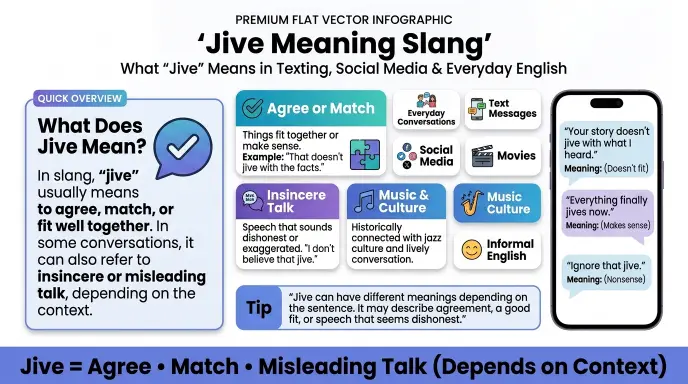
Jive meaning slang usually refers to talk that is false, silly, confusing, or not honest. People may say someone is “talking jive” when they think the person is lying or saying something that does not make sense.
However, the meaning can change with the situation. In some cases, jive also refers to a style of music and dance. That is why context is important.Many people search for jive meaning slang after hearing the word in movies, songs, TV shows, or online conversations.
This guide explains the slang meaning, other common meanings, where people use it, and when you should avoid using it. You will also learn real examples, the history of the word, and the best way to understand it in different situations.
Quick Answer: Jive Meaning Slang
Jive meaning slang usually means false talk, nonsense, or dishonest words. People may also use it to describe speech that sounds confusing or unbelievable. The exact meaning depends on the conversation.
What Does Jive Mean in Slang?
In slang, jive often means talking in a way that is not truthful or does not make sense.
If someone says, “Don’t give me that jive,” they mean, “Don’t tell me lies,” or “Don’t say something I do not believe.”
The word can also describe speech that sounds exaggerated or confusing.
Here are a few examples:
- “I don’t believe that jive.”
- “Stop talking jive.”
- “That story sounds like jive.”
In each example, jive refers to words that the speaker does not trust.
Does Jive Have More Than One Meaning?
Yes. Jive has more than one meaning. The correct meaning depends on the context.
Jive as Slang
This is the meaning most people search for.
Here, jive means:
- False talk
- Nonsense
- Dishonest words
- Confusing speech
Jive as Music
Jive is also the name of a popular style of jazz music from the 1930s and 1940s. The word became well known during the swing era.
Jive as a Dance
Jive is also a fast ballroom dance. Many dance competitions include jive as one of the official Latin dances.
Because the word has several meanings, always read the full sentence before deciding what it means.
What Does “Talking Jive” Mean?
The phrase “talking jive” means saying something that sounds false, silly, or hard to believe.
People often use this phrase when they think another person is not being honest.
For example:
- “He’s talking jive again.”
- “Don’t listen to all that jive.”
- “That sounds like pure jive.”
These examples show that the speaker does not believe what they hear.
Where Is Jive Slang Commonly Used?
Although jive meaning slang is less common today, you may still hear it in some places.
Movies and TV Shows
Older movies and comedy shows sometimes use the word jive in conversations.
Music
Classic songs and older music often include the word because of its connection to jazz culture.
Books
Some novels use jive to match the language of a certain time or community.
Casual Conversations
A few people still say jive when they think someone is not telling the truth.
Social Media
The word appears from time to time in posts, comments, and memes, but it is much less common than modern slang terms.
Is Jive Slang Rude, Offensive, or Harmless?
Jive is usually harmless. However, the tone and context matter.
If you say someone is “talking jive,” they may think you are calling them dishonest. Because of that, the phrase can sound rude.
The word itself is not a swear word. Still, it is better to use it carefully.
Here is a simple guide:
| Situation | Is It Appropriate? |
| Talking with friends | ✅ Usually |
| Casual conversations | ✅ Yes |
| Social media | ✅ Yes |
| School discussion | ⚠️ Depends on the context |
| Workplace | ⚠️ Better to avoid |
| Business emails | ❌ No |
| Formal meetings | ❌ No |
Why Do People Use Jive in Slang?
People use jive for different reasons.
To Question a Story
Someone may use jive when they think a story is not true.
Example:
- “That sounds like jive to me.”
To Call Out Nonsense
People sometimes use the word when an idea sounds confusing.
Example:
- “Stop giving me that jive.”
To Sound Casual
Some speakers use jive because it has a classic slang style.
Today, younger people often choose newer slang words instead.
Is Jive Still Popular Today?
Jive is much less common than it was in the past.
The word was very popular in the United States during the 1930s and 1940s. It also appeared in music, movies, and everyday speech for many years.
Today, you may still hear jive in:
- Older movies
- Classic TV shows
- Jazz history
- Vintage books
- Some casual conversations
Modern slang words have replaced jive in many situations.
Who Uses Jive Slang?
You are more likely to hear jive from:
- Older adults
- Fans of classic movies
- Jazz lovers
- Writers
- Actors
- People discussing older American slang
Most teenagers and young adults rarely use the word in daily conversations.
Common Situations Where You May Hear Jive
People still use jive in a few everyday situations.
- Talking with friends
- Watching classic movies
- Reading older books
- Listening to jazz music
- Watching comedy shows
- Discussing American slang
These examples show that jive is still understood, even though it is less common today.
Common Misunderstandings About Jive
Many people confuse jive with other words.
Here are the most common mistakes.
Thinking Jive Always Means Music
This is not true.
Sometimes jive means false or dishonest talk. In other situations, it refers to music or dance.
Mixing Up Jive and Jibe
Many people confuse these two words.
Jive usually refers to slang, music, dance, or false talk.
Jibe usually means to agree or to match.
For example:
- “His story doesn’t jibe with the facts.”
- “Stop talking jive.”
Although the words sound similar, they have different meanings.
Believing Jive Is Modern Slang
Not exactly.
Jive is an older slang word. Most people today use newer expressions such as cap, fake, lies, or nonsense instead.
Real-Life Examples of Jive Meaning Slang
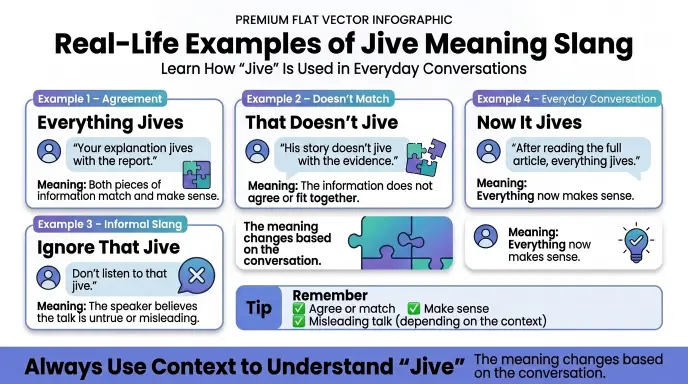
These examples show how people use jive in everyday conversations.
Friend: “I don’t believe that jive.”
Text Message: “Stop sending me that jive.”
Movie Scene: “He’s talking jive again.”
Social Media Post: “That rumor is just jive.”
Family Conversation: “Tell me the truth. I don’t want any jive.”
In each example, jive means false talk, nonsense, or something the speaker does not believe.
Origin and History of Jive
The history of jive is more complex than many people think.
Language experts generally agree that the word became popular in the United States during the 1930s. It was closely linked to African American communities and jazz culture. During that time, jive described a style of speech and later became connected with jazz music and dancing.
Over time, the slang meaning also changed. In many conversations, people began using jive to describe talk that sounded false, confusing, or dishonest.
Today, this older slang is less common, but many people still recognize it from classic movies, music, and books.
Similar Slang Words
If you understand jive meaning slang, you may also hear these words.
| Slang | Meaning | Tone |
| Cap | A lie | Informal |
| Fake | Not real | Neutral |
| Nonsense | Silly talk | Neutral |
| BS | Dishonest talk | Informal |
| Garbage | Poor or untrue idea | Casual |
| Bogus | Fake or false | Informal |
| Hype | Big claims | Casual |
| Trash Talk | Insulting speech | Informal |
Each word has a different tone. Choose the one that best fits your conversation.
When Should You Avoid Using Jive?
Although jive is not offensive by itself, it is not suitable in every situation.
Avoid using it when:
- Writing business emails.
- Talking to your boss.
- Speaking in a job interview.
- Writing school assignments.
- Giving a formal presentation.
- Talking with someone who may not understand older slang.
Simple words like false, incorrect, or not true are usually better in formal settings.
Better Alternatives to Jive
If jive does not fit the situation, try one of these words.
- False
- Untrue
- Fake
- Incorrect
- Nonsense
- Misleading
- Confusing
- Unrealistic
These alternatives are easier to understand in formal writing.
Frequently Asked Questions
Q1. What does jive mean in slang?
Jive meaning slang usually means false talk, nonsense, or words that sound dishonest. People often use it when they do not believe what someone is saying.
Q2. What does “talking jive” mean?
Talking jive means speaking in a way that sounds untrue, confusing, or exaggerated. It often suggests that the speaker is not being honest.
Q3. Is jive a bad word?
No. Jive is not a swear word. However, saying someone is “talking jive” may sound rude because it questions their honesty.
Q4. Is jive still used today?
Yes, but not as often. The word appears more in older movies, classic books, jazz history, and conversations about vintage slang than in modern social media.
Q5. What is the difference between jive and jibe?
They are different words.
Jive often means false talk or refers to music and dance.
Jibe means to agree, match, or fit together.
Q6. Does jive always mean lying?
No. It usually means false or confusing talk in slang. However, the word can also refer to a style of music or a ballroom dance. The meaning depends on the context.
Q7. Can I use jive in professional conversations?
It is better not to. Words like incorrect, false, or misleading sound more professional and are easier for everyone to understand.
Q8. Why do people still search for jive meaning slang?
Many people hear the word in classic movies, songs, books, or TV shows. They want to understand what it means before using it in a conversation.
Q9. Is jive common on TikTok or Instagram?
Not really. Modern slang words such as cap, fake, and no cap are much more common on today’s social media platforms.
Q10. How can I know which meaning of jive is correct?
Look at the sentence. If people are talking about honesty, jive usually means false talk. If they are discussing music or dancing, it refers to the jazz style or ballroom dance.
Conclusion
Jive meaning slang usually refers to false talk, nonsense, or words that sound dishonest. The word also has other meanings in music and dance, so context is always important.
Although jive is less popular than modern slang, many people still hear it in classic movies, books, and songs. Once you understand the different meanings, you can quickly tell how the word is being used and avoid confusion.
Get More Articles:
“Yoyo Slang: What It Really Means and Where It Comes From”

I am Masson Caldwell, a language enthusiast and content writer at SlangAura. I write about internet slang, texting trends, and modern expressions to help readers understand the evolving world of online language with simple and clear explanations.