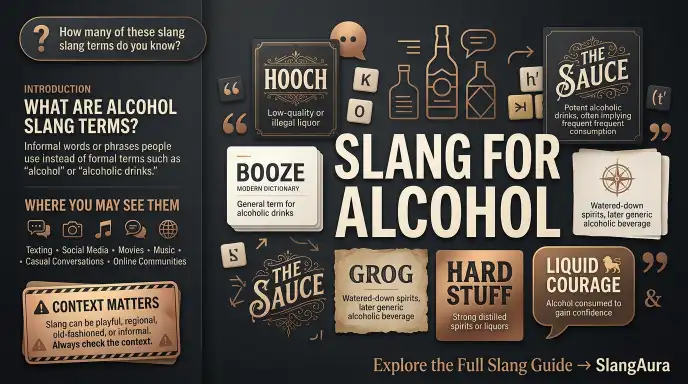
Alcohol has many casual names, such as “booze,” “hooch,” “sauce,” “juice,” and “firewater.” These slang terms for alcohol can sound playful, old-fashioned, regional, or informal, depending on the speaker and situation.
Some terms name alcohol itself, while others describe drinking or being drunk.People search for slang terms for alcohol when they see unfamiliar words in texts, movies, TikTok posts, Reddit discussions, songs, or everyday conversations. Knowing the context makes these expressions much easier to understand.
It also helps you tell the difference between a harmless joke, an old expression, and a word that may sound too casual for formal situations.This guide explains common alcohol slang in simple English. You will learn what these terms mean, where they are used, how their tone can change, and which expressions are best kept out of professional or formal conversations.
Quick Answer: Slang Terms for Alcohol
Common slang terms for alcohol include “booze,” “hooch,” “sauce,” “juice,” “firewater,” “grog,” and “hard stuff.” Some refer to alcohol in general, while others describe strong drinks, beer, drinking, or the effects of alcohol.
“Booze” is one of the most widely understood casual terms for alcoholic drinks. It is informal rather than a formal or medical term.
What Do Slang Terms for Alcohol Mean?
Slang terms for alcohol are informal words and phrases people use instead of saying “alcohol,” “liquor,” or “alcoholic drinks.”
The meaning and tone can vary. Some words are common in everyday speech, while others sound old-fashioned, humorous, or strongly tied to a particular setting.
| Term | Meaning | Tone |
| Booze | Alcohol in general | Casual |
| Hooch | Alcoholic liquor | Informal |
| Sauce | Alcohol | Playful |
| Juice | Alcohol in some contexts | Casual |
| Firewater | Strong alcohol | Old-fashioned |
| Grog | An alcoholic drink | Old-fashioned |
| Spirits | Distilled alcoholic drinks | Neutral |
| Liquid courage | Alcohol used to feel confident | Humorous |
| Nightcap | A drink taken late at night | Classic |
| Rocket fuel | Very strong alcohol | Humorous |
| Hard stuff | Strong alcoholic drinks | Informal |
| Brew | Usually beer | Casual |
| Cold one | Usually a cold beer | Casual |
A key point is that not all of these words are pure slang. “Spirits,” for example, is a standard term for distilled alcoholic drinks. “Nightcap” is also an established expression rather than modern internet slang.
30+ Common Slang Terms for Alcohol
Below are common expressions you may see in conversations, entertainment, social media, and online communities.
1. Booze
“Booze” is one of the most common informal words for alcohol. It can refer to alcoholic drinks in general and is especially common in casual conversation.
Example: “Do we need to buy more booze for the party?”
The word is informal, but it is widely understood. It has a long history and is not a new Gen Z expression.
2. Hooch
“Hooch” is slang for alcoholic liquor. It can suggest cheap, homemade, low-quality, or illegally produced alcohol, depending on context.
Example: “The movie showed them making homemade hooch.”
The word has a documented history going back to the late 19th century. Its history is more specific than many modern slang terms.
3. Sauce
“Sauce” can be used casually to mean alcohol.
Example: “He had too much sauce last night.”
This word needs context because its normal meaning is a food sauce. Online, the meaning can also vary depending on the community.
4. Juice
“Juice” can sometimes refer to alcohol in informal conversation.
Example: “Who brought the juice for the celebration?”
This is highly context-dependent. If someone is talking about breakfast, “juice” probably means a normal fruit drink.
5. Firewater
“Firewater” is an old-fashioned expression for strong alcoholic liquor.
Example: “The character called the drink firewater.”
You are more likely to see this word in historical stories, Western-themed entertainment, or humorous writing than in normal modern texting.
6. Grog
“Grog” is an old term for an alcoholic drink, especially one associated with rum.
Example: “The pirate ordered another cup of grog.”
Today, “grog” often sounds historical, nautical, fantasy-themed, or playful.
7. Spirits
“Spirits” is a standard term for distilled alcoholic drinks such as vodka, gin, rum, and whiskey.
Example: “The restaurant has a large selection of spirits.”
Unlike “booze” or “hooch,” this term can also appear in professional writing.
8. Liquid Courage
“Liquid courage” is a humorous expression for alcohol that someone drinks because they believe it makes them feel more confident.
Example: “She called that first drink her liquid courage before karaoke.”
It describes the perceived effect of alcohol rather than naming a specific type of drink.
9. Nightcap
A “nightcap” is a drink taken late in the evening, often before going to bed.
Example: “He had a small nightcap before going upstairs.”
The word has a classic, old-fashioned feel and is not usually considered modern social media slang.
10. Poison
“Poison” can appear in the expression “What’s your poison?” This is a joking way to ask what alcoholic drink someone wants.
Example: “What’s your poison: beer or wine?”
The phrase is figurative. It does not mean that the drink is actually poisonous.
11. Rocket Fuel
“Rocket fuel” is a humorous name for very strong alcohol.
Example: “That homemade drink was basically rocket fuel.”
It is not the official name of a particular alcoholic beverage.
12. Liquid Gold
“Liquid gold” can describe an expensive, valuable, or highly prized alcoholic drink.
Example: “They saved that bottle because they called it liquid gold.”
The expression is figurative and can also be used for other valuable liquids.
13. The Good Stuff
“The good stuff” can refer to a person’s favorite or higher-quality alcohol.
Example: “Save the good stuff for the wedding.”
This phrase is not limited to alcohol. Context tells you what “the good stuff” means.
14. Brew
“Brew” commonly refers to beer in casual speech.
Example: “They stopped for a brew after the game.”
It can also refer to coffee or other brewed drinks, so the surrounding conversation matters.
15. Cold One
“A cold one” is an informal expression usually referring to a cold beer.
Example: “He opened a cold one after finishing work.”
It generally does not mean alcohol in every form.
16. Brewski
“Brewski” is a playful informal word for beer.
Example: “They joked about grabbing a brewski after the match.”
It can sound humorous or slightly dated depending on the speaker.
17. Tipple
“Tipple” can mean an alcoholic drink. It can also relate to drinking alcohol.
Example: “Whiskey was his usual tipple.”
This word is less common in modern casual American English and may sound old-fashioned or British.
18. Strong Stuff
“Strong stuff” can describe alcohol that has a high alcohol content or feels particularly powerful.
Example: “Careful, that’s strong stuff.”
It is a descriptive phrase rather than a fixed name for one drink.
19. Hard Stuff
“Hard stuff” can refer to strong alcoholic drinks, especially distilled liquor.
Example: “They had beer but no hard stuff.”
The phrase is informal and depends on context.
20. Drink
“Drink” is not exactly slang, but people often use it casually to mean an alcoholic drink.
Example: “Do you want to grab a drink after dinner?”
It does not always mean alcohol. The situation determines the meaning.
21. Bottle
“Bottle” can sometimes be used as shorthand for a bottle of alcohol.
Example: “They brought a bottle for dinner.”
This is context-based rather than a dedicated alcohol slang term.
22. Hit the Bottle
“To hit the bottle” is an idiom meaning to drink alcohol, often heavily or frequently.
Example: “He started hitting the bottle after a difficult week.”
This expression can carry a negative tone because it may suggest a drinking problem.
23. Boozy
“Boozy” is an adjective meaning containing, involving, or associated with alcohol.
Example: “They served a boozy dessert at the party.”
It describes something related to alcohol rather than naming alcohol itself.
24. Boozing
“Boozing” means drinking alcohol. It can also suggest drinking heavily.
Example: “They spent the evening boozing with friends.”
The tone is casual and is not suitable for formal writing.
25. Getting Lit
“Getting lit” can mean becoming very intoxicated or having a wild, energetic time.
Example: “They said they were getting lit at the party.”
The phrase has other meanings too, so you should not automatically assume it refers to alcohol.
26. Getting Tipsy
“Getting tipsy” means becoming slightly drunk.
Example: “I started getting tipsy after the second drink.”
“Tipsy” describes a person’s level of intoxication. It is not another name for alcohol.
27. Hammered
“Hammered” is informal slang for being very drunk.
Example: “He was hammered by the end of the night.”
It is stronger than “tipsy” and is generally too casual for professional communication.
28. Wasted
“Wasted” can mean extremely drunk in casual speech.
Example: “He got wasted at the party.”
The word has many other meanings, such as being used inefficiently or being exhausted. Context is important.
29. Plastered
“Plastered” is informal slang for being very drunk.
Example: “He was completely plastered after the celebration.”
It is a strong and casual expression. It should not be confused with the literal meaning related to plaster.
30. Three Sheets to the Wind
“Three sheets to the wind” is an old idiom meaning very drunk.
Example: “By midnight, he was three sheets to the wind.”
It sounds much more old-fashioned than most modern drinking slang.
31. Under the Influence
“Under the influence” is a formal expression for being affected or impaired by alcohol or another substance.
Example: “Driving under the influence can have serious legal consequences.”
This phrase is very different in tone from words such as “hammered” or “wasted.” It is more appropriate for legal, safety, medical, and formal contexts.
Where Are Slang Terms for Alcohol Commonly Used?
Slang for alcohol appears in many types of communication, but the tone changes from one platform to another.
| Platform or setting | Typical use |
| Texting | Booze, drink, sauce |
| TikTok | Humorous phrases and drinking references |
| Short captions and casual expressions | |
| Informal discussion and community slang | |
| Discord | Casual chat and jokes |
| Movies and TV | Modern slang plus older expressions |
| Gaming communities | Casual references and jokes |
| Workplace chat | Neutral terms are usually better |
| School settings | Alcohol slang may be inappropriate |
For example, someone might write “Need some booze?” in a private text. In a workplace message, “Alcoholic beverages will be available” sounds much more professional.
Context also prevents confusion. “Juice” could mean alcohol in one conversation but ordinary fruit juice in another.
Is Alcohol Slang Rude, Offensive, or Harmless?
Most alcohol slang is not automatically rude or offensive. The main issue is tone and setting.
Words such as “booze,” “brew,” and “sauce” are generally casual. They may sound too informal in a workplace, school document, news report, or official message.
Stronger expressions deserve more care. “Hammered,” “wasted,” and “plastered” describe heavy intoxication and can sound judgmental or rough. “Hitting the bottle” may also suggest excessive or problematic drinking.
Some historical expressions require additional context. “Firewater,” for example, has cultural and historical associations and can sound insensitive when used casually as a modern nickname for alcohol.
For neutral communication, “alcohol,” “alcoholic drinks,” or “alcoholic beverages” are safer choices.
Real-Life Examples of Alcohol Slang
Text Message
“Are you bringing any booze to the dinner?”
Here, “booze” simply means alcoholic drinks.
TikTok Caption
“Just a little liquid courage before karaoke.”
The phrase is being used humorously to describe drinking for confidence.
Discord Chat
“That drink is basically rocket fuel.”
The speaker is joking that the drink is extremely strong.
Reddit Comment
“I stopped drinking booze for a month.”
“Booze” is used as a casual replacement for “alcohol.”
Movie Dialogue
“What’s your poison?”
The speaker is asking which alcoholic drink the other person wants.
Workplace Message
“Alcoholic beverages will be available at the event.”
The formal wording is clearer and more suitable for work.
Family Conversation
“Please don’t bring alcohol to the family event.”
Here, the direct word “alcohol” avoids unnecessary slang.
Origin and History of Alcohol Slang
Alcohol slang does not come from one period or one online community. Different expressions developed across different centuries, regions, occupations, and social groups.
“Booze” is much older than modern internet slang. Merriam-Webster traces the word to Middle English and records its first known use in the 14th century.
“Hooch” also has a documented history. Merriam-Webster records its alcohol meaning from 1897 and explains its connection to “hoochinoo,” a distilled liquor associated with the Hoochinoo, a Tlingit community.
Other expressions have different histories. “Grog” is linked with older naval language, while “three sheets to the wind” comes from nautical terminology and later became an idiom for drunkenness.
This history shows why it is misleading to label every alcohol expression as “Gen Z slang” or “internet slang.” Many terms existed long before TikTok, Instagram, Reddit, or Discord.
Similar Slang and Related Terms
Not every alcohol-related slang word means the same thing. Some terms name the drink itself, while others describe drinking, intoxication, or the effect alcohol may have on someone.
| Category | Common terms | What they describe |
| Alcohol in general | Booze, hooch, sauce | Alcoholic drinks |
| Beer | Brew, brewski, cold one | Usually beer |
| Strong alcohol | Hard stuff, firewater, rocket fuel | Strong alcoholic drinks |
| Drinking | Boozing, hitting the bottle | The act of drinking |
| Slightly drunk | Tipsy | Mild intoxication |
| Very drunk | Hammered, wasted, plastered | Heavy intoxication |
| Confidence from drinking | Liquid courage | A perceived effect of alcohol |
| Late-night drink | Nightcap | A drink taken late in the evening |
This difference matters when you are reading a text or social media post. For example, someone saying “I have some booze” is talking about alcohol, while “I am tipsy” is describing their own condition.
How Alcohol Slang Differs by Context
The same expression can sound very different depending on who uses it and where it appears.
Texting
Friends may use simple words such as “booze,” “drink,” “sauce,” or “brew” because texting is usually informal.
Example: “Are you bringing booze tonight?”
The wording is casual and does not automatically suggest anything negative.
TikTok and Instagram
Social media often favors short, humorous expressions. Phrases such as “liquid courage,” “getting lit,” or “rocket fuel” may appear in captions, comments, or jokes.
However, these phrases can have meanings outside alcohol. Always check the surrounding post before assuming what the writer means.
Reddit discussions can use both modern slang and older expressions. A community discussing drinks may use terms such as “booze,” “brew,” or “hard stuff.”
The tone can range from humorous to serious, so the meaning depends on the discussion.
Discord and Gaming
Alcohol slang may appear as jokes or casual conversation in Discord communities. A user might call a very strong drink “rocket fuel” or say someone is “getting lit.”
These expressions are informal and may not be understood the same way by every community.
Workplace Communication
Alcohol slang is usually a poor choice for professional messages. “Booze” may sound too casual, while “alcoholic beverages” is clearer and more neutral.
For example:
Casual: “There will be booze at the event.”
Professional: “Alcoholic beverages will be available at the event.”
The second version is better for an email, company notice, or official announcement.
When Should You Avoid Using Alcohol Slang?
You should avoid alcohol slang when the situation requires clear, neutral, or professional language.
Common situations include:
- Workplace emails and documents
- School assignments
- News or educational writing
- Legal or official documents
- Safety information
- Health-related discussions
- Conversations with people who may not understand the slang
- Situations where alcohol use is a sensitive subject
There is also a difference between casual slang and expressions that suggest heavy drinking. Words such as “hammered,” “wasted,” and “plastered” describe significant intoxication. They may sound inappropriate when discussing a serious event.
If precision matters, simply use “alcohol” or “alcoholic beverages.”
Polite Alternatives to Alcohol Slang
If you want a neutral and widely understood term, these alternatives work well:
- Alcohol
- Alcoholic drinks
- Alcoholic beverages
- Drinks
- Beverages
- Liquor
- Spirits
The best choice depends on what you are describing.
“Alcohol” is the broadest option. “Liquor” usually refers to distilled alcoholic drinks. “Spirits” is also commonly used for distilled drinks such as vodka, gin, rum, and whiskey.
For formal writing, “alcoholic beverages” is often the clearest choice.
Why Do People Use Slang for Alcohol?
People use slang because it can make a conversation feel more relaxed, friendly, humorous, or expressive.
For example, “booze” sounds more casual than “alcohol.” Saying “rocket fuel” can make a joke about how strong a drink tastes. “Liquid courage” adds humor when someone talks about drinking before a difficult social situation.
Slang can also reflect a person’s group or culture. Friends may develop their own expressions, while online communities can spread certain phrases quickly.
Still, slang is not always clearer. A person who has never heard “three sheets to the wind” may not understand that it means someone is very drunk. That is why context matters.
Common Misunderstandings About Alcohol Slang
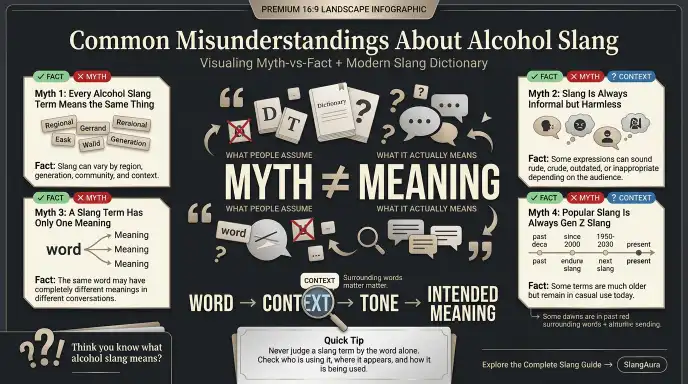
One of the biggest mistakes is treating every alcohol-related word as a name for alcohol.
That is not accurate.
“Booze” and “hooch” can refer to alcohol itself. “Tipsy,” “hammered,” and “plastered” describe a person’s state after drinking. “Boozing” describes the act of drinking. “Liquid courage” describes the confidence someone believes alcohol gives them.
Another common mistake is assuming that all alcohol slang is modern.
Many expressions are much older than social media. “Booze,” for example, has a history going back centuries. “Hooch” has a documented alcohol-related use from the 19th century.
Some terms have also become less common over time. “Grog” and “three sheets to the wind” may sound old-fashioned to many modern speakers. They can still appear in books, movies, historical discussions, jokes, and themed conversations.
Are These Terms Used by Gen Z?
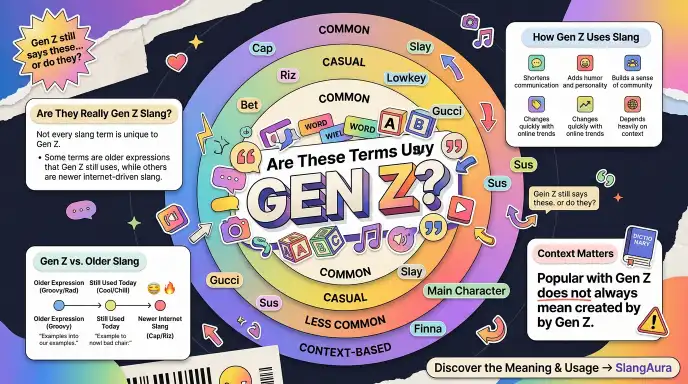
Some alcohol-related expressions can appear in Gen Z conversations, especially on social media, but it would be inaccurate to label all of them as Gen Z slang.
Words such as “booze,” “hooch,” “grog,” and “nightcap” existed long before Gen Z.
Modern social media can spread older words again, but that does not make them newly created slang.
Expressions such as “getting lit” can feel more connected to modern casual speech, although their meanings can vary outside alcohol-related conversations.
The safest approach is to judge the term by its actual context instead of assigning it to a generation without evidence.
Are Alcohol Slang Terms Safe to Use?
Most alcohol slang is not inherently offensive. The main concern is appropriateness and clarity.
A casual word such as “booze” may be perfectly normal between friends but unsuitable in a formal report. Strong intoxication terms such as “wasted” or “plastered” can also sound insensitive when discussing a serious alcohol-related incident.
Context is especially important when discussing people who may have problems with alcohol. Joking phrases can sometimes minimize a serious situation.
For health, safety, legal, or educational information, direct language is usually the better choice.
Frequently Asked Questions
Q1. What does Gen Z say for drunk?
Gen Z may say “wasted,” “lit,” “hammered,” “buzzed,” “tipsy,” or “plastered.” The exact word depends on how drunk someone is.
Q2. What is a nickname for alcohol?
Common informal names include “booze,” “liquor,” “spirits,” and “hooch.” “Booze” is one of the most common casual terms.
Q3. What are some slang terms for drinking alcohol?
Common slang includes “drinking,” “boozing,” “getting lit,” “getting wasted,” “having a few,” and “hitting the bottle.”
Q4. What do Gen Z drink instead of alcohol?
Many Gen Z consumers choose mocktails, sparkling water, iced tea, coffee, energy drinks, and non-alcoholic beverages. Preferences vary widely, so there is no single Gen Z replacement for alcohol.
Q5. What is the most girly alcohol drink?
There is no objectively “girly” alcohol drink. In popular culture, drinks such as cosmopolitans, pink cocktails, fruity cocktails, and rosé are often stereotyped as feminine.
Q6. What is Gen Z obsessed with right now?
There is no single answer. Gen Z trends move quickly, but TikTok culture, short-form video, AI tools, beauty trends, memes, niche internet communities, and personalized fashion remain major areas of interest.
Conclusion
Slang terms for alcohol include familiar expressions such as “booze,” “hooch,” “sauce,” and “brew,” along with older phrases such as “grog” and “three sheets to the wind.” Some terms refer to alcohol itself, while others describe drinking or the effects of alcohol.
The most important thing is context. A word such as “booze” can sound normal in a text between friends but too casual in a workplace email. Likewise, “tipsy,” “hammered,” and “wasted” describe intoxication rather than alcohol.
If you are writing for a formal, educational, legal, or professional audience, use direct terms such as “alcohol” or “alcoholic beverages.” For casual conversations, slang can sound natural as long as everyone understands what it means.
Trending Slang Meanings:
YK Slang Meaning: Uses, Examples, and Texting Context

I am Masson Caldwell, a language enthusiast and content writer at SlangAura. I write about internet slang, texting trends, and modern expressions to help readers understand the evolving world of online language with simple and clear explanations.