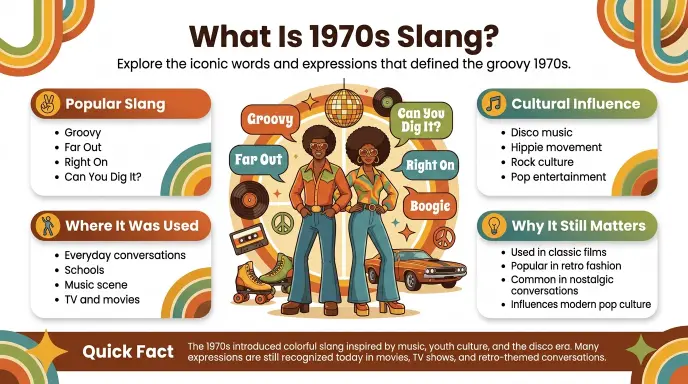
1970’s slang refers to the informal words and expressions that became popular during the 1970s. Many of these terms were influenced by pop culture, disco music, television, surfing, skateboarding, and everyday American life.
Some 1970s slang words are rarely used today, while others have remained part of modern English. People often search for 1970’s slang to understand old movies, TV shows, song lyrics, books, or conversations from that decade. Learning these expressions also provides insight into the culture and lifestyle of the 1970s.
Quick Answer:
1970’s slang includes informal words and phrases that were popular during the 1970s. These expressions reflected the music, fashion, entertainment, and youth culture of the era.
What Does 1970’s Slang Mean?
1970’s slang refers to the casual language that people commonly used during the 1970s. These words helped people express excitement, approval, surprise, or humor in a more creative and relaxed way.
Many expressions from the 1970s became popular through movies, television, musicians, comedians, and everyday conversations. While some have disappeared over time, others are still recognized today.
People often use 1970’s slang when:
- Talking about the 1970s.
- Watching classic films.
- Reading older books.
- Creating retro-themed content.
- Remembering childhood memories.
Learning these phrases makes it easier to understand conversations from that decade.
Is 1970’s Slang an Official Language?
No. 1970’s slang is not an official language or dialect.
Instead, it is a collection of informal expressions that became popular among different communities during the 1970s.
Many of these words were influenced by:
- Pop culture
- Disco music
- Soul and funk music
- Surf culture
- Television
- Youth trends
- Regional American English
Some expressions spread across the United States, while others remained popular only in certain regions.
Does 1970’s Slang Have a Full Form?
No. 1970’s slang does not have a full form.
Unlike internet abbreviations such as LOL or BRB, these are ordinary words and phrases that gained popularity through everyday speech rather than initials.
Examples include:
- Groovy
- Far out
- Right on
- Bogus
- Funky
- Can you dig it?
These expressions are understood by their meaning and historical context rather than as abbreviations.
Is 1970’s Slang Rude, Offensive, or Neutral?
Most 1970’s slang is neutral or positive.
People originally used these expressions to sound relaxed, friendly, or enthusiastic.
However, a few words could sound rude depending on the speaker’s tone and the situation.
Friendly Expressions
Many slang terms expressed approval or excitement.
Examples include:
- Groovy
- Right on
- Cool
- Far out
These expressions were commonly used among friends.
Neutral Expressions
Some phrases simply described situations or emotions.
Examples include:
- Hang loose
- Catch you later
- Keep on truckin’
These expressions are generally harmless.
Context Matters
Like modern slang, the meaning often depends on:
- Tone of voice
- Relationship between speakers
- Situation
- Local culture
Some older slang may sound outdated today, but it is rarely considered offensive when used respectfully.
Where Is 1970’s Slang Commonly Used?
Although the 1970s ended decades ago, many slang words from that era are still recognized today. You may hear them in classic movies, television shows, music, books, and retro-themed conversations.
Classic Movies and TV Shows
Many 1970s expressions appear in films and television programs from that decade.
Examples include:
- “Groovy!”
- “Far out!”
- “Right on!”
These phrases help capture the culture and personality of the time.
Music
Disco, funk, rock, and soul music helped spread many popular slang expressions.
Song lyrics and interviews from the 1970s often include words like groovy, funky, and right on.
Social Media
Today, people sometimes use 1970’s slang on TikTok, Instagram, Facebook, and X when creating retro content, vintage fashion posts, or nostalgic videos.
Examples include:
- “Groovy outfit!”
- “That party looked far out.”
Everyday Conversations
Although less common today, some 1970s slang words still appear in casual conversations, especially among people who grew up during that decade.
Words like cool and funky have remained part of everyday English.
Popular 1970’s Slang Words
Here are some well-known slang terms from the 1970s.
Groovy
Groovy means excellent, fashionable, or enjoyable.
Examples:
- “That’s a groovy song.”
- “Your jacket looks groovy.”
Far Out
Far out expresses surprise, excitement, or admiration.
Examples:
- “Far out! That’s amazing.”
- “Your new bike is far out.”
Right On
Right on means I agree or exactly.
Examples:
- “Right on! I feel the same way.”
- “Right on, that’s a great idea.”
Funky
During the 1970s, funky often described something stylish, unique, or connected to funk music.
Examples:
- “That’s a funky outfit.”
- “I love this funky beat.”
Bogus
Bogus means fake, unfair, or wrong.
Examples:
- “That excuse is bogus.”
- “The rumor turned out to be bogus.”
Can You Dig It?
This phrase means Do you understand? or Do you like the idea?
Examples:
- “We’re leaving at six. Can you dig it?”
- “This music is incredible. Can you dig it?”
Real-Life Examples of 1970’s Slang
Seeing these expressions in conversations makes them much easier to understand.
Friendly Conversation
- “That’s a groovy shirt!”
- “Right on! Let’s go.”
- “Far out! I didn’t expect that.”
Casual Conversation
- “That movie was totally funky.”
- “His excuse sounded bogus.”
- “Can you dig it?”
Family Conversation
- “Your grandparents used to say ‘groovy’ all the time.”
- “Right on, let’s have dinner.”
- “That’s a far-out story.”
Social Media
- “Groovy vibes only.”
- “Retro fashion is far out!”
- “Can you dig this vintage look?”
These examples show how 1970’s slang reflected the relaxed and creative style of the decade.
Origin and Background of 1970’s Slang
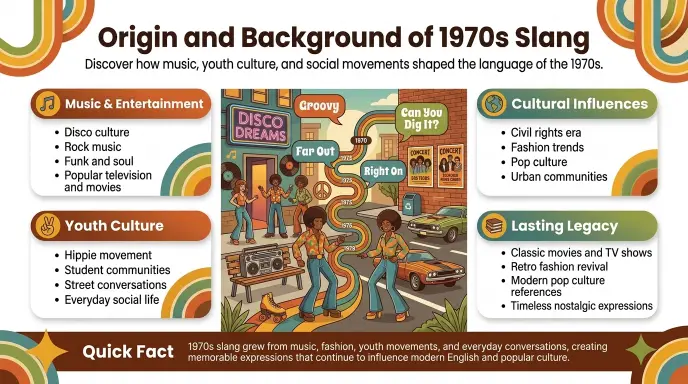
The slang of the 1970s developed through a combination of music, youth culture, television, movies, and changing fashion trends.
Many expressions were influenced by:
- Disco culture
- Funk and soul music
- Rock music
- Surf culture
- Skateboarding
- Television sitcoms
- Youth movements
Some words, such as cool, became even more popular during the 1970s despite originating earlier. Others, including groovy and far out, became closely associated with the decade’s unique style.
Today, these expressions continue to appear in nostalgic media, documentaries, and retro-themed entertainment.
Comparison with Similar Decade Slang
Many 1970’s slang words are different from the expressions used in later generations.
| 1970’s Slang | Modern Equivalent | Meaning |
| Groovy | Awesome | Excellent or stylish |
| Far out | Amazing | Expressing surprise or admiration |
| Right on | Exactly | Showing agreement |
| Funky | Cool | Stylish or unique |
| Bogus | Fake | False or unfair |
| Can you dig it? | Do you get it? | Do you understand? |
Although the wording has changed over time, many of these expressions communicate similar ideas.
When Should You Avoid Using 1970’s Slang?
Most 1970’s slang is harmless, but it may not always fit every situation.
Professional Communication
Avoid retro slang in:
- Business emails
- Job interviews
- Academic writing
- Formal presentations
Standard English is usually a better choice.
Speaking with International English Learners
Some expressions like far out or can you dig it? may confuse people who are unfamiliar with American slang from the 1970s.
Using clearer language helps avoid misunderstandings.
Formal Situations
Legal documents, government communication, healthcare settings, and official meetings generally require standard English rather than vintage slang.
Polite Alternatives to 1970’s Slang
If you want to use more modern or formal language, these alternatives work well.
Instead of “Groovy”
Use:
- Great
- Excellent
- Wonderful
- Awesome
Instead of “Far Out”
Use:
- Amazing
- Incredible
- Impressive
Instead of “Right On”
Use:
- Exactly
- I agree
- That’s correct
These alternatives are widely understood and appropriate in most conversations.
Why People Use 1970’s Slang
People still use 1970’s slang because it brings a sense of nostalgia and reflects the culture of one of the most memorable decades in modern history. These expressions can also make conversations feel fun, relaxed, and creative.
Some common reasons people use 1970’s slang include:
- To create a retro or vintage style.
- To reference classic movies and TV shows.
- To celebrate 1970s music and fashion.
- To add humor to conversations.
- To remember childhood memories or past experiences.
Although many expressions are dated, they remain recognizable and enjoyable for many people.
Impact of Using Slang in Communication
Using 1970’s slang can make conversations more expressive and entertaining. However, because some terms are no longer common, it’s important to consider your audience.
Advantages
- Adds personality to conversations.
- Creates a nostalgic atmosphere.
- Helps people understand classic media.
- Reflects historical language and culture.
- Makes retro-themed content more authentic.
Disadvantages
- Younger audiences may not recognize some expressions.
- Certain phrases can sound outdated today.
- Vintage slang may not fit formal communication.
- Some meanings have changed over time.
The best approach is to use 1970’s slang in casual conversations, entertainment, or historical discussions while choosing standard English for professional situations.
Is 1970’s Slang Safe for Social Media?
Yes. Most 1970’s slang is completely safe to use on social media.
People often use these expressions on TikTok, Instagram, Facebook, and X when sharing vintage fashion, classic music, retro movies, or nostalgic memories.
Before using 1970’s slang online, remember these tips:
- Make sure the phrase matches the retro theme.
- Avoid outdated expressions that may confuse your audience.
- Use modern explanations if younger readers may not recognize the slang.
- Keep your tone friendly and respectful.
Overall, 1970’s slang is harmless and works well in nostalgic or vintage-related posts.
Frequently Asked Questions
Q1. What is 1970’s slang?
1970’s slang refers to informal words and phrases that became popular during the 1970s. These expressions reflected the decade’s music, fashion, entertainment, and youth culture.
Q2. Is 1970’s slang still used today?
Yes. While many expressions have become outdated, words like cool, funky, and bogus are still used in modern English.
Q3. What was the most popular 1970’s slang word?
One of the most famous 1970’s slang words is groovy, which means something is excellent, enjoyable, or stylish.
Q4. Was 1970’s slang offensive?
Most 1970’s slang was friendly or neutral. However, as with any informal language, tone and context determine if an expression sounds respectful.
Q5. Why was “groovy” so popular?
Groovy became popular because it reflected the relaxed, creative, and music-driven culture of the 1970s. It was widely used in movies, television, and everyday conversations.
Q6. Where can I hear 1970’s slang today?
You can still hear 1970’s slang in classic movies, TV shows, documentaries, retro music, podcasts, and nostalgic social media content.
Q7. Is 1970’s slang appropriate at work?
Generally, no. While it is harmless, vintage slang may sound unprofessional in business meetings, emails, or formal documents.
Q8. Do younger people still understand 1970’s slang?
Some well-known expressions like cool, bogus, and funky are still recognized, but many older slang terms are unfamiliar to younger generations.
Q9. Why is 1970’s slang important?
1970’s slang offers a glimpse into the culture, humor, and everyday life of the decade. It also helps people better understand classic entertainment and historical conversations.
Q10. What are some 70’s slang words?
Some popular 70’s slang words include groovy, far out, right on, funky, bogus, can you dig it, and keep on truckin’. These expressions reflected the music, fashion, and youth culture of the 1970s.
Q11. What are some old slangs?
Some well-known old slang words are groovy, swell, nifty, cool cat, hep, square, boss, and cat’s pajamas. Many of these terms are now considered vintage but still appear in classic movies and books.
Q12. How did people say “cool” in the 1970s?
During the 1970s, people often said groovy, far out, right on, or boss instead of “cool.” These expressions were commonly used to show approval, excitement, or admiration.
Q13. What is groovy 70s slang?
In 1970s slang, groovy means excellent, fashionable, enjoyable, or impressive. It was one of the decade’s most iconic expressions and was often used to compliment people, music, or experiences.
Conclusion
1970’s slang is a fascinating part of English that reflects the music, fashion, movies, and youth culture of the 1970s. Expressions like groovy, far out, right on, and funky became symbols of the decade and continue to appear in classic entertainment and nostalgic conversations.
if you’re exploring vintage culture, watching classic films, or simply curious about old-fashioned expressions, learning 1970’s slang helps you understand how people communicated during that era. While some phrases sound dated today, many remain fun, recognizable, and meaningful when used in the right context.

I am Emma Collins, a content writer at SlangAura specializing in internet slang, texting abbreviations, and online language. I create simple and accurate guides to help readers understand modern slang easily and confidently.