
Clout is a slang term used to describe influence, power, popularity, or social status particularly the kind that comes from how many people know you, respect you, or follow you.
It reflects how much “pull” or sway a person has, whether in real-life social circles, a specific industry, or on social media platforms like Instagram, TikTok, and Twitter/X.Someone with “a lot of clout” is seen as important, popular, or respected.
On the flip side, someone accused of “chasing clout” is doing things sometimes shocking or attention-grabbing purely to boost their popularity or online status, rather than for a genuine reason.
Quick Answer:What Does “Clout” Mean?
In slang, “clout” means influence, popularity, or the ability to get attention from other people, especially online. Someone with clout is respected or widely recognized, while a “clout chaser” is someone who seeks attention by associating with famous people or creating dramatic content.
What Does Clout Definition Slang Mean?
Clout definition slang refers to a person’s influence, reputation, or ability to attract attention. Although the word existed long before social media, its modern slang meaning became popular through online culture.
Today, having clout usually means:
- Being well-known online.
- Having a large and engaged audience.
- Influencing other people’s opinions.
- Receiving respect because of popularity.
- Having strong social or cultural influence.
For example:
- “She has a lot of clout on TikTok.”
- “That creator gained clout after one viral video.”
- “He knows everyone in the gaming community, so he has real clout.”
The exact meaning depends on the conversation. Sometimes it highlights genuine influence. In other situations, it simply refers to internet fame.
Clout as Positive Slang
When used positively, clout describes someone with real influence or respect.
Examples:
- “Her fashion advice carries clout.”
- “That streamer has clout because people trust his reviews.”
Here, clout reflects credibility and strong community support rather than just follower numbers.
Clout as Negative Slang
Sometimes the word has a negative tone. It may suggest that someone cares too much about becoming famous or getting attention.
Examples:
- “He only posted that video for clout.”
- “Stop chasing clout and be yourself.”
In these cases, the speaker criticizes attention-seeking behavior instead of praising popularity.
Does Clout Have a Full Form?
No. Clout is not an abbreviation, acronym, or texting short form.
It is a regular English word that has been used for centuries. In traditional English, it often meant power, influence, or political importance. Internet users later adopted the word and gave it a modern slang meaning related to online popularity and social influence.
Because of this, there is no full form for “clout.”
Different Meanings of Clout
The meaning of clout changes slightly depending on the situation. Here are the most common uses.
| Meaning | Context | Tone |
| Influence or power | Everyday conversation | Positive |
| Online popularity | Social media | Neutral |
| Respect or reputation | Communities and workplaces | Positive |
| Attention gained from fame | Internet culture | Neutral |
| Attention-seeking behavior (“for clout”) | Social media slang | Negative |
Influence and Respect
This is the original and most positive meaning.
Example:
- “The coach has a lot of clout in the sports community.”
The sentence means the coach is respected and influential.
Internet Popularity
Many people now use clout to describe social media fame.
Example:
- “She became famous overnight and gained a lot of clout.”
This focuses on online recognition.
“For Clout”
This phrase usually carries criticism.
When someone says another person did something “for clout,” they mean the action was mainly intended to gain attention, followers, likes, or publicity.
Example:
- “People think he started that argument just for clout.”
Clout Chaser
A “clout chaser” is someone who tries to become popular by attaching themselves to celebrities, influencers, or trending topics.
For example:
- Constantly appearing with famous creators.
- Starting unnecessary online drama.
- Posting shocking content only to go viral.
The phrase is usually negative because it questions the person’s motives.
Where Is Clout Commonly Used?
Clout is widely used across the internet, but the meaning can change slightly depending on the platform.
| Platform | How Clout Is Used |
| TikTok | Viral videos, influencers, trends |
| Followers, creators, lifestyle content | |
| X | Online influence and public discussions |
| Reputation within communities | |
| Discord | Gaming and creator communities |
| YouTube | Popular creators and internet fame |
| Twitch | Streaming influence and audience loyalty |
Social Media
Social media is where the slang meaning appears most often.
People may say:
- “She has serious clout online.”
- “That collaboration gave him more clout.”
Gaming Communities
Gamers sometimes use clout to describe respected players, professional streamers, or community leaders.
Example:
- “That esports player has plenty of clout.”
Everyday Conversations
The slang has also become common in everyday speech.
Someone might say:
- “His opinion carries a lot of clout.”
Here, the speaker simply means that other people respect and value his opinion.
Is Clout Rude, Offensive, or Harmless?
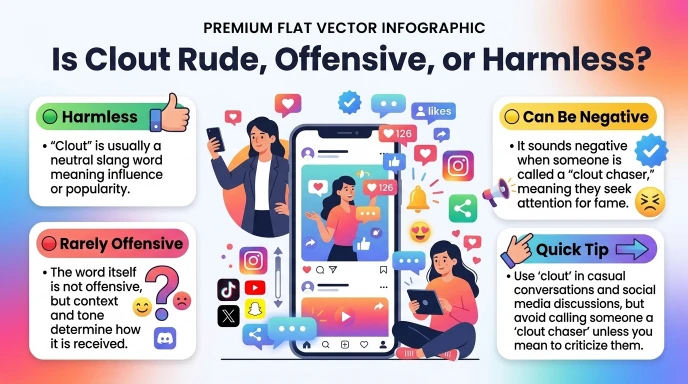
In most cases, clout is harmless slang. It simply refers to influence, popularity, or social status. However, the tone changes with the way people use it.
If someone says, “She has a lot of clout,” it is usually a compliment. It means she is respected or has a strong influence.
On the other hand, if someone says, “He’s only doing it for clout,” the phrase becomes critical. It suggests the person wants attention instead of having genuine reasons for their actions.
Overall, the word itself is not offensive. The surrounding words determine if it sounds positive, neutral, or negative.
Is It Appropriate at Work?
Although many people understand the term, it is informal slang. In professional emails, meetings, reports, or academic writing, words like “influence,” “reputation,” “authority,” or “credibility” sound more appropriate.
For example:
- Professional: “She has significant influence in the industry.”
- Informal: “She has a lot of clout.”
Can You Use It with Parents or Teachers?
Yes, if they understand modern internet slang.
Still, using plain English is often clearer. Some adults may know the word from its traditional meaning, while others may recognize its social media meaning.
Real-Life Examples of Clout Definition Slang
Friends Talking
Friend 1: “How did Alex get invited to that event?”
Friend 2: “He has a lot of clout in the local music scene.”
Text Message
Person A: “Why did that video suddenly get millions of views?”
Person B: “A famous creator shared it. That gave the channel more clout.”
TikTok
Creator 1: “Everyone is copying that dance.”
Creator 2: “The original creator already had plenty of clout.”
“I don’t post just for clout. I enjoy sharing my photography.”
“That user has built real clout by helping new members for years.”
Discord
“Ask Maya. She has enough clout in this server to organize community events.”
Gaming
“Our team captain has a lot of clout because he has won several tournaments.”
School
“Everyone listened because the student council president had plenty of clout.”
These examples show that clout usually means influence or popularity, although the tone changes with the situation.
Origin and History of Clout
The word “clout” is much older than the internet.
Historically, English speakers used it to describe influence, political power, or strong personal authority. Dictionaries have recorded this meaning for centuries.
Its modern slang meaning became popular during the 2010s as social media platforms grew. Influencers, musicians, YouTubers, streamers, and online creators started using “clout” to describe internet fame and social influence.
Later, phrases such as “clout chasing” and “doing it for clout” spread quickly across platforms like TikTok, YouTube, X, Instagram, Reddit, and Discord.
Today, younger internet users often connect the word with online popularity rather than traditional power.
Is the Meaning Changing?
Modern internet slang continues to evolve.
Today, people often use clout in three different ways:
- Genuine influence earned through talent or experience.
- Social media popularity and public recognition.
- Attention gained by creating drama or controversial content.
The first meaning is generally positive, while the third is often negative.
Similar Slang and Related Terms
| Slang | Meaning | Common Tone |
| Fame | Being widely known | Positive |
| Influence | Ability to affect others | Positive |
| Flex | Show off success | Neutral |
| Viral | Becoming popular quickly | Neutral |
| Hype | Excitement or publicity | Positive |
| Glow-up | Big personal improvement | Positive |
| Clout chaser | Someone seeking attention | Negative |
| Influencer | Person with online influence | Neutral |
Clout vs Fame
Fame means many people know who you are.
Clout means your popularity gives you influence over other people.
A celebrity may have fame, while a respected industry expert may have clout without being famous worldwide.
Clout vs Influence
These words are similar, but influence works in both formal and informal situations.
Clout vs Clout Chasing
Clout chasing describes trying to gain attention by using trends, controversy, or famous people.
The second phrase usually has a negative meaning.
When Should You Avoid Using It?
Although clout is common online, it does not fit every conversation.
Avoid using it when:
- Writing business emails.
- Preparing academic assignments.
- Speaking in formal presentations.
- Talking with people unfamiliar with internet slang.
- Discussing serious professional topics.
Instead, choose words like:
- Influence
- Reputation
- Authority
- Credibility
- Recognition
- Respect
Polite Alternatives to Clout
If you are writing professionally or speaking in a formal setting, these words are better choices than “clout.”
| Informal Slang | Polite Alternative |
| Clout | Influence |
| Clout | Authority |
| Clout | Reputation |
| Clout | Credibility |
| Clout | Recognition |
| Clout | Respect |
These alternatives work well in workplaces, schools, business meetings, and academic writing.
Why Do People Use Clout?
People use “clout” because it is a quick way to describe someone’s influence or popularity. The word has become part of everyday internet language and is widely understood on social media.
Common reasons people use it include:
- To describe someone with a large online following.
- To talk about influence within a community.
- To praise someone’s reputation.
- To criticize attention-seeking behavior.
- To explain why someone receives special attention.
The meaning depends on the context, so always consider the conversation before using the word.
Common Misunderstandings
Some people misunderstand the slang because it has more than one meaning.
Here are a few common misconceptions.
Clout Always Means Fame
This is not true.
Someone can have clout without being a celebrity. A respected teacher, business leader, or community member may have strong influence even if they are not famous.
Clout Is Always Negative
No.
The word itself is neutral. It becomes negative only when used in phrases like “clout chasing” or “doing it for clout.”
Clout Is Only Used Online
Not anymore.
Although social media helped popularize the slang, people also use it in everyday conversations to describe influence, reputation, or respect.
Frequently Asked Questions
Q1. What does “clout” slang mean?
Clout in slang means fame, influence, or popularity, especially on social media. It describes someone who has attention and can influence other people.
Q2. What is clout Gen Z slang?
In Gen Z slang, clout means online popularity, social status, or internet influence. It is often linked to platforms like TikTok, Instagram, and YouTube.
Q3. How to use clout?
Use “clout” when talking about someone’s influence or popularity. Example: “She has a lot of clout on TikTok because millions follow her.”
Q4. What is clout in social media?
On social media, clout means having a large audience, strong influence, or viral popularity. People with clout can easily attract views, likes, and followers.
Q5. Is clout chasing negative?
Clout chasing is usually seen as negative because it means seeking attention through drama, trends, or famous people. However, some people use the term jokingly or in a neutral way.
Q6. What is another word for clout?
Common words similar to clout include influence, power, authority, popularity, credibility, and status. The best choice depends on the context.
Conclusion
Clout definition slang refers to influence, popularity, or the ability to gain attention, especially on social media. Depending on the situation, it can describe genuine respect, online fame, or attention-seeking behavior. That is why understanding the context is important before using the word.
Today, “clout” appears across TikTok, Instagram, YouTube, Reddit, Discord, and everyday conversations. While it is suitable for casual communication, professional settings usually call for more formal alternatives such as “influence” or “credibility.” Knowing the difference helps you use the term naturally and avoid misunderstandings.
Learn More articles:
“Medieval Slang: A Journey Into the Language of Knights
“TP Meaning in Texting Slang: What Does TP Really Mean?”
Pirate Slang Insults Meaning in Text:Pirate Slang Insults Explained

I am Masson Caldwell, a language enthusiast and content writer at SlangAura. I write about internet slang, texting trends, and modern expressions to help readers understand the evolving world of online language with simple and clear explanations.