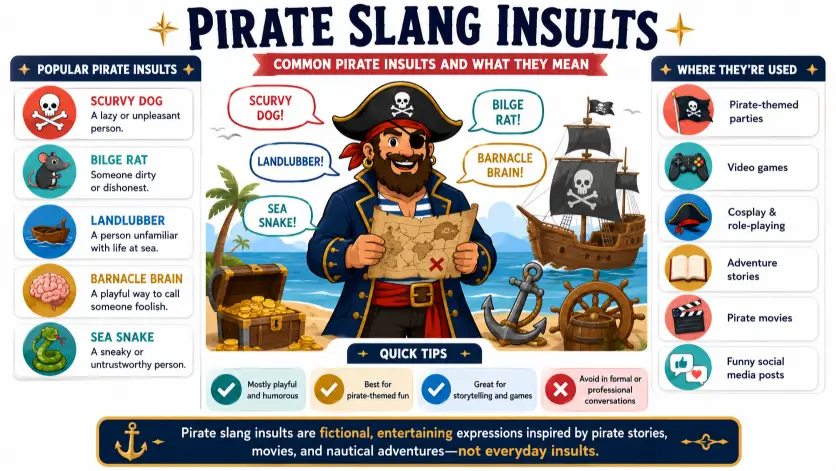
Pirate slang insults are colorful words and phrases that pirates in stories, books, and movies use to mock, threaten, or joke with other people.
Many people search for this term because they hear pirate expressions on Talk Like a Pirate Day, in films, online games, or social media and want to know what they really mean.
Unlike modern internet slang, pirate insults are mostly linked to historical fiction and entertainment rather than everyday conversations. While some expressions are inspired by real sailors from the Age of Sail, many popular pirate insults were created or popularized by books, movies, and TV shows.
Today, pirate slang insults are commonly used in pirate-themed parties, role-playing games, cosplay events, video games, memes, and humorous online posts. Most people use them for fun rather than to genuinely offend someone.
Quick Answer:
Pirate slang insults are humorous or mocking words and phrases associated with fictional pirates. They are mainly used in entertainment, role-playing, and pirate-themed conversations instead of serious real-life communication.
What Does Pirate Slang Insults Mean in Text?
Meaning of Pirate Slang Insults
The phrase pirate slang insults refers to old-fashioned or pirate style expressions used to tease, mock, or challenge someone. These insults are usually exaggerated and dramatic rather than truly offensive.
You may see them in:
- Pirate movies
- Adventure novels
- Video games
- Tabletop role-playing games
- Halloween events
- Pirate-themed social media posts
Unlike modern slang, pirate insults are designed to sound adventurous and entertaining.
Some examples include:
- “Scurvy dog!”
- “Bilge rat!”
- “Barnacle brain!”
- “Sea snake!”
- “Landlubber!”
These phrases help create the image of a rough sailor without using modern offensive language.
Pirate Slang Full Form or Definition
Does Pirate Slang Insults Have a Full Form?
No.
Pirate slang insults are not an acronym, so there is no full form.
Instead, the phrase simply refers to insulting words commonly associated with pirates in fiction and popular culture.
If someone searches for:
- pirate slang insults full form
- pirate slang meaning slang
- what does pirate slang insults stand for
the answer is the same:
It does not stand for anything. It is simply a collection of pirate-style insulting expressions.
Is Pirate Slang Insults Rude, Offensive, or Neutral?
Understanding the Tone
The tone depends entirely on the situation.
In pirate role-playing, these insults are usually playful and funny.
For example:
“Ye scurvy dog! Hand over the treasure!”
Nobody would normally feel insulted because everyone understands the pirate theme.
However, calling someone names outside a joking context may sound rude.
Tone Guide
| Situation | Tone |
| Pirate costume party | Funny |
| Video game roleplay | Playful |
| Children’s pirate event | Harmless |
| Historical reenactment | Theatrical |
| Serious conversation | Can sound rude or immature |
Always consider if everyone understands the joke before using pirate-style insults.
Where Is Pirate Slang Commonly Used?
Modern Uses
Today, pirate slang insults are mostly found in entertainment rather than everyday speech.
Common places include:
- Pirate-themed video games
- Dungeons & Dragons campaigns
- Fantasy role-playing games
- Pirate festivals
- Cosplay events
- Halloween parties
- Family board games
- Adventure books
- Pirate memes
- Funny TikTok videos
- Reddit roleplay communities
- Discord gaming servers
People rarely use pirate insults in normal texting unless they are joking with friends.
Origin and Background of Pirate Slang Insults
Where Did These Expressions Come From?
Many people believe pirates really talked exactly like movie characters.
The truth is more interesting.
Real pirates lived during the 1600s and 1700s. They came from different countries and spoke different dialects. There wasn’t one universal “pirate language.”
The famous pirate speech people recognize today became popular through:
- Adventure novels
- Stage performances
- Treasure Island by Robert Louis Stevenson
- Classic pirate films
- Television shows
- Modern games
Expressions like “Arrr!” became famous largely because actors created memorable pirate characters.
Many pirate insults were also inspired by sailor vocabulary. Sailors often joked with one another using creative nicknames based on ships, the sea, and hard life aboard vessels.
Because of this history, today’s pirate slang insults are a mix of real nautical language and fictional storytelling.
Why People Use Pirate Slang Insults
A Fun Way to Add Humor
Most people use pirate slang insults to make conversations more entertaining. These expressions sound dramatic, playful, and adventurous, which is why they remain popular in pirate-themed events and online communities.
People often use them to:
- Stay in character during role-playing games
- Make pirate-themed jokes
- Add humor to conversations
- Create funny social media posts
- Celebrate Talk Like a Pirate Day
- Make children’s pirate games more exciting
- Add personality to gaming streams and cosplay events
In nearly every case, the goal is entertainment rather than genuinely insulting someone.
Real-Life Examples of Pirate Slang Insults
Friendly
Friend: “You took the last slice of pizza!”
You: “Ye scurvy dog! I’ll get the next one.”
Casual
“I can’t believe you beat me again, you bilge rat!”
Argumentative
“If you keep cheating, you landlubber, nobody will want to play.”
Although this example sounds stronger, it is still much lighter than using modern offensive insults.
Gaming or Social Media
“Prepare to lose, ye barnacle brain! The treasure is mine!”
This type of playful language is common during pirate-themed games or livestreams.
Pirate Slang Insults Compared with Similar Slang
| Term | Meaning | Tone | Common Use |
| Pirate slang insults | Fictional pirate-style insults | Playful | Games, cosplay, stories |
| Sailor insults | Nautical insults used by sailors | Casual | Maritime culture |
| Medieval insults | Historical insults from the Middle Ages | Humorous | Renaissance fairs |
| Shakespearean insults | Creative insults from Shakespeare’s plays | Witty | Literature and theater |
| Modern internet slang insults | Current online insults | Varies from playful to offensive | Social media and texting |
Pirate insults generally sound less harsh than many modern internet insults because they are often used as part of a fictional theme.
When to Avoid Using Pirate Slang Insults
Choose the Right Situation
Even though pirate insults are usually humorous, they are not appropriate everywhere.
Avoid using them:
- In professional emails
- During job interviews
- In formal meetings
- At school presentations
- When talking to people who may not understand the joke
- During serious conversations
- When someone has asked you to stop joking
Using pirate insults in the wrong setting can make you appear unprofessional or disrespectful.
Polite Alternatives
If you want to keep the conversation fun without insulting anyone, try these alternatives:
- You silly goose!
- You little rascal!
- Nice try!
- You trickster!
- You sneaky one!
- You clever pirate!
- Better luck next time!
These expressions keep the playful mood while avoiding unnecessary offense.
Impact of Using Pirate Slang in Communication
The Good Side
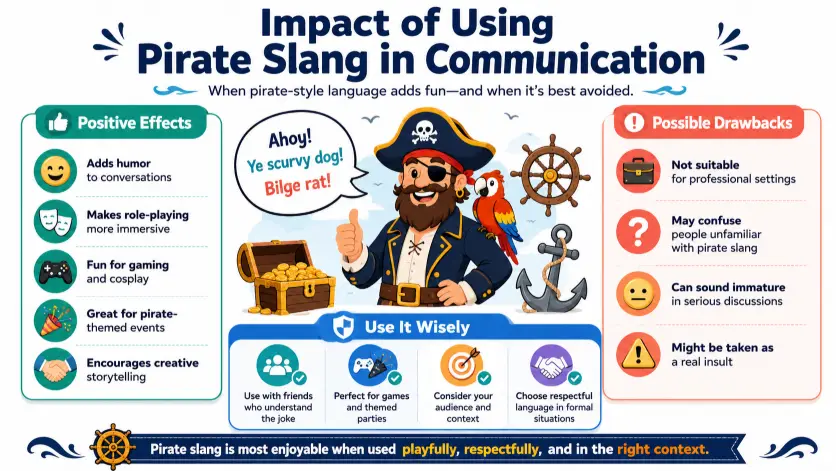
When used appropriately, pirate slang insults can:
- Make conversations more entertaining
- Encourage creativity
- Improve role-playing experiences
- Create memorable jokes
- Help build a fun group atmosphere
Possible Drawbacks
If used in the wrong context, they may:
- Confuse people unfamiliar with pirate culture
- Sound childish in formal settings
- Be mistaken for genuine insults
- Distract from serious discussions
The key is understanding your audience and choosing the right time to use them.
Is Pirate Slang Insults Safe for Social Media?
Yes, in most cases.
Because pirate slang insults are generally fictional and humorous, they are considered safe to use on social media platforms when shared in a playful context.
They are commonly seen in:
- Pirate memes
- Gaming communities
- Cosplay content
- Family-friendly pirate events
- Talk Like a Pirate Day posts
- Fantasy role-playing groups
However, avoid directing repeated insults at real people, even if the words seem harmless. Friendly humor works best when everyone understands the joke.
Frequently Asked Questions
What are pirate slang insults?
They are humorous pirate-style words and phrases used to tease or mock someone in a playful way, mainly in stories, games, and pirate-themed events.
Are pirate slang insults real historical language?
Some are inspired by old sailor vocabulary, but many became popular through novels, movies, and television rather than actual pirate speech.
What does pirate slang insults stand for?
Nothing. It is not an acronym and has no full form. The phrase simply refers to pirate-themed insulting expressions.
Are pirate insults offensive?
Most are mild and humorous. However, they can still sound rude if used in a serious conversation or directed at someone who does not appreciate the joke.
Where are pirate slang insults commonly used?
They are most common in pirate role-playing games, cosplay, adventure stories, pirate festivals, themed parties, and online gaming communities.
Can children use pirate slang insults?
Many pirate expressions, such as “scurvy dog” or “bilge rat,” are considered family-friendly when used in pirate-themed play. Parents and teachers should still encourage respectful communication.
Conclusion
Pirate slang insults are a fun part of pirate-themed language that adds humor, personality, and adventure to conversations. While many people associate these expressions with real pirates, most of the famous insults used today come from books, films, games, and popular culture rather than historical records.
Understanding the meaning, tone, and context of pirate slang insults helps you use them appropriately. They work best in role-playing games, themed events, social media posts, and friendly conversations where everyone understands the joke. In professional or serious situations, choosing more respectful language is always the better option.
if you are dressing up for Talk Like a Pirate Day, playing a pirate game, or simply looking for creative ways to joke with friends, pirate slang insults can make conversations more entertaining as long as they are used with good humor and consideration for your audience.

I am Masson Caldwell, a language enthusiast and content writer at SlangAura. I write about internet slang, texting trends, and modern expressions to help readers understand the evolving world of online language with simple and clear explanations.