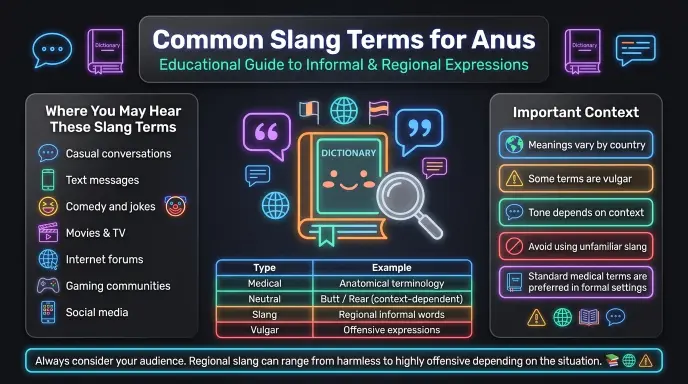
Informal slang for the anus appears in everyday conversations, internet memes, comedy, movies, and social media. People often search for these words because they encounter them online, hear them in conversations, or want to understand what someone meant without misunderstanding the context.
Many of these expressions are intended as jokes, insults, or casual slang rather than medical language. Their meaning, tone, and level of offensiveness can vary depending on the speaker, audience, and situation. Understanding the context helps you recognize when a term is humorous, rude, or inappropriate.
Quick Answer
Quick Answer: Informal slang for the anus refers to non-medical words people use to describe the body part. Most are considered vulgar or offensive and are best avoided in professional, academic, or formal settings.
What Does Informal Slang for the Anus Mean?
The phrase refers to everyday, non-medical expressions that people use instead of the anatomical word anus.
These expressions commonly appear in:
- Casual conversations
- Comedy shows
- Internet memes
- Social media comments
- Online gaming chats
- Reddit discussions
- Movies and TV dialogue
Although the underlying meaning is usually the same, different terms can carry different tones. Some are humorous, some are childish, and others are intended as insults.
Full Form or Definition
Unlike internet abbreviations such as “LOL” or “BRB,” slang terms for anatomical body parts usually do not have a full form.
Instead, they are simply informal nicknames or colloquial expressions that have developed over time through everyday speech and popular culture.
The medically correct term remains anus, while informal alternatives vary widely in tone and appropriateness.
Is It Rude, Offensive, or Neutral?
Most slang words referring to the anus are vulgar or offensive.
Their impact depends on:
| Situation | Appropriate? |
| Medical discussion | ✅ Use “anus” |
| School assignment | ✅ Use medical terminology |
| Workplace | ❌ Avoid slang |
| Social media jokes | Sometimes |
| Close friends | Depends on the group |
| Public speaking | ❌ Not recommended |
Using slang in the wrong setting may offend people or make communication seem unprofessional.
Where Is This Slang Commonly Used?
People may encounter these expressions on:
- Reddit discussions
- TikTok comedy videos
- Instagram memes
- Discord servers
- Online gaming voice chats
- Casual texting between friends
- Stand-up comedy
- Movies and television
In many online communities, these terms are used for humor rather than literal anatomical discussion.
However, moderation rules on some platforms may restrict vulgar language.
Origin and Background of the Slang
Most slang words for body parts develop naturally over many years rather than being invented by one person. They often begin as humorous nicknames, regional expressions, or insults before spreading through everyday conversations.
The internet has made these terms even more common. Social media, memes, online gaming, and discussion forums have helped many slang expressions reach a much wider audience. While some terms have existed for centuries, others became popular only after appearing in viral videos or online jokes.
It’s important to remember that popularity can change over time. A word that is common in one country or age group may be unfamiliar in another.
Why People Use This Slang
People use anatomical slang for different reasons depending on the situation and the tone they want to create.
Common reasons include:
- Adding humor to a conversation
- Making jokes among friends
- Expressing anger or frustration
- Creating exaggerated insults
- Quoting movies, TV shows, or internet memes
- Matching the informal style of online communities
The intention behind the word is often just as important as the word itself. A joking comment between close friends may be taken very differently if said to a stranger or coworker.
Tone and Context Matter
Even if two people use the same slang word, the meaning can feel different depending on how it is said.
Humorous
Sometimes the slang is used simply to make people laugh.
Example
“That joke was so ridiculous everyone burst out laughing.”
Playful
Close friends may use mild slang while teasing each other.
Example
“Stop being so dramatic!”
Insulting
Some slang terms are used as direct insults.
In these situations, they are intended to offend someone rather than describe anatomy.
Because of this, they can quickly turn a conversation into an argument.
Casual Internet Use
On Reddit, Discord, or gaming servers, slang may appear frequently because conversations are less formal.
However, community rules differ, and offensive language may still result in deleted posts or account penalties.
Comparison with Similar Informal Terms
There are many informal expressions that refer to the same anatomical body part or are used as insults. Their meanings and levels of offensiveness can vary.
| Type | General Tone | Common Usage |
| Medical term | Neutral | Healthcare, education, science |
| Informal nickname | Casual | Friends, jokes, comedy |
| Vulgar slang | Offensive | Arguments, crude humor |
| Insult based on anatomy | Highly offensive | Personal attacks |
| Euphemism | Mild | Family-friendly conversations |
Choosing the right language depends on your audience and the setting.
Why Context Changes the Meaning
The exact same word may have different effects depending on where it appears.
| Context | Interpretation |
| Medical article | Educational |
| Comedy show | Humorous |
| Text between friends | Casual |
| Online gaming | Trash talk or joking |
| Workplace email | Inappropriate |
| School presentation | Unprofessional |
This is why understanding context is more useful than memorizing a definition alone.
Polite Alternatives
If you need to discuss anatomy in a respectful or professional setting, use clear medical language instead of slang.
Good alternatives include:
- anus
- anal area
- rectal opening (when medically appropriate)
- lower digestive tract (when discussing anatomy generally)
Using medical terminology helps avoid confusion and keeps communication respectful.
Why Learning Slang Is Still Useful
Even if you never plan to use these expressions yourself, understanding them can help you:
- Understand online conversations
- Follow movie or TV dialogue
- Read internet comments more accurately
- Recognize when someone is joking
- Avoid accidentally using offensive language
- Improve your understanding of modern English slang
Knowing the meaning does not mean you need to use the words yourself. In many situations, choosing neutral language is the better option.
Real-Life Examples of Usage
The following examples demonstrate how anatomical slang may appear in conversation without encouraging its use. The examples avoid explicit terms while showing the tone and context.
Friendly Tone
Friends sometimes use crude slang jokingly when everyone understands it’s not meant seriously.
Examples:
- “He was joking around, and everyone knew not to take it personally.”
- “The group laughed because the comment was clearly meant as a joke.”
Casual Conversation
Informal slang may appear in relaxed conversations, especially among close friends.
Examples:
- “That comedy show used a lot of crude humor.”
- “Some internet memes rely on body-related slang for laughs.”
Argumentative Tone
Some anatomical slang is used as an insult during arguments. This is one reason these words are considered offensive.
Examples:
- “The discussion became hostile after people started using insulting slang.”
- “Using offensive language made the conversation worse instead of solving the problem.”
Gaming or Social Media Context
Online games, Reddit threads, Discord servers, and meme pages often contain crude slang. Moderators may remove posts that violate community guidelines.
Examples:
- “The moderator deleted several comments because they contained offensive language.”
- “Many gaming communities encourage respectful communication instead of insults.”
Impact of Using Slang in Communication
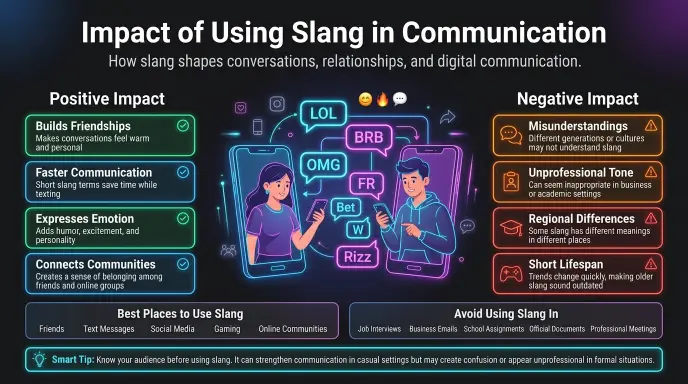
Using slang can make conversations feel informal and relatable, but it can also create misunderstandings.
Possible Benefits
- Can make jokes feel more natural.
- Helps people understand internet culture.
- Common in comedy and casual conversations.
Possible Drawbacks
- May offend readers or listeners.
- Can appear immature or unprofessional.
- Not suitable for workplaces or schools.
- May violate community guidelines on some platforms.
Before using slang, think about your audience and if the setting is appropriate.
Is It Safe for Social Media?
In general, reading or discussing slang in an educational context is fine, but using vulgar anatomical slang publicly may not always be appropriate.
Different platforms have different moderation policies. Repeated use of offensive language can lead to:
- Removed comments
- Reduced visibility
- Community warnings
- Temporary account restrictions in some communities
If your goal is to educate, explain the slang rather than use it casually or aggressively.
Comparison Table
| Expression Type | Formality | Offensive Level | Best Used In |
| Medical term | Formal | None | Healthcare, education |
| Informal nickname | Informal | Low to moderate | Casual conversations |
| Vulgar slang | Very informal | High | Generally best avoided |
| Euphemism | Neutral | Low | General conversation |
Frequently Asked Questions
What does slang for the anus mean?
It refers to informal or non-medical words people use instead of the anatomical term anus. Many of these expressions are considered vulgar.
Does slang for the anus have a full form?
No. These are ordinary slang words, not abbreviations or acronyms, so they do not have a full form.
Is this slang offensive?
Many terms are considered offensive or crude, especially in formal settings. The level of offensiveness depends on the specific word, context, and audience.
Where is this slang commonly used?
It may appear in comedy, memes, online gaming, social media discussions, casual texting, and informal conversations between friends.
Should I use these slang terms?
In most professional, educational, or public situations, it’s better to use the correct anatomical term or another respectful alternative.
Why do people search for these terms?
People often encounter them in movies, social media, memes, online games, or conversations and want to understand what they mean without using them themselves.
Conclusion
Understanding slang for anus can help you recognize informal language in conversations, memes, movies, and online communities. While these expressions are widely understood in some settings, many are considered vulgar or offensive and are not appropriate for professional, academic, or formal communication.
When discussing anatomy, the medical term anus is the clearest and most respectful choice. Learning the meaning of slang is useful for understanding modern English, but choosing language that fits your audience and the situation is even more important. Using respectful words helps avoid misunderstandings, keeps conversations inclusive, and ensures clear communication both online and offline.
Descover more articles:
Diesel Slang Meaning in Text:Diesel Slang Explained
La Semilla Dominican Slang Meaning in Text

I am Emma Collins, a content writer at SlangAura specializing in internet slang, texting abbreviations, and online language. I create simple and accurate guides to help readers understand modern slang easily and confidently.