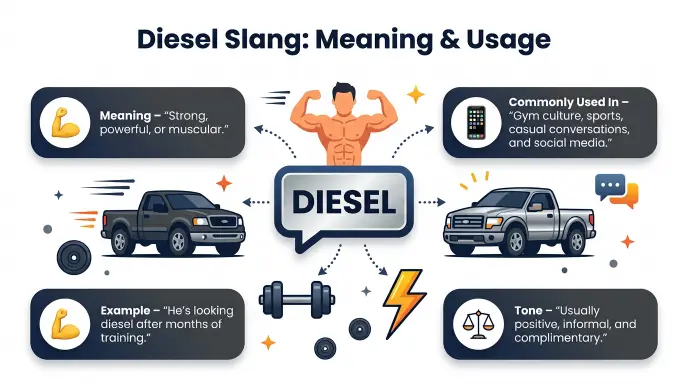
Diesel slang usually describes someone or something that is powerful, tough, muscular, energetic, or built for strength. Depending on the conversation, it can refer to a physically strong person, a high-performance vehicle, or anything that appears rugged and powerful.
Unlike many internet slang terms, diesel slang is based on the reputation of diesel engines, which are known for durability and strength.
Many people search for diesel slang after hearing it in conversations, sports, music, gyms, social media, or car communities. Because the meaning changes slightly depending on the context, it can be confusing for someone hearing it for the first time.
This guide explains what diesel slang means, where it’s commonly used, if it’s rude, its history, real-life examples, and when you should or shouldn’t use it.
Quick Answer: Diesel Slang
Diesel slang usually means strong, powerful, muscular, or highly energetic. It is most often used as a compliment and is generally considered neutral or positive, although the exact meaning depends on the context.
What Does Diesel Slang Mean?
The meaning of diesel changes depending on the situation. Unlike abbreviations such as “LOL” or “BRB,” diesel is a descriptive slang word.
In everyday conversation, calling someone diesel often means they look physically strong or have impressive strength.
For example:
- “That guy is diesel.”
- “She’s been working out she’s diesel now.”
Here, the speaker is complimenting someone’s physical build rather than criticizing them.
The slang can also describe objects that seem especially powerful or durable.
Examples include:
- A truck with lots of power.
- Heavy-duty equipment.
- Someone with incredible stamina.
- A sports player known for strength.
The exact meaning comes from the reputation of diesel engines, which are famous for producing high torque, lasting a long time, and handling difficult work.
Does Diesel Have a Full Form?
No.
Diesel is not an acronym or abbreviation.
It does not stand for anything in texting or internet slang.
Instead, the word originally refers to the type of engine named after Rudolf Diesel, the German engineer who invented the diesel engine in the late 19th century.
Over time, people began using the word figuratively to describe strength, endurance, and power.
So if someone searches:
- diesel full form
- what does diesel stand for
- diesel abbreviation
the answer is simple:
Diesel has no full form. It is a regular English word that later became slang.
Different Meanings of Diesel Slang
One reason people become confused is that diesel has more than one slang meaning. Context is important.
1. Diesel = Strong or Muscular Person (Most Common)
This is the meaning you’ll hear most often.
Someone described as diesel is:
- Muscular
- Well-built
- Powerful
- Athletic
- Physically intimidating
Examples:
- “Jake got diesel over the summer.”
- “Our linebacker is absolutely diesel.”
This meaning is common in:
- Gyms
- Sports teams
- Fitness communities
- Schools
- Casual conversations
The tone is usually positive and complimentary.
2. Diesel = Powerful Vehicle or Machine
Car enthusiasts often describe vehicles as diesel even when they aren’t literally powered by diesel fuel.
Here the slang emphasizes:
- Strength
- Pulling power
- Toughness
- Reliability
Example:
- “That truck is diesel.”
In this sentence, the speaker means the truck feels incredibly powerful.
This usage is common in:
- Car communities
- Truck forums
- Automotive videos
- Off-road groups
3. Diesel = High Energy or Intense
Sometimes people use diesel to describe a person who has exceptional energy or intensity.
Examples:
- “The crowd was diesel tonight.”
- “She came into the game diesel.”
Here, the word suggests enthusiasm, power, or unstoppable energy rather than physical size.
This usage is less common but still appears in sports and entertainment conversations.
4. Diesel as a Nickname
Some athletes, musicians, gamers, and online creators use Diesel as a nickname.
The nickname usually suggests:
- Strength
- Confidence
- Toughness
- Dominance
In these cases, Diesel isn’t describing fuel or engines it becomes part of someone’s identity or personal brand.
Which Meaning Is Most Common?
For most people, diesel slang simply means:
- Strong
- Muscular
- Tough
- Powerful
If someone says:
“He’s diesel.”
They’re almost always complimenting that person’s physical strength or impressive build.
Where Is Diesel Slang Commonly Used?
Diesel slang appears in several communities, but it is not one of the most common internet slang terms like “LOL” or “Rizz.” Instead, it’s used more often in conversations about fitness, sports, vehicles, and strength.
Gym and Fitness
This is where you’ll hear diesel the most.
People use it to compliment someone’s physique or strength.
Examples:
- “You’ve gotten diesel since last year.”
- “He’s looking diesel after months of training.”
The tone is positive and respectful.
Sports
Coaches, teammates, and fans sometimes use diesel to describe powerful athletes.
Examples:
- “Their running back is diesel.”
- “She’s diesel in the weight room.”
The slang highlights physical power rather than skill alone.
Car and Truck Communities
In automotive conversations, diesel may describe a vehicle that feels exceptionally powerful or durable.
Examples:
- “That’s a diesel truck.”
- “This engine is absolutely diesel.”
Sometimes the speaker means the vehicle actually has a diesel engine. Other times, they’re simply praising its strength. Context makes the difference.
Social Media
Although diesel isn’t a trending internet slang word, it occasionally appears on:
- TikTok fitness videos
- Instagram workout posts
- Reddit fitness discussions
- YouTube gym content
- Facebook fitness groups
Example caption:
“Feeling diesel after today’s workout. 💪”
Gaming
Gamers don’t commonly use diesel as gaming slang.
However, teammates might occasionally say:
“That tank build is diesel.”
Here it means the character or build is extremely strong.
This usage is informal and relatively uncommon.
Is Diesel Slang Rude, Offensive, or Harmless?
For most situations, diesel is harmless.
It is usually meant as a compliment.
Tone Guide
| Context | Tone |
| Complimenting someone’s strength | ✅ Positive |
| Talking about powerful vehicles | ✅ Neutral |
| Sports conversations | ✅ Positive |
| Friendly conversations | ✅ Casual |
| Workplace | ⚠️ Depends on context |
Unlike many slang terms, diesel is not generally considered offensive or insulting.
Could Someone Take It the Wrong Way?
Sometimes.
Calling someone diesel focuses on their physical appearance or strength.
Some people may appreciate the compliment.
Others may prefer compliments that don’t focus on their body.
When talking to someone you don’t know well, it’s usually better to compliment their effort instead.
For example:
- “You’ve been working hard.”
- “You look really fit.”
These are often safer choices in professional or formal settings.
Real-Life Examples of Diesel Slang
Here are examples showing how people naturally use the word.
Friendly Conversation
Alex: Have you seen Ben lately?
Chris: Yeah, he’s gotten diesel since joining the gym.
Gym Conversation
Trainer: You’ve added a lot of muscle.
Client: Thanks! I’m finally starting to feel diesel.
Sports Conversation
Coach: Our defensive line looks diesel this season.
Player: We’ve been training hard every day.
Family Conversation
Brother: Wow, you’ve gotten strong.
Sister: Dad keeps calling me diesel now.
Text Message Example
Friend: You still lifting every day?
You: Yep! Trying to get diesel before summer.
Social Media Caption
- “Feeling diesel after leg day. 💪”
- “Hard work pays off.”
- “Getting stronger every week.”
Reddit Example
“I’ve been lifting for eight months and finally feel diesel.”
Origin and History of Diesel Slang
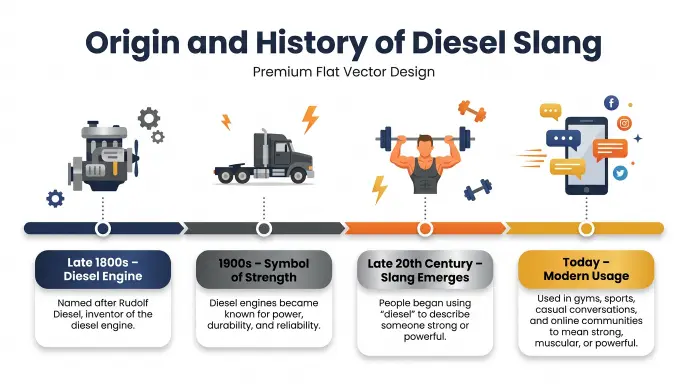
The word diesel originally referred to the diesel engine, invented by Rudolf Diesel in the late 1800s.
Diesel engines became known for qualities such as:
- Strength
- Reliability
- Endurance
- Heavy-duty performance
- Long-lasting power
Because of these qualities, people gradually started using diesel as a metaphor.
Instead of describing only engines, it began describing people, vehicles, and even performances that seemed exceptionally powerful.
When Did It Become Slang?
There isn’t a single documented date when diesel became slang.
Its figurative use developed gradually through:
- Sports culture
- Gym communities
- Automotive enthusiasts
- Everyday American English
Unlike internet slang that spreads quickly through social media, diesel evolved over many years through spoken language.
Is Diesel Slang Still Popular?
Yes, but its popularity depends on the community.
It remains common in:
- Fitness circles
- Weightlifting
- Bodybuilding
- Sports teams
- Automotive communities
However, younger social media users are now more likely to use newer slang such as:
- Built
- Jacked
- Ripped
- Swole
So while diesel is still understood, it isn’t as trendy among teenagers as some newer expressions.
It sounds natural rather than outdated, especially among adults and sports enthusiasts.
Similar Slang and Related Terms
If you’ve heard diesel slang, you may also come across other words that describe strength, muscle, or power. While they have similar meanings, each has its own tone and context.
| Slang | Meaning | Tone | Common Usage |
| Diesel | Strong, muscular, powerful | Positive | Gym, sports, casual conversation |
| Jacked | Very muscular | Informal | Fitness, bodybuilding |
| Swole | Muscular after working out | Casual | Gym, social media |
| Ripped | Very lean with defined muscles | Positive | Fitness, bodybuilding |
| Built | Naturally or intentionally muscular | Neutral | Everyday conversation |
| Beast | Extremely strong or skilled | Positive | Sports, gaming, fitness |
| Tank | Big, strong, hard to move | Casual | Sports, gaming |
Although these words are similar, diesel often suggests a mix of strength, endurance, and toughness, rather than just appearance.
When Should You Avoid Using Diesel Slang?
Even though diesel is generally harmless, there are situations where it may not be the best choice.
1. Professional Settings
Avoid using slang in formal workplaces, business emails, or interviews.
Instead of saying:
“Our new manager is diesel.”
Say:
“Our new manager has a strong leadership style.”
2. Academic Writing
School assignments and research papers should use formal language.
Replace slang with words like:
- Strong
- Powerful
- Athletic
- Muscular
3. When Someone May Feel Uncomfortable
Not everyone likes comments about their body or appearance.
Even if you mean it as a compliment, consider if it’s appropriate before saying someone looks “diesel.”
4. International Conversations
People outside North America may not recognize the slang meaning.
If your audience is international, clearer words like strong or powerful may avoid confusion.
Polite Alternatives
If you want to compliment someone without using slang, try these expressions:
- Strong
- Athletic
- Fit
- Muscular
- Powerful
- Well-built
- In great shape
- Healthy-looking
These alternatives work well in both casual and professional conversations.
Why Do People Use Diesel Slang?
People use diesel because it’s a quick and expressive way to describe impressive strength or power.
Common reasons include:
- To compliment someone’s physique.
- To describe a powerful athlete.
- To praise a tough vehicle or machine.
- To highlight endurance and resilience.
- To add personality to casual conversations.
The word paints a vivid picture without needing a long explanation.
Common Misunderstandings
Myth 1: Diesel Always Refers to Fuel
False.
In slang, diesel often has nothing to do with fuel. It describes strength or power.
Myth 2: Diesel Is an Internet Abbreviation
False.
It isn’t an acronym like LOL, BRB, or IMO.
It’s a regular English word that gained a slang meaning over time.
Myth 3: Diesel Is Always About Muscles
Not always.
It can also describe:
- Powerful vehicles
- Tough equipment
- High-energy performances
- Strong athletes
The exact meaning depends on the context.
Frequently Asked Questions
What does diesel slang mean?
Diesel slang usually means strong, muscular, powerful, or tough. It is commonly used as a compliment.
Does diesel have a full form?
No. Diesel is not an abbreviation or acronym. It does not stand for anything.
Is diesel slang offensive?
No. In most situations, it is considered neutral or positive. However, avoid using it if someone may not appreciate comments about their appearance.
Is diesel used on social media?
Yes. You’ll occasionally see it on TikTok, Instagram, Reddit, YouTube, and fitness forums, especially in workout or sports-related posts.
Can I use diesel slang at work?
It’s best to avoid slang in professional settings unless you’re speaking casually with colleagues who understand the context.
Is diesel still popular?
Yes, especially in fitness, bodybuilding, sports, and automotive communities. While it’s not the newest slang term, it’s still widely understood and used.
Conclusion
Diesel slang is a positive, informal expression used to describe someone or something that is strong, muscular, powerful, or built to last. Inspired by the durability and performance of diesel engines, the term has become a compliment in fitness, sports, and automotive communities.
Although diesel isn’t an internet abbreviation or a trendy social media buzzword, it remains a familiar part of everyday slang. The key to using it correctly is understanding the context. In casual conversations, it usually sounds natural and complimentary. In professional or formal situations, however, it’s better to choose more standard words like strong, athletic, or powerful.
if you hear it in the gym, on the sports field, or in online discussions, you’ll now understand exactly what diesel slang means and when it’s appropriate to use it.
Get more information:
WTC Meaning Slang:What Does WTC Mean in Slang?

I am Emma Collins, a content writer at SlangAura specializing in internet slang, texting abbreviations, and online language. I create simple and accurate guides to help readers understand modern slang easily and confidently.