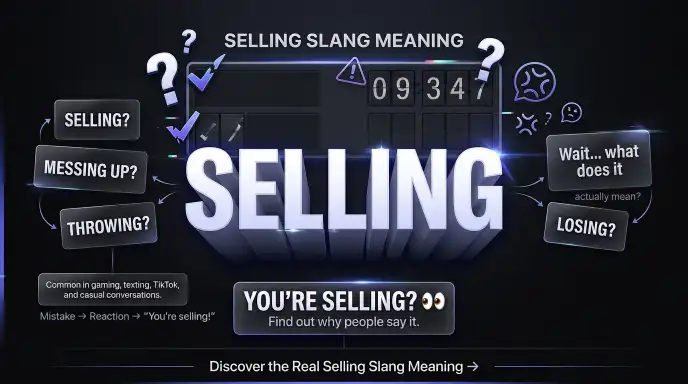
“Selling” in slang usually means messing up, making poor plays, or hurting your chances of success. When someone says, “You’re selling,” they often mean that your mistake could cause you or your team to lose.
The selling slang meaning can be confusing because “selling” normally refers to giving something to someone in exchange for money. Online, however, the word has taken on a different casual meaning.
You may see it in gaming chats, sports discussions, TikTok comments, Discord servers, group texts, and other online spaces.The exact meaning can also change with the situation. Someone can “sell” a game by making a bad play.
“sell” an opportunity by making a poor decision, or jokingly say “I sold” after making a simple mistake. This guide explains the selling slang meaning with clear examples so you can understand what people mean when they use it.
Quick Answer: Selling Slang Meaning
The selling slang meaning is making a mistake, performing badly, or doing something that hurts your chances of getting a good result. It is especially common in gaming and sports.
For example, if a player makes a terrible move near the end of a close match, another player might say, “Bro, you’re selling.” This usually means, “You are hurting our chances of winning.”
The phrase can be serious, playful, or teasing depending on the tone and situation.
What Does the Selling Slang Meaning Mean?
In casual online language, selling means messing up when success is still possible.
The idea is simple: a person has a good position but makes choices that start to take that advantage away. The person may not be trying to lose. They might simply be making bad decisions, missing important chances, or playing poorly.
For example:
“We were winning easily, but our team started selling.”
This means the team began making mistakes that could turn a likely win into a loss.
You may also see these common forms:
| Phrase | Meaning |
| “You’re selling.” | You are making mistakes right now. |
| “Stop selling.” | Stop making bad plays or decisions. |
| “I’m selling.” | I am messing up. |
| “I sold.” | I made a mistake and ruined my chance. |
| “He sold the game.” | His mistakes badly hurt the chance of winning. |
| “They are selling hard.” | They are making many serious mistakes. |
The slang is often used as a quick reaction. Instead of explaining everything that went wrong, someone can simply say, “You’re selling.”
Why Does “Selling” Mean Failing?
The slang use plays on the idea of giving away a good result.
Imagine a team is close to winning. One player then makes several poor decisions and gives the other team an advantage. Other players may feel that the person is practically “selling” the win away.
This is why the expression works especially well in competitive settings.
It does not mean that the person is literally selling something.
Is “Selling” an Acronym or Full Form?
No. “Selling” is not an acronym and does not have a special full form in slang.
It is the normal English word selling, but online communities use it in a newer informal sense. The standard verb relates to exchanging something for money, while the slang use describes poor performance, a bad decision, or a lost opportunity.
So if you search for “selling slang full form,” there is no set of letters that the word expands into.
Selling vs. “Sell”
The slang comes from the verb sell.
For example:
- Sell → “Don’t sell this game.”
- Selling → “You’re selling.”
- Sold → “I sold that round.”
The form changes with the sentence, but the basic slang idea stays connected to messing up or giving away an advantage.
Different Meanings of “Selling”
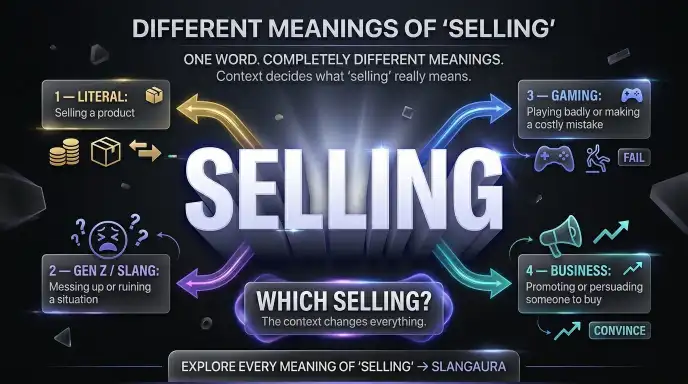
“Selling” can describe several situations. These meanings are related, but they should not be mixed together.
1. Selling Means Playing Badly
This is one of the most common uses in gaming and competitive conversations.
A person is “selling” when their poor play is hurting their team or their own chances.
For example:
“Why did you push alone? You’re selling.”
The speaker is criticizing the player’s decision because it may put the team in a worse position.
This use does not require the person to lose the entire game. Even one important mistake can lead someone to say, “You’re selling.”
2. Selling Means Ruining a Good Opportunity
The slang can also move outside gaming.
Someone may say a person is “selling” when they have a good opportunity but make choices that could ruin it.
For example:
“You had the perfect chance to ask for the job, then you left without saying anything. You sold.”
Here, “sold” means you ruined your opportunity.
This broader use shows why the slang can appear in everyday conversations, not only in games.
3. Selling Means Hurting Your Own Situation
People can also use the word when they are making their own situation worse.
For example:
“I was saving money, then I bought another expensive jacket. I’m selling.”
The speaker is joking that their own decision is working against their goal.
This use is usually playful and does not involve competition.
4. “Selling” Can Be Connected to Betrayal in Other Expressions
There is another meaning to watch for.
Phrases such as “sell out” or “sell someone out” can refer to abandoning principles, loyalty, or another person for personal benefit. That is a different expression from the common gaming phrase “you’re selling.”
For example:
“He sold out his old team for money.”
Here, the meaning is not simply “he played badly.”
This is why context matters. “You’re selling” in a game and “you sold someone out” should not automatically be treated as the same slang meaning.
“Selling” vs. “Sold”: What Is the Difference?
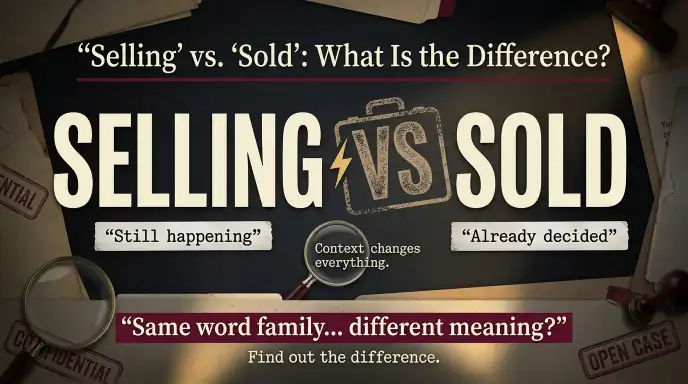
One useful detail that is often missed is the difference between selling and sold.
“Selling” usually describes what someone is doing now.
“You’re selling this round.”
The person is currently making mistakes.
“Sold” usually describes a mistake that already happened.
“I sold that round.”
The person is admitting that they already messed up.
This difference makes the expressions useful in fast conversations.
| Phrase | Time | Example |
| “You’re selling.” | Happening now | “You’re selling, stay focused.” |
| “I’m selling.” | Happening now | “I’m selling today.” |
| “I sold.” | Already happened | “I sold that final play.” |
| “He sold.” | Already happened | “He sold at the end.” |
Intentional Selling vs. Accidental Selling
Another important point is that “selling” does not automatically mean someone is trying to lose.
A player can be selling because they:
- Made a bad decision
- Missed an easy chance
- Lost focus
- Panicked under pressure
- Misread the situation
- Simply played badly
If someone intentionally ruins a game, “throwing” may be a better word.
For example:
“He missed the shot because he panicked. He was selling.”
This suggests a mistake.
But:
“He intentionally gave the enemy team the win.”
That is much closer to throwing.
The two terms can overlap in casual speech, but they are not exact synonyms.
How Serious Is “Selling”?
The phrase can describe anything from a small mistake to a major failure.
Light use
“Bro, you sold that easy question 😂”
This may simply mean someone made a funny mistake.
Moderate use
“You’re selling the match. Focus!”
The speaker is genuinely frustrated.
Strong use
“You sold the entire game.”
This suggests the person’s mistakes had a major effect on the result.
Tone matters as much as the words. Friends may use “selling” as a joke, while teammates in a serious competition may use it as direct criticism.
Key Takeaway So Far
The simplest way to remember the selling slang meaning is:
Selling = making mistakes or poor decisions that hurt your chance of success.
In gaming, it usually means playing badly and hurting the team’s chance to win. In everyday online talk, it can also mean ruining a good opportunity or making your own situation worse.
The words “selling,” “I sold,” and “you’re selling” are closely related, but their tense changes how people use them. Most importantly, selling does not automatically mean intentional failure.
Where Is “Selling” Commonly Used?
“Selling” is most common in gaming, sports, social media, texting, and casual online conversations. The basic idea stays the same, but the tone can change from one platform to another.
Gaming and Competitive Matches
Gaming is one of the clearest places to see this slang.
A player may be called “selling” when they make a bad move, ignore useful information, waste an advantage, or make a mistake that could cost the team a win.
For example:
“We had the round, but you sold at the last second.”
The speaker means that the player made a mistake that changed a promising situation.
You may see the expression in communities around competitive games, team-based games, ranked matches, and gaming chats.
Sports Discussions
The expression also appears in sports conversations.
Fans may call a player “selling” when they miss an important shot, make a costly mistake, or perform badly during a key part of a game.
“They were up by 15 and still lost. They were selling in the fourth quarter.”
Here, the phrase expresses frustration about a team’s poor performance.
Sports fans can also use it jokingly when a favorite player makes a silly mistake.
TikTok and Instagram
On TikTok and Instagram, “selling” often appears in comments under clips showing someone making an obvious mistake.
For example:
“He had one job and started selling 😭”
The commenter is usually being humorous rather than making a serious accusation.
Social media also makes the phrase useful outside sports and gaming. Someone might call a person “selling” after watching them ruin a date, miss an opportunity, or make an awkward decision.
Discord
Discord conversations can be more direct because many users are talking in real time.
A player might type:
“Stop selling and rotate!”
This means the speaker wants the teammate to stop making poor decisions and play more effectively.
The phrase can sound harsher in a live match because there is little time to explain what went wrong.
Texting
In private messages, friends often use “selling” as playful criticism.
“You told him the whole story? You’re selling 😂”
The speaker may mean that the friend accidentally made their own situation worse.
This is a good example of how the slang has moved beyond gaming.
How Does “Selling” Change by Context?
The word does not have one fixed emotional tone. The situation, relationship, and timing all affect how it sounds.
| Context | Likely meaning | Typical tone |
| Gaming | Playing badly or making costly mistakes | Frustrated or playful |
| Sports | Hurting the team’s chances | Critical or humorous |
| Texting | Making a bad personal decision | Teasing |
| TikTok | Failing or ruining an opportunity | Humorous |
| Discord | Making poor plays | Direct |
| Workplace | Performing poorly | Informal and potentially rude |
A close friend saying “you’re selling” may be harmless teasing. A coach, manager, teacher, or stranger saying the same thing could sound insulting.
That is why understanding the context is more useful than treating “selling” as a word with one fixed tone.
Is “Selling” Rude, Offensive, or Harmless?
“Selling” is not a profanity or inherently offensive slang term. Still, it can be rude when you use it to blame someone for a mistake.
The phrase often carries a negative judgment because you are saying that another person is hurting the outcome.
When It Sounds Playful
“Bro sold the easiest round ever 😂”
Between friends, this may simply be a joke.
When It Sounds Critical
“You keep selling every match.”
This sounds more serious because it attacks the person’s performance.
When It Can Become Hurtful
Repeatedly calling someone a “seller” after every mistake can become discouraging. This is especially true when the person is already frustrated or struggling.
So the word itself is not offensive, but how and when you use it matters.
Can You Use “Selling” at Work or School?
You can use slang casually with people who understand it, but “selling” is usually not the best choice for formal communication.
At work, saying:
“You’re selling the project.”
may sound like an insult or an accusation.
A clearer alternative would be:
“That decision could hurt the project.”
At school, the same rule applies. Friends may understand “you’re selling,” but a teacher or formal assignment is not the right setting for this expression.
Use professional language when the goal is to explain a real problem rather than tease someone.
Real-Life Examples of Selling Slang
Example 1: Gaming
Alex: “Why did you leave the objective?”
Sam: “I thought they were coming from the other side.”
Alex: “Bro, you’re selling 😭”
Here, “selling” means Sam made a poor decision that could hurt the team’s chances.
Example 2: Sports
“He missed the free throw with five seconds left. The fans said he was selling.”
The phrase describes a costly mistake during an important moment.
Example 3: Texting
Friend: “I ignored her message for three days.”
You: “You’re selling yourself.”
Here, the speaker means the person may be damaging their own chance with someone.
Example 4: TikTok
“She had the perfect comeback and said nothing. She sold.”
The person missed a good opportunity.
Example 5: Discord
“We were almost done with the raid, and he disconnected. We’re cooked.”
If another player had repeatedly made poor decisions before disconnecting, teammates might call that player “selling.”
Example 6: Everyday Life
“I planned to study all evening, then I watched videos for four hours. I sold.”
The speaker is joking about making a decision that worked against their own goal.
Selling vs. Failing: Are They the Same?
Not exactly.
Failing is a broad word for not succeeding. Selling usually suggests that the person had a chance to succeed but made choices that damaged that chance.
Compare these:
“I failed the test.”
This only tells us that the person did not pass.
“I sold the test.”
This sounds like the person believes they made mistakes that caused them to lose a good chance of doing well.
The second phrase adds a sense of self-inflicted failure.
That distinction is useful when reading comments online.
Selling vs. Fumbling
“Fumbling” is another related slang term.
Someone is fumbling when they mishandle a good opportunity, especially in relationships, social situations, or personal decisions.
For example:
“She liked him, but he kept ignoring her. He’s fumbling.”
“Selling” can describe a similar situation, but it often has a stronger connection to performance, competition, or actively hurting an outcome.
A simple way to remember the difference:
- Selling: hurting your chances through bad actions or mistakes.
- Fumbling: mishandling a good opportunity.
- Failing: not achieving the desired result.
- Throwing: deliberately or seriously giving away a winning position.
- Choking: failing under pressure.
These meanings overlap, but they are not interchangeable in every sentence.
Selling vs. Choking
The difference between “selling” and “choking” is also worth knowing.
Selling can happen at any point.
“He was selling from the first round.”
This means he was making poor plays early.
Choking usually involves pressure.
“He choked in the final round.”
This suggests the person failed when the moment became important or stressful.
A person can therefore be selling without choking, and someone can choke without people calling them a seller.
When Should You Avoid Using “Selling”?
Avoid the slang when the situation needs respect, clarity, or professional language.
You should think twice before using it when:
- Speaking to a teacher
- Writing a school assignment
- Talking to a manager
- Sending a formal work message
- Giving serious feedback
- Speaking to someone you do not know well
- Discussing a sensitive mistake
Instead of:
“You’re selling.”
try:
“I think that decision hurt our chances.”
Instead of:
“You sold the project.”
try:
“That choice may have caused the problem.”
These alternatives explain the issue without sounding like an online insult.
Why Do People Use “Selling”?
People use “selling” because it is short, expressive, and easy to understand within online culture.
In a fast gaming match, nobody wants to give a long explanation about a teammate’s mistake. Saying “stop selling” communicates the complaint immediately.
The phrase also works well as humor.
Someone can laugh at their own mistake and say:
“I sold so badly.”
This turns a frustrating moment into a joke.
Another reason is that “selling” can describe more than the final result. A team may still be winning while someone is “selling” because their decisions are making the situation worse.
Who Usually Uses “Selling”?
The term is especially common among people involved in:
- Online gaming
- Sports communities
- Competitive chats
- Meme culture
- Social media discussions
- Group messaging
You do not need to be a gamer to understand or use it. The meaning has spread into everyday online conversations.
However, the slang is most natural in casual settings. It is not a formal English expression.
Key Context Tip
If you see “selling” in a gaming or sports comment, first think:
“They are saying someone is making mistakes that could cost the win.”
If you see “I sold” in a personal conversation, think:
“I messed up or ruined my own opportunity.”
If you see “sell out” or “sell someone out,” stop and check the sentence again. That is a different expression with a different meaning.
Context is the key to understanding the word correctly.
Common Misunderstandings About “Selling”
“Selling” is easy to misunderstand because the word already has a normal English meaning. In slang, the intended meaning usually comes from the situation around it.
“Selling” Does Not Always Mean Intentional Failure
One of the biggest misunderstandings is assuming that a person is trying to lose.
Usually, selling simply means making mistakes or hurting your own chances. Someone can sell because they are distracted, nervous, inexperienced, or simply having a bad day.
If someone intentionally ruins a game, throwing may describe the situation more accurately.
“Selling” Does Not Always Mean Losing
A person can be “selling” even when they have not lost yet.
For example:
“We’re still winning, but you’re selling.”
The speaker means the person’s current actions are making the situation worse.
The final result has not happened yet.
“Selling” and “Sold” Are Closely Related
“Selling” usually describes an action that is happening now.
“You’re selling.”
“Sold” often describes a mistake that has already happened.
“I sold that round.”
Both expressions point to a similar idea, but the tense changes the sentence.
“Selling Me” Can Have a Different Meaning
The phrase “selling me” needs extra attention because it can mean more than ordinary poor performance.
In some contexts, “selling me” can mean making the speaker look bad, betraying them, or putting them in a difficult position.
In gaming, it can also mean that a teammate’s poor play is hurting the speaker’s chances.
For example:
“Stop selling me in ranked.”
Here, the speaker is blaming a teammate for making the match harder.
That is different from:
“I’m selling.”
The second sentence usually means the speaker is admitting that they are making mistakes themselves.
How the Tone of “Selling” Changes the Meaning
The same phrase can sound very different depending on who says it and why.
Friendly Joke
“Bro, you sold that so badly 😂”
This is likely playful teasing between friends.
Frustrated Reaction
“Stop selling! We need to win this.”
The speaker is genuinely annoyed.
Self-Deprecating Humor
“I’m selling today. I can’t hit anything.”
The person is making fun of their own poor performance.
Serious Criticism
“You keep selling every important round.”
This sounds much more negative because the speaker is repeatedly blaming someone.
So, tone is part of the meaning. Do not judge the phrase only by the word itself.
Why “Selling” Works So Well in Online Slang
The expression is useful because it communicates a complicated idea in only a few words.
When someone says:
“You’re selling.”
They may be communicating several ideas at once:
- You had a good chance.
- You are making mistakes.
- Your choices are hurting the outcome.
- You could still recover.
- You need to change what you are doing.
That makes the slang especially useful in fast-moving conversations such as gaming chats and live sports discussions.
It also has a humorous quality. Saying “I sold” can turn an embarrassing mistake into something easier to laugh about.
Frequently Asked Questions
Q1. What does “selling” mean in Gen Z slang?
In Gen Z slang, “selling” means making a mistake, performing badly, or ruining a situation. It is often said jokingly when someone fails at something important.
Q2. What does it mean if someone is selling?
If someone is “selling,” they are usually doing something badly or making avoidable mistakes. The phrase is common when someone is hurting their own chances of success.
Q3. What does “selling” mean in gaming slang?
In gaming slang, “selling” means playing badly and causing your team to lose an advantage, round, or game. It can describe a player who makes a costly mistake.
Q4. What does it mean if someone says “I’m selling”?
When someone says “I’m selling,” they usually mean they are messing up or making mistakes. It can also be a humorous way to admit that they are performing badly.
Q5. What does “selling” mean in slang?
In slang, “selling” usually means messing up, failing, or throwing away a good opportunity. The exact meaning depends on the situation and context.
Q6. What does “selling me” mean in slang?
“Selling me” can mean someone is making you look bad, betraying your trust, or putting you in a difficult situation. In gaming, it can mean a teammate is playing badly and hurting your chances of winning.
Conclusion
The selling slang meaning is mainly about messing up, performing badly, or hurting your chances of success. In gaming, it often describes a player whose mistakes are costing the team an advantage. In everyday online conversations, it can also describe someone who ruins a good opportunity or makes their own situation worse.
The expressions “you’re selling,” “I’m selling,” and “I sold” are closely related, but they describe slightly different situations based on tense and context. “Selling me” can also carry a different meaning when it refers to betrayal, embarrassment, or putting someone in a difficult position.
The best way to understand the word is to look at the full conversation. If you see it in a game, it probably refers to poor play. If you see it in a personal conversation, it may mean someone messed up an opportunity.
More Slang in Contex:
Irish Slang for Pretty Girl: Common Terms and Their Meanings

I am Emma Collins, a content writer at SlangAura specializing in internet slang, texting abbreviations, and online language. I create simple and accurate guides to help readers understand modern slang easily and confidently.