Rico is a Spanish word that commonly means “rich” or “delicious,” but in casual conversations, it can also mean “attractive,” “cute,” or “really good.” Its exact meaning depends on the sentence, the speaker, and the Spanish speaking region.
You may see rico in TikTok comments, Instagram captions, Snapchat messages, WhatsApp chats, or conversations about food, money, and relationships. Sometimes people use it to compliment a meal; other times, they use it to describe someone they find attractive.
If you searched for rico meaning, you may be wondering if it is Spanish slang, a romantic compliment, or a word with a hidden meaning in texting. The answer is that it can have several meanings, but it is not an acronym or abbreviation.
This guide explains how the word works in everyday Spanish, what it can mean on social media, how to respond when someone says it, and how to understand its tone without confusing one meaning with another.
Quick Answer: What Does Rico Mean?
Rico usually means “rich” or “delicious” in Spanish. In informal conversations, it may also describe someone or something as attractive, cute, pleasant, or enjoyable.
Here are the main meanings:
- Rich or wealthy: Él es rico. : He is rich.
- Delicious or tasty: La comida está rica. : The food is delicious.
- Attractive or sexy: Estás muy rico. : You look very attractive or sexy, depending on the context and region.
- Cute or lovely: In some contexts, rico can describe a cute child or someone pleasant.
- Enjoyable or satisfying: ¡Qué rico! can express that something feels or tastes wonderful.
The feminine form is rica, while the plural forms are ricos and ricas. The correct form depends on the noun or person being described.
Important: When someone says rico in a text, do not assume they are flirting. They might be talking about food, money, a pleasant experience, or someone’s appearance.
1. Rico Meaning in Text
The meaning of rico in a text message depends on what the conversation is about. Unlike abbreviations such as IDK or BRB, it is a regular Spanish word with several established meanings.
Rico means rich or wealthy
The most direct meaning of rico is rich, especially when describing someone who has a lot of money or possessions.
For example:
- Mi tío es rico. : My uncle is rich.
- Quiero ser rico algún día. : I want to be rich someday.
- Esa familia es muy rica. : That family is very wealthy.
If someone writes soy rico in a message, they generally mean “I am rich.” They could be serious, joking, or exaggerating, so the rest of the conversation matters.
For example:
A: I just bought a new car.
B: Wow, eres rico 😂
Translation: “Wow, you’re rich.”
In this situation, the speaker may be teasing their friend rather than making a serious statement about their finances.
Rico means delicious or tasty
Another very common meaning is delicious. Spanish speakers often use rico to describe food and drinks that taste good.
Examples include:
- El pastel está rico. : The cake is delicious.
- Esta pizza está muy rica. : This pizza is really tasty.
- El café está rico. : The coffee tastes good.
The expression ¡Qué rico! is particularly useful. Depending on the situation, it can mean “How delicious!”, “That tastes so good!” or “How lovely!”
For example:
A: I made chocolate cake.
B: ¡Qué rico! 😍
Translation: “That looks delicious!” or “How delicious!”
This is one of the easiest uses to recognize because food, cooking, or eating is usually part of the conversation.
Rico can mean attractive or sexy
In some Latin American contexts, rico can be used informally to describe someone as physically attractive or sexy. This meaning is more personal than the ordinary description of delicious food.
For example:
- Estás muy rico. : You look very attractive or sexy.
- Ese chico está rico. : That guy is attractive or sexy.
- Qué rico te ves. : You look really good or sexy.
These expressions can sound flirtatious. The exact strength of the compliment depends on the country, relationship, and tone.
If a romantic partner sends you estás muy rico, they may be complimenting your appearance. However, the same interpretation should not automatically be applied to every message containing the word.
Rico can mean cute or lovely
In some contexts, especially when talking about a child, rico can mean cute, lovely, or adorable.
For example:
¡Qué niño tan rico!
This can mean “What a cute child!” or “What a lovely little boy!”
This usage is not the same as calling an adult sexy. The person being described and the surrounding sentence help establish the intended meaning.
Is rico slang, an acronym, or an abbreviation?
Rico is a standard Spanish word, not an acronym or texting abbreviation. However, some informal uses :particularly those describing someone as attractive :can feel like slang.
People may write it in casual messages because it is short and expressive. Its meaning still comes from ordinary Spanish vocabulary.
In other words, rico is not like IDK, which stands for “I don’t know.” It is a real word that changes meaning according to context.
2. Where People Use Rico
The word can appear in many online spaces because Spanish speakers use it in everyday conversations. English speaking users may also encounter it while learning Spanish, watching videos, or communicating with Spanish speaking friends.
Rico meaning on TikTok
On TikTok, rico may appear in food reviews, cooking videos, romantic edits, memes, and comments about someone’s appearance.
For example, a user watching a recipe video might comment:
“Se ve muy rico.”
Translation: “It looks really delicious.”
Under a video of a person, the same word could be used as a compliment. In a flirtatious context, it may suggest that the person looks attractive.
TikTok often mixes regional expressions and humor, so the video itself is important. A comment about a plate of food should not be interpreted in the same way as a comment directed at a person.
Rico meaning on Snapchat
Snapchat messages are often informal and personal. Someone might use rico while sharing a meal, reacting to a picture, or talking to a romantic interest.
Examples:
- Ese helado está rico. : That ice cream is delicious.
- Te ves muy rico. : You look very attractive or sexy, depending on context.
- ¡Qué rico! : That looks or sounds so good.
If someone sends you the word without any additional explanation, consider the picture or conversation that came before it. A food photo, selfie, or romantic message can lead to different interpretations.
Rico meaning on Instagram
On Instagram, the word may appear in Reels comments, Stories, captions, and direct messages.
A person might comment “Qué rico” on a video showing fresh food. Under a selfie, the same expression might be a personal compliment.
For example:
A: Posts a picture of homemade tacos.
B: ¡Qué rico! 😋
Here, the comment most likely refers to the food.
If the comment is directed at someone’s appearance, it may be flirtatious instead. The word alone does not tell you everything about the speaker’s intention.
Rico meaning on WhatsApp
WhatsApp is commonly used for family chats, friendships, and private conversations. The word can describe a meal, a plan, a pleasant experience, or a person’s appearance.
For example:
A: Mi mamá preparó arroz con pollo.
B: ¡Qué rico! Guarda un poco para mí.
Translation:
A: My mom made chicken and rice.
B: That sounds delicious! Save some for me.
A different conversation between romantic partners could give rico a more affectionate or suggestive meaning.
Rico meaning in SMS and regular texting
In ordinary text messages, rico works just as it does in spoken Spanish.
A friend might text:
“El desayuno estaba rico.”
That means “Breakfast was delicious.”
Someone discussing money might write:
“Quiero ser rico.”
That means “I want to be rich.”
A person flirting might use the word as a compliment. There is no single hidden texting definition that applies to every situation.
3. Ten Real Chat Examples of Rico
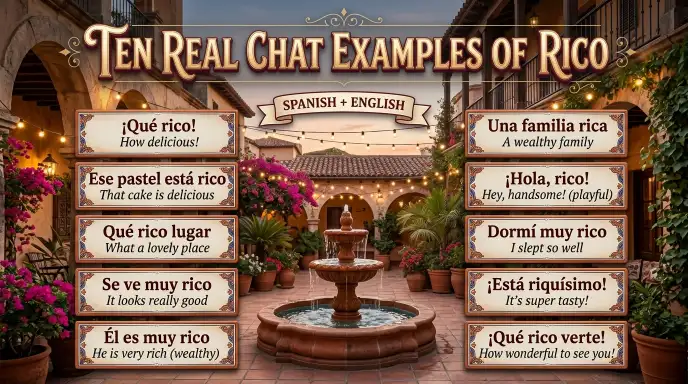
These realistic conversations show how the meaning changes with context. Each example includes an English explanation so beginners can understand the Spanish phrases.
Example 1: Talking about food
A: ¿Probaste la pizza nueva?
B: Sí, estaba muy rica.
A: Ahora quiero probarla también.
Translation:
A: Did you try the new pizza?
B: Yes, it was really delicious.
A: Now I want to try it too.
Meaning: Rica describes the taste of the pizza.
Example 2: Complimenting a meal
A: I made pasta for dinner.
B: ¿En serio? ¡Qué rico!
A: I’ll save you a plate next time.
Translation of B: Really? That sounds delicious!
Meaning: The word expresses excitement about food.
Example 3: Talking about money
A: My dream is to own a house by the beach.
B: Entonces tienes que hacerte rico 😂
A: Let me start with saving money first.
Translation of B: Then you have to become rich.
Meaning: Rico refers to wealth.
Example 4: Complimenting someone’s appearance
A: ¿Qué tal me veo en esta foto?
B: Te ves muy rico 😍
A: Jajaja, gracias.
Translation:
A: How do I look in this picture?
B: You look really attractive.
A: Haha, thank you.
Meaning: Here, the word is a flirtatious compliment. This usage is regional and informal.
Example 5: Asking about a Spanish comment
A: Someone commented “qué rico” on my food video.
B: They probably mean that the food looks delicious.
A: Oh, that’s what I thought!
Meaning: The food related context makes the meaning clear.
Example 6: Talking about a cute child
A: Mira qué lindo es el bebé.
B: Sí, es un niño muy rico.
A: Tiene una sonrisa preciosa.
Translation:
A: Look how cute the baby is.
B: Yes, he’s a lovely little boy.
A: He has a beautiful smile.
Meaning: In this context, rico means cute or lovely rather than wealthy or sexy.
Example 7: A playful message between friends
A: I brought cookies to school today.
B: ¿Están ricos?
A: Sí, pero ya casi no quedan.
Translation:
A: I brought cookies to school today.
B: Are they tasty?
A: Yes, but there are hardly any left.
Meaning: The plural form ricos agrees with the masculine plural noun cookies :galletas :only if the noun is masculine; because galletas is feminine, the fully correct question is ¿Están ricas? This example illustrates why adjective agreement matters in Spanish.
Example 8: Flirting in a private chat
A: You looked amazing at the party.
B: ¿Sí? ¿Te gusté?
A: Claro. Te veías muy rico.
Translation of the last line: Of course. You looked really attractive.
Meaning: The word is being used as an informal compliment. It may feel intimate, so it is best suited to a relationship where that tone is welcome.
Example 9: Talking about coffee
A: ¿Cómo está el café?
B: Está rico, pero un poco fuerte.
A: Perfecto, así me gusta.
Translation:
A: How’s the coffee?
B: It’s good, but a little strong.
A: Perfect, that’s how I like it.
Meaning: Rico describes the taste.
Example 10: Understanding a short message
A: She replied “rico 😋” to my picture of the cake.
B: She probably means it looks delicious.
A: Good, I thought she was using slang.
Meaning: The emoji and food picture make the intended meaning easier to identify.
4. How to Reply When Someone Says Rico

The best response depends on what the other person means. A comment about food calls for a different reply from a compliment about your appearance.
Funny replies
If the conversation is lighthearted, try one of these:
- “I know, I’m basically a five star chef 😂”
- “One bite and you’ll be asking for the recipe!”
- “Rich in flavor, not in money!”
- “Don’t compliment the food unless you’re bringing dessert next time!”
Use these replies when the conversation is friendly and the joke fits the situation.
Casual replies
For everyday conversations, a simple answer is enough:
- “Sí, está delicioso.” : Yes, it’s delicious.
- “Gracias.” : Thank you.
- “Me alegra que te guste.” : I’m glad you like it.
- “Sí, estaba buenísimo.” : Yes, it was really good.
You do not need a complicated response when someone is simply discussing a meal.
Friendly replies
If a friend compliments your cooking or a shared experience, you could say:
- “¡Gracias! Lo hice con mucho cariño.” : Thanks! I made it with lots of care.
- “La próxima vez te preparo más.” : I’ll make you more next time.
- “Me alegra que te guste.” : I’m glad you like it.
- “Tenemos que probar otro restaurante pronto.” : We need to try another restaurant soon.
Flirty replies
If someone uses rico to compliment your appearance and you welcome the attention, you could respond playfully:
- “¿Ah, sí? 😉” : Oh, really?
- “Qué lindo de tu parte.” : That’s sweet of you.
- “Tú tampoco te ves nada mal.” : You don’t look bad yourself.
- “Jajaja, gracias por el cumplido.” : Haha, thanks for the compliment.
Only use a flirty response if you feel comfortable with the conversation. You do not have to return a compliment or encourage romantic attention.
Neutral replies
If you are unsure what the person means, stay neutral:
- “¿Te refieres a la comida?” : Do you mean the food?
- “¿Qué quieres decir exactamente?” : What exactly do you mean?
- “Gracias, pero no entendí el contexto.” : Thanks, but I didn’t understand the context.
- “¿Lo dices por la foto?” : Do you mean because of the picture?
When a message is ambiguous, asking a simple follow up question is better than assuming the person is flirting.
5. Is Rico Rude or Offensive?
Rico is not inherently rude or offensive. It is an ordinary Spanish adjective, but some informal uses can sound suggestive, flirtatious, or overly personal.
The key is understanding who is speaking, what they are describing, and how the word is being used.
When rico is completely normal
Using rico to describe food is common and generally appropriate.
Examples:
- La sopa está rica. : The soup is delicious.
- El pan está rico. : The bread is tasty.
- ¡Qué rico huele! : It smells wonderful.
You can use these expressions with friends, family, classmates, and colleagues when discussing food or pleasant experiences.
When rico can sound flirtatious
When directed at someone’s body or appearance, the word may have a sexual or flirtatious meaning in some regions.
For example, estás muy rico can be a strong personal compliment. It may be welcome between partners but uncomfortable when said to a stranger, coworker, or someone who has not invited that kind of attention.
If you are learning Spanish, avoid using this meaning until you understand the context and the relationship.
Is rico appropriate at school?
In a Spanish class, rico is a useful vocabulary word. Students can use it in sentences about meals, money, and everyday experiences.
However, using it to make unwanted comments about another student’s body or appearance may be inappropriate. A word can be grammatically correct while still being unsuitable for a particular situation.
Is rico appropriate at work?
In a professional environment, rico is generally fine when describing food, such as a meal at a team lunch.
Using it to describe a coworker in a suggestive way may cross personal or professional boundaries. When in doubt, choose a neutral compliment such as te ves bien (“you look good”) or simply avoid commenting on someone’s body.
Does the meaning change by country?
Yes. Spanish varies across regions, and dictionaries record different uses of rico in different countries. In some places, it is commonly used as an informal compliment about appearance; in others, that meaning may be less familiar or carry a different tone.
Do not assume that a phrase is harmless or romantic just because it is common in one online community. Consider local usage and the relationship between the speakers.
6. Who Uses Rico?
Because rico is a standard Spanish word, it is used by people of many ages and backgrounds. It is not limited to teenagers or Gen Z.
Spanish speakers of different ages
Children may learn rico when talking about food. Adults may use it to discuss money, meals, or pleasant experiences. Older speakers may also use it in familiar expressions.
The word is part of everyday vocabulary rather than a term belonging to one age group.
Gen Z and younger social media users
Younger people may encounter the word through TikTok, Instagram Reels, music, memes, and private messages. Some use it to compliment food or a person’s appearance, while others simply use it in ordinary Spanish sentences.
That does not mean every use is internet slang. A comment such as “Está rico” can be a completely ordinary statement about a meal.
Bilingual users and Spanish learners
People learning Spanish may search for the word after seeing it in a caption or receiving a message from a Spanish speaking friend.
Bilingual users may switch between Spanish and English, especially in casual chats. They may also recognize meanings that a beginner does not know yet, such as a regional use for an attractive person.
How often does rico appear online?
The word is used in ordinary Spanish, so it can appear in many types of online content. However, its exact frequency on TikTok, Snapchat, Instagram, WhatsApp, and SMS varies, and there is no single reliable number that measures all those platforms together.
It is better to understand rico as a common Spanish word with several uses than to describe it as a new trend or a recently invented texting term.
7. Origin of the Term Rico
Rico is an established Spanish word, not a slang expression created by TikTok or modern texting. Its different meanings developed through the history of the language and its use in different contexts.
The word is used to describe wealth, abundance, good taste, and :in some varieties of Spanish :pleasant or attractive qualities.
Because Spanish is spoken across many countries, its vocabulary can develop regional shades of meaning. A word that primarily describes food in one conversation may be used as a compliment in another.
How the internet influenced its use
Social media has made regional expressions easier to encounter outside their original communities. A person watching a Mexican cooking video, a Spanish language comedy clip, or a Latin American music video may hear rico used in a way they have not learned in a classroom.
Captions and comments also leave out tone of voice, which can make the meaning harder to understand. A spoken ¡Qué rico! accompanied by a picture of food is relatively clear. The same words under a selfie may be more personal or flirtatious.
Is there one exact origin for the slang meaning?
There is no single modern internet event that explains every use of rico. Its core meanings are established Spanish vocabulary, while specific informal meanings vary by region and context.
It would therefore be misleading to claim that the word originated on TikTok or that it always carries a romantic meaning.
The best way to interpret it is to start with the standard meaning and then use the surrounding context to identify any informal or regional meaning.
8. Rico Compared With Common Text Abbreviations
Although rico meaning is often searched alongside internet slang, the word is different from common English texting abbreviations.
| Term | Meaning | Type | Usage | Popularity |
| Rico | Rich, delicious, or attractive in some contexts | Spanish word; informal uses vary | Food, wealth, compliments, everyday conversation | Common Spanish vocabulary |
| IDK | I don’t know | Text abbreviation | Expressing uncertainty | Widely recognized in English texting |
| IDC | I don’t care | Text abbreviation | Expressing indifference | Widely recognized in English texting |
| IMO | In my opinion | Text abbreviation | Sharing a personal view | Widely recognized in online discussions |
| BRB | Be right back | Text abbreviation | Saying you will return shortly | Widely recognized in English texting |
These popularity descriptions are general, not live platform rankings.
Why this comparison matters
If someone sends you IDK, the letters stand for a longer phrase. When someone writes rico, they are using a Spanish word whose meaning depends on context.
It can be informal or slang like in certain situations, but it is not an abbreviation with one fixed texting definition.
9. Real World Usage Example
Imagine you are visiting a Spanish speaking friend and they invite you over for dinner. After tasting the food, you might say:
“¡Qué rico está todo!”
This means “Everything tastes so good!” It is a natural way to compliment the meal.
Now imagine you are discussing a wealthy businessperson. You might say:
“Ese hombre es muy rico.”
That means “That man is very rich.” The word refers to money rather than taste.
In a different situation, you might see someone comment “estás muy rico” under a picture of a person. Depending on the region and relationship, the comment could be flirtatious or suggestive.
These examples show why a direct translation is not always enough. You need to consider what is being described and why the speaker is using the word.
If you are unsure, look at the full sentence, the image or video, and the relationship between the people involved. Those details usually make the intended meaning clearer.
Frequently Asked Questions
1. What does rico mean in text messages?
Rico usually means “rich” or “delicious” in Spanish. In informal contexts, it can also mean “attractive” or “sexy.” The exact meaning depends on the conversation.
2. What does rico mean on TikTok?
On TikTok, rico may describe delicious food, a wealthy person, or someone who looks attractive. The video and comment context help determine the intended meaning.
3. Is rico slang?
Not by itself. Rico is a standard Spanish word, although some informal uses :especially as a compliment about someone’s appearance :can be slang like.
4. Is rico rude or offensive?
Usually not when describing food or wealth. When directed at someone’s appearance, it can sound flirtatious or suggestive, so consider the relationship and context.
5. How should you reply to rico?
If someone is complimenting your food, you can say “¡Gracias!” If they are complimenting your appearance, you can respond warmly, flirt back if you wish, or ask what they mean if the message is unclear.
Conclusion
Rico has several meanings in Spanish, most commonly “rich” and “delicious.” In informal or regional contexts, it can also describe someone as cute, attractive, or sexy.
You may encounter the word on TikTok, Snapchat, Instagram, WhatsApp, or in everyday conversations. When it appears beside a food picture, it usually refers to taste. In a conversation about money, it refers to wealth. When directed at a person, it may be a compliment, but the tone depends on context and regional usage.
Remember that rico is a real Spanish word, not an acronym or abbreviation. It is generally safe to use when describing food or wealth, but its more personal meanings require care.
Start with the basic translation, pay attention to the surrounding conversation, and avoid assuming that every use is flirtatious. That is the easiest way to understand the word naturally and use it appropriately.
📖 Continue Your Slang Journey:
White Boy in Spanish: Meaning, Translation & Examples

I am Masson Caldwell, a language enthusiast and content writer at SlangAura. I write about internet slang, texting trends, and modern expressions to help readers understand the evolving world of online language with simple and clear explanations.