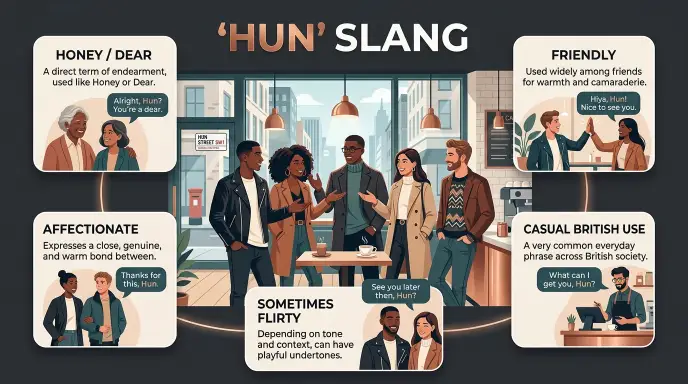
“Hun” is a popular slang term used as an affectionate nickname for a friend, partner, or even a stranger, similar to “honey” or “sweetie.”
This casual slang word adds warmth to everyday conversations and is widely used across social media and texting. Understanding hun slang helps you catch the friendly, informal tone behind this common expression.
HUN slang is a friendly way to say “honey.” People use it as a warm nickname for someone they know or like. You may see it in texts, social media comments, and casual chats. The word can sound caring, playful, or relaxed. Its meaning can also change with the tone and context.
Quick Answer:HUN Slang
HUN slang is a casual short form of “honey.” People use it as a friendly, caring, or affectionate way to address someone in texts, chats, and everyday conversations.
What Does HUN Slang Mean?
HUN is a short form of “honey.” It works as a casual term of affection in everyday conversation.
People often use it when talking to a friend, partner, family member, or someone they feel comfortable with. In some cases, strangers may also use “hun” in a friendly way.
For example:
- “Thanks, hun!”
- “Are you okay, hun?”
- “Hun, you need to see this!”
The tone usually makes the meaning clear.
What Does HUN Stand For?
HUN commonly stands for “honey” when used as slang.
It is not usually an acronym in casual texting. Instead, it is a shortened spelling that makes the word quicker and more informal.
You may also see it written as “hun” in lowercase. Both forms can carry the same meaning in casual chats.
Is HUN Short for Honey?
Yes. In most casual conversations, HUN is simply a shorter form of “honey.”
The shorter version feels more relaxed. It also fits naturally into texts, comments, and social media messages.
How Is HUN Used in Texting?
People use HUN in texting to show friendliness or affection. The exact feeling depends on the relationship between the people.
A close friend might use it as a friendly nickname. A romantic partner may use it in a more affectionate way.
Here are a few common examples:
“Good morning, hun!”
“Hun, can you help me with this?”
“Don’t worry about it, hun.”
In each example, HUN adds a warm and personal tone.
Is HUN a Friendly or Romantic Term?
HUN can be either friendly or romantic. Context plays an important role.
Friends may use it without any romantic meaning. Couples can also use it as a sweet nickname.
The relationship, tone, and situation help explain the intended meaning.
Where Is HUN Commonly Used?
HUN appears in many forms of casual online communication. You can find it in:
- Text messages
- Instagram comments
- Facebook chats
- TikTok comments
- Snapchat messages
- Online forums
- Everyday conversations
It is especially common when people want their message to sound warm and informal.
HUN Slang Meaning in Different Contexts
The meaning of HUN can shift slightly based on the situation. Most uses still carry a friendly, caring, or affectionate tone.
HUN Between Friends
Friends may use HUN as a casual nickname. It can make a simple message feel warmer.
“Hun, are you coming tonight?”
“Thanks for helping me, hun.”
HUN in Romantic Conversations
Couples often use HUN as a sweet name for each other. In this setting, it can show affection and closeness.
“Miss you, hun.”
“Sleep well, hun.”
HUN From Strangers
Some people use HUN with strangers as a friendly form of address. This use is common in casual online chats and everyday conversations.
“Hun, you forgot your bag.”
“Take care, hun.”
HUN in Customer Service
You may also see HUN in informal customer conversations. However, its use depends on the person and the setting.
A casual speaker might say, “Thanks, hun,” to sound warm. A professional business message usually uses more neutral wording.
Why Do People Say HUN?
People use HUN because it sounds friendly and personal. It can also make a short message feel less formal.
The term is easy to type and easy to understand. As a result, it works well in quick conversations.
Some people also use it to show support or kindness.
For example:
“Don’t worry, hun. Everything will be okay.”
Here, HUN adds a caring touch to the message.
Is HUN Slang or an Abbreviation?
HUN is generally considered a slang term or informal shortened form of “honey.” It is not normally treated as a standard texting acronym.
Unlike terms such as “LOL” or “BRB,” HUN does not represent a phrase made from initial letters.
Instead, it comes from shortening the word “honey.”
HUN vs. Honey
HUN and “honey” have almost the same basic meaning. The main difference is the tone.
“Honey” can sound slightly more traditional or affectionate. “Hun” feels shorter, more casual, and more suitable for quick messages.
For example:
“Thank you, honey.”
“Thank you, hun.”
Both sentences express warmth, but the second one feels more relaxed.
Is HUN Always a Term of Affection?
No. HUN does not always show romantic affection.
A friend, relative, coworker, or even a stranger may use it casually. Some speakers use HUN as part of their normal conversational style.
The context matters more than the word itself.
If someone says “Thanks, hun” after receiving help, they may simply be showing appreciation. There may be no romantic meaning at all.
When Should You Use HUN?
HUN works best in relaxed conversations where the tone is friendly. It can make a message sound warm and personal.
Use it with people who are comfortable with casual terms of address. With someone you do not know well, a neutral greeting may feel more appropriate.
When Should You Avoid HUN?
HUN may not fit every situation. Formal emails, workplace messages, and professional conversations usually need more neutral language.
You should also consider the other person’s preference. Some people may see HUN as too familiar or slightly patronizing.
Polite Alternatives to HUN
If you want a friendly but more neutral tone, several options can work well:
- Dear
- Friend
- Hi there
- Hey
- My friend
- Everyone
The best choice depends on your relationship and the setting.
HUN in Social Media and Online Chats
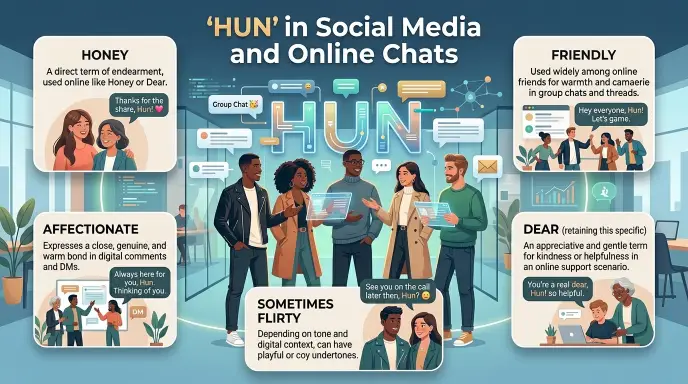
HUN is common in informal online conversations. People may use it in comments, direct messages, and replies.
On social media, it can sound supportive and friendly. For example, someone might comment, “You look great, hun!” on a friend’s post.
However, the same word can feel different when it comes from a stranger. Context and tone still matter.
Real-Life Examples of HUN Slang
Here are some natural examples of how people use HUN in everyday conversations:
- “Hey hun, how have you been?”
- “Thanks for checking on me, hun.”
- “Hun, I have something funny to tell you.”
- “Good luck today, hun!”
- “Take care on your way home, hun.”
These examples show that HUN can express friendliness, care, or affection.
FAQs About HUN Slang
Q1. What does Hun mean in texting?
“Hun” is a casual shortened form of “honey” used as a friendly term of address.
It can show affection, friendliness, or familiarity.
Q2. What does a Hun mean in slang?
In slang, “hun” usually means “honey” or “dear.”
It is often used casually between friends, partners, or even strangers.
Q3. Is Hun friendly or flirty?
“Hun” can be friendly or flirty, depending on the relationship and tone.
By itself, it does not always indicate romantic interest.
Q4. Why do British people say Hun?
In British informal speech, especially in some regional and online communities, “hun” can mean “dear” or “love.”
It is often used casually and does not necessarily carry a romantic meaning.
Q5. Is calling someone Hun offensive?
“Hun” is usually not offensive when used as a friendly term.
However, tone and context matter, as some people may find it patronizing or overly familiar.
Q6. Is it hon or Hun?
Both “hon” and “hun” are informal spellings of “honey.”
“Hon” is common in American English, while “hun” is widely seen in British and online informal speech.
Q7. Is Hun the same as Babe?
“Hun” and “babe” can both be affectionate terms, but they are not exactly the same.
“Babe” often sounds more intimate, while “hun” can be friendly and casual.
Q8. How to reply to hun?
You can reply naturally with “Hey hun,” “Hi!” or “Hey, how are you?” depending on your relationship.
If the message feels flirty, you can respond warmly or playfully to match the tone.
Conclusion
HUN is a casual way to say “honey” or “dear.” It can show warmth, friendliness, or affection in everyday conversations.
Its meaning depends on the relationship and the tone. In casual chats, HUN can sound natural and caring. In formal settings, a more neutral term is usually a better choice.
Related Slang Terms:
HBU Slang: Meaning and How to Use It
What Is Opp in Slang? Meaning, Full Form, and Examples in Text

I am Emma Collins, a content writer at SlangAura specializing in internet slang, texting abbreviations, and online language. I create simple and accurate guides to help readers understand modern slang easily and confidently.