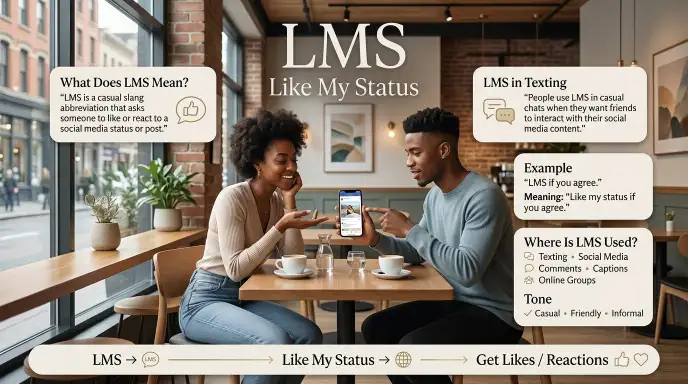
LMS slang meaning usually refers to “Like My Status.” People use LMS when they want others to like their status, post, photo, or update. It is a short and casual internet abbreviation.
You may see it in social media posts, comments, and private chats. The meaning can change in some contexts, but “Like My Status” is the most common slang use.LMS became popular when social media users often asked friends to interact with their status updates. Today, the term may sound a little old fashioned, but people still use it in casual online conversations.
Quick Answer:LMS Slang Meaning
LMS usually means “Like My Status” in slang. It is used to ask someone to like a social media status or post.
For example, “LMS if you agree” means “Like my status if you agree.” It is a simple way to ask for engagement.
What Does LMS Mean in Slang?
LMS stands for “Like My Status.” It is an informal abbreviation used in online communication.
The phrase became popular with social media status updates. Users wanted friends to react to their posts. Instead of writing the full phrase, they used LMS to keep the message short.
For example:
“LMS for a shoutout.”
This means the person wants others to like their status. In return, they may offer a shoutout.
Another example is:
“LMS if you miss summer.”
Here, the writer is asking people to like the post if they share the same feeling.
LMS is simple to understand when the topic is social media engagement. It usually has a friendly and casual tone.
What Is the Full Form of LMS?
The common slang full form of LMS is “Like My Status.”
Each letter represents one word:
- L = Like
- M = My
- S = Status
The abbreviation is mainly used in informal communication. It is not a good choice for formal writing.
For example, you would not normally use LMS in a business email. You would also avoid it in an academic paper.
Its main purpose is to make casual online messages shorter and faster.
How Is LMS Used in Texting?
People use LMS in texting when they want someone to interact with a post or status. The meaning is usually clear when the conversation involves social media.
For example:
“LMS when you see my new post.”
The sender is asking the other person to like the post after seeing it.
Another example is:
“LMS if you want part two.”
This means the person wants people to like the post if they want to see more content.
LMS can also appear as part of a longer message. For example:
“LMS and I’ll tell you the story.”
In this case, the sender is using a like as a small form of interaction before sharing something.
The term works best among friends and online followers. It can sound less natural in professional conversations.
Where Is LMS Commonly Used?
LMS is mostly found in casual social media communication. It became especially common on platforms where people shared status updates with friends.
You may find LMS in:
- Facebook posts
- Instagram comments
- Text messages
- Social media captions
- Online groups
- Casual chats
Its popularity can vary by platform. Younger users may use newer abbreviations instead. Still, LMS can appear when someone wants a quick way to ask for likes.
The term is more suitable for casual spaces. It does not fit formal communication.
Why Do People Use LMS?
People use LMS because it is short and easy to understand. It also gives users a quick way to ask for attention or engagement.
A person may use LMS to get more likes on a post. Another person may use it to see who agrees with an opinion.
For example:
“LMS if you love pizza.”
The writer is using the phrase as a simple engagement request. People who agree may like the post.
LMS can also create a sense of interaction. Instead of simply sharing an update, the writer gives followers a small action to take.
This makes the post feel more active. It can also encourage friends to respond or continue the conversation.
LMS Examples in Real Conversations
LMS is easy to understand when you see it in a real conversation. The phrase usually asks someone to like a post or status.
Here are some simple examples:
Example 1:
“LMS if you agree with me.”
This asks people to like the post if they share the same opinion.
Example 2:
“LMS for a follow back.”
The person is asking for a like and offering a follow in return.
Example 3:
“LMS if you want more pictures.”
This asks followers to show interest by liking the post.
Example 4:
“LMS and I’ll give you a shoutout.”
The writer is offering a shoutout to people who like the status.
These examples show how LMS works in casual social media language.
Is LMS Still Common Today?
LMS is less common today than it was during the early years of social media. It was especially popular when Facebook status updates were a major part of online communication.
Modern users often use more direct phrases. They may simply say “like this,” “drop a like,” or “show some love.”
Still, LMS has not completely disappeared. You may see it in older posts, casual groups, or conversations where people know the abbreviation.
Its meaning remains easy to understand when the topic is social media engagement.
Is LMS Considered Slang?
Yes, LMS can be considered informal internet slang. It is an abbreviation rather than a formal English expression.
People use slang to make online communication faster and more casual. LMS follows this pattern because it replaces the longer phrase “Like My Status.”
It is best suited to friendly conversations and social media. You should avoid it in formal writing where clear and professional language is expected.
Is LMS Rude or Offensive?
LMS is not normally rude or offensive. It is usually a simple request for a like or social media interaction.
However, the tone can change based on how someone uses it. Repeatedly asking people to like your posts may seem pushy.
For example, one casual LMS request is usually harmless. Posting it many times can make the message feel like a demand for attention.
The meaning itself is not offensive. The situation and tone matter more.
LMS vs. Like My Status
LMS and “Like My Status” have the same basic meaning. The main difference is the way they are written.
LMS is shorter and more casual. “Like My Status” is clearer for people who may not know the abbreviation.
For example:
LMS: “LMS if you agree.”
Full phrase: “Like my status if you agree.”
Both messages ask for the same action. LMS simply makes the sentence faster to type.
When Should You Use LMS?
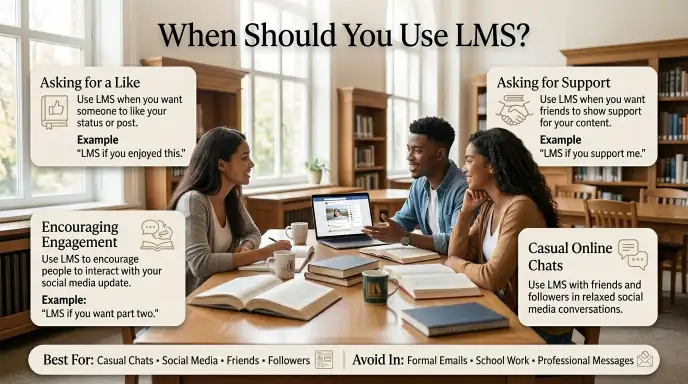
You can use LMS in casual social media conversations when you want people to like your status or post.
It can work well when talking with friends. It may also fit a casual social media caption.
For example:
“LMS if you want to see the next part.”
This gives followers a simple way to show interest.
You should think about your audience before using it. Some people may not know older internet abbreviations. In that case, writing “like my post” may be clearer.
When Should You Avoid LMS?
Avoid LMS in formal or professional communication. The abbreviation can sound too casual in these settings.
You should usually avoid it in:
- Business emails
- School assignments
- Job applications
- Professional reports
- Formal messages
Use clear language instead. For example, write “Please like my post” when you want the meaning to be obvious.
LMS works best when the conversation is relaxed and informal. The right choice depends on the people you are talking to and the platform you are using.
How to Understand LMS in Different Contexts
LMS can have slightly different uses depending on the platform and conversation. In most casual social media situations, it means “Like My Status.”
The phrase is mainly used to encourage interaction. A person may want likes, reactions, or support from friends and followers.
LMS in Casual Conversations
LMS can appear in short messages between friends. The sender usually expects the other person to visit a post and interact with it.
For example:
“LMS when you get a chance.”
The message is a casual request. It does not usually carry a serious or negative meaning.
LMS and Social Media Engagement
People often use short slang terms to make social media messages easier to write. LMS is one example of this style.
It can be used to encourage people to like a post. It may also be connected with requests for comments, shares, follows, or other forms of engagement.
The meaning stays simple when the conversation is about social media activity.
LMS and Context
Not every use of LMS has the same meaning. Some platforms and communities may use the letters for different phrases.
For this reason, look at the words around LMS. The surrounding message can help you understand what the sender means.
If someone writes “LMS if you agree,” the intended meaning is clearly related to liking a post or status.
Frequently Asked Questions About LMS
Q1. What does LMS mean in text slang?
LMS usually means “Like My Status” in text slang. It asks people to like or react to your social media post.
Q2. What does LMS mean in Gen Z?
Gen Z may use LMS as a short way to say “Like My Status.” It can encourage likes, reactions, or engagement.
Q3. What does “LMS” mean in chat?
In chat, LMS commonly means “Like My Status.” Someone may send it when they want friends to interact with their post.
Q4. What does LMS mean from a boy?
If a boy sends LMS, he may be asking you to like his status or post. The exact meaning can depend on the conversation.
Q5. What does LMSS mean in text from girl?
LMSS is often an extended form of LMS meaning “Like My Status.” The extra “S” may simply add emphasis in casual texting.
Q6. What is LMS in Snapchat?
On Snapchat, LMS can mean “Like My Status” in casual slang. However, Snapchat users may also use LMS with other meanings based on context.
Final Thoughts on LMS Slang Meaning
LMS is a short internet abbreviation that commonly means “Like My Status.” People use it to ask others to like or react to a social media post.
It is informal and works best in casual online conversations. You may see it in texts, comments, captions, and social media groups.
The popularity of LMS has changed as social media language has evolved. Still, knowing its meaning can help you understand older posts and casual online conversations.
When you see LMS, always consider the context. In most social media conversations, it means “Like My Status.”
Trending Slang Meanings:
HUN Slang: Meaning, Uses, Examples, and More
I am Emma Collins, a content writer at SlangAura specializing in internet slang, texting abbreviations, and online language. I create simple and accurate guides to help readers understand modern slang easily and confidently.