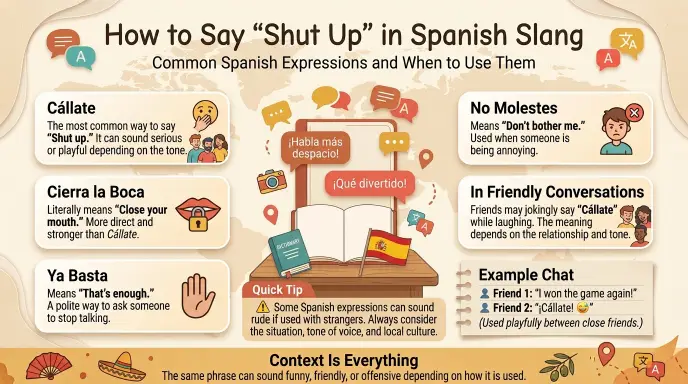
If you want to say “shut up” in Spanish slang, the most common word is “cállate.” It means “be quiet” or “shut up.”
Friends sometimes use it as a joke, but the same word can sound rude if you say it in anger. The meaning always depends on your tone and the situation.Many people search for how to say shut up in Spanish slang after hearing the phrase in a movie, on TikTok, in a game, or during a conversation.
Spanish also has regional slang, so the exact words can change from one country to another. This guide explains the most common expressions, where people use them, if they are offensive, and when you should choose a more polite option.
Quick Answer: How to Say Shut Up in Spanish Slang
The most common way to say “shut up” in Spanish slang is “cállate.” It literally means “be quiet.” Friends may use it playfully, but it can sound rude or disrespectful if spoken with an angry tone.
What Does “Shut Up” Mean in Spanish Slang?
In Spanish slang, “shut up” usually means asking someone to stop talking. Sometimes it is a serious command. In other situations, it shows surprise, excitement, or playful disbelief.
For example, a friend might say, “¡Cállate!” after hearing unbelievable news. In that case, the speaker does not really want the other person to stop talking. They are simply expressing surprise.
Most Common Ways to Say Shut Up in Spanish Slang
| Spanish Expression | English Meaning | Tone |
| Cállate | Shut up / Be quiet | Common |
| Cállense | You all, be quiet | Neutral |
| Cállate ya | Shut up already | Strong |
| Ya cállate | Just shut up | Strong |
| Guarda silencio | Keep quiet | Polite |
Cállate
“Cállate” is the best-known Spanish expression for “shut up.” People use it with friends, family, and people they know well.
Examples:
- “¡Cállate! You really met him?”
- “Cállate, you’re joking.”
Cállense
“Cállense” is the plural form. It is used when speaking to more than one person.
Examples:
- “¡Cállense! The movie is starting.”
- “Please, cállense for a minute.”
Cállate Ya
“Cállate ya” adds emphasis. It usually means “shut up already.”
Examples:
- “¡Cállate ya! I’m trying to study.”
- “Cállate ya and let me explain.”
Ya Cállate
This phrase has a similar meaning but places more emphasis on stopping immediately.
Examples:
- “Ya cállate. Everyone heard you.”
- “Ya cállate for one minute.”
Does “Shut Up” Have Different Meanings in Spanish?
Yes.
The same words can have different meanings depending on the speaker’s tone and the relationship between the people involved.
| Situation | Meaning |
| Friends joking | Playful surprise |
| Family conversation | Asking someone to be quiet |
| Heated argument | Angry command |
| Classroom | Request for silence |
Playful Reaction
Friends sometimes say “¡Cállate!” after hearing exciting or shocking news. They are showing surprise instead of giving a real command.
Example:
- “¡Cállate! You won the tickets?”
Serious Command
The same expression becomes much stronger during an argument.
Example:
- “¡Cállate ahora mismo!” (Be quiet right now.)
Where Is It Commonly Used?
People use these expressions in many everyday situations.
| Place | Common Use |
| Text Messages | Joking with friends |
| TikTok | Funny comments and videos |
| Casual conversations | |
| Snapchat | Quick chats |
| Discord | Gaming conversations |
| Everyday Speech | Informal discussions |
Text Messages
Friends often use “¡Cállate!” to react to surprising news.
Examples:
- “¡Cállate! That’s amazing.”
- “No way. ¡Cállate!”
Social Media
People also use the phrase in comments and captions to show excitement or disbelief.
Examples:
- “¡Cállate! I love this video.”
- “¡Cállate! That ending shocked me.”
Is Saying “Shut Up” in Spanish Slang Rude, Offensive, or Harmless?
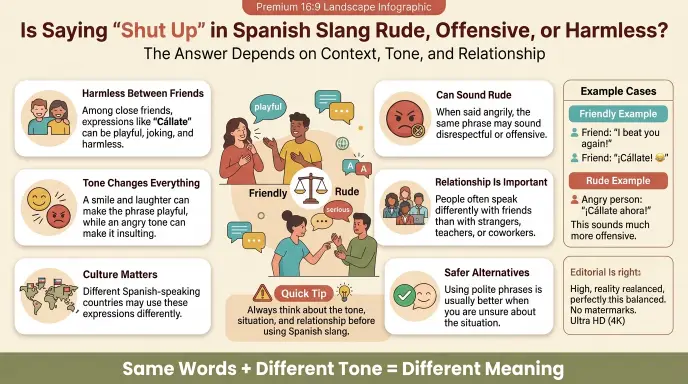
It depends on the context.
“Cállate” can sound friendly between close friends who are joking. However, the same word may sound rude if you say it during an argument or to someone you do not know well.
Your tone of voice matters just as much as the words.
Is It Appropriate at Work?
No.
Avoid using “cállate” in professional settings. It can sound disrespectful, even if you do not mean to offend anyone.
Instead, use polite expressions such as:
- “Por favor, guarda silencio.” (Please be quiet.)
- “¿Podemos hablar uno por uno?” (Can we speak one at a time?)
- “Un momento, por favor.” (One moment, please.)
Can You Use It with Teachers or Older Adults?
It is better to avoid it.
Spanish speakers usually choose more respectful expressions when talking to teachers, older adults, or people they have just met.
Regional Variations of “Shut Up” in Spanish Slang
Spanish changes from one country to another. Some expressions are common in one region but uncommon in another.
| Country or Region | Common Expression | Tone |
| Most Spanish-speaking countries | Cállate | Common |
| Spain | Cállate | Informal |
| Mexico | Ya cállate | Informal |
| Argentina | Cállate | Informal |
| Colombia | Cállate | Informal |
Some countries also have local slang expressions. However, many of them are highly regional and may sound offensive. If you are learning Spanish, “cállate” is the safest and most widely understood informal choice.
Real-Life Examples
Friends Talking
Friend A: “I won free concert tickets.”
Friend B: “¡Cállate! That’s incredible.”
Text Message
Person A: “Guess who replied to my message?”
Person B: “¡Cállate! Tell me everything.”
Family Conversation
Brother: “Please, cállate for one minute.”
Sister: “Okay, I’m listening.”
TikTok Comment
“¡Cállate! That ending was amazing.”
Gaming Chat
Player A: “We won with one second left.”
Player B: “¡Cállate! No way.”
These examples show that the phrase often expresses surprise instead of telling someone to stop talking.
Origin and History
The expression “cállate” comes from the Spanish verb callar, which means “to be quiet” or “to become silent.”
People have used forms of this verb for centuries in everyday Spanish. Over time, “cállate” also became a common informal expression among friends, especially when reacting to surprising news.
Today, it remains one of the best-known Spanish expressions across many Spanish-speaking countries.
Is It Still Popular?
Yes.
“Cállate” is still widely used in everyday conversations, text messages, movies, television shows, and social media. It remains one of the most recognized informal Spanish expressions.
Similar Spanish Expressions
| Expression | English Meaning | Tone |
| Cállate | Shut up | Informal |
| Guarda silencio | Keep quiet | Polite |
| Haz silencio | Be quiet | Neutral |
| Silencio, por favor | Quiet, please | Polite |
| Baja la voz | Lower your voice | Respectful |
Cállate vs Guarda Silencio
“Cállate” is informal and can sound strong.
“Guarda silencio” is more polite and works better in schools, workplaces, and formal settings.
Cállate vs Baja la Voz
“Cállate” asks someone to stop talking.
“Baja la voz” asks someone to speak more quietly instead of becoming completely silent.
When Should You Avoid Using It?
Avoid saying “cállate” in situations where respect and politeness are important.
Do not use it when:
- Speaking with teachers.
- Talking to customers.
- Writing professional emails.
- Meeting someone for the first time.
- Having a formal conversation.
- Discussing serious topics.
In these situations, polite expressions help you communicate more respectfully.
Polite Alternatives to “Shut Up” in Spanish
If you want someone to be quiet without sounding rude, these expressions are much better choices.
| Informal Expression | Polite Alternative | English Meaning |
| Cállate | Guarda silencio | Keep quiet |
| Cállate | Haz silencio | Be quiet |
| Cállate | Baja la voz | Lower your voice |
| Cállate | Un momento, por favor | One moment, please |
| Cállate | ¿Podemos hablar uno por uno? | Can we speak one at a time? |
These phrases work well in schools, workplaces, and formal conversations.
Why Do People Say “Shut Up” in Spanish Slang?
People use Spanish slang expressions like “cállate” for different reasons. The meaning changes with the situation and the speaker’s tone.
Common reasons include:
- Showing surprise after hearing exciting news.
- Reacting to something unbelievable.
- Joking with close friends.
- Asking someone to stop interrupting.
- Adding emotion to a casual conversation.
Common Mistakes to Avoid
Thinking It Is Always Offensive
“Cállate” is not always an insult. Friends often say it jokingly after hearing shocking or exciting news.
Using It with Strangers
Avoid using “cállate” with people you do not know well. It may sound impolite or disrespectful.
Forgetting That Tone Matters
The same words can sound funny, friendly, or rude. Your voice, facial expression, and the situation all change how people understand the phrase.
Frequently Asked Questions
Q1. Do Spanish speakers really say “cállate” in everyday conversations?
Yes. Many Spanish speakers use “cállate” in casual conversations. Friends often say it jokingly, while family members may use it when asking someone to be quiet.
Q2. Is “cállate” stronger than “be quiet”?
Usually, yes. “Be quiet” sounds softer in English, while “cállate” can sound more direct. The speaker’s tone determines how strong it feels.
Q3. Can “cállate” be a funny reaction instead of an insult?
Yes. Many people say “¡Cállate!” after hearing exciting news. In this situation, it means something close to “No way!” or “You’re kidding!” instead of a real command.
Q4. Should Spanish learners use “cállate” often?
Not at first. It is better to learn polite expressions before using informal slang. Once you understand the culture and the context, you can use “cállate” more naturally with friends.
Q5. What is the safest way to ask someone to be quiet in Spanish?
The safest option is “Por favor, guarda silencio” or “Por favor, baja la voz.” These expressions sound respectful and are appropriate in most situations.
Conclusion
If you are wondering how to say shut up in Spanish slang, “cállate” is the most common answer. It is widely understood across Spanish-speaking countries and appears in everyday conversations, text messages, movies, and social media.
However, context is important. The same expression can sound playful between friends or rude during an argument. If you are speaking in a formal setting or talking to someone you do not know well, choose a polite alternative instead. Learning when to use each expression will help you communicate naturally and respectfully.
Discover More Articles:
Beta Slang Meaning: What Does “Beta” Mean in Slang?
What Is a Hoosier Slang Meaning in Text:The Slang Term’s Origin

I am Masson Caldwell, a language enthusiast and content writer at SlangAura. I write about internet slang, texting trends, and modern expressions to help readers understand the evolving world of online language with simple and clear explanations.