Clunge British Slang: Meaning, Origin & When to Avoid It

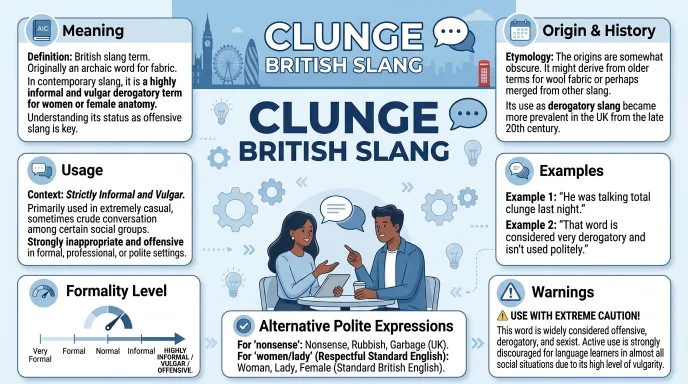
Clunge British slang is a vulgar British slang word used to refer to a woman’s genitals. It is considered offensive and is generally used in informal, adult conversations rather than polite everyday speech.

Because of its explicit nature, many people search for clunge British slang after hearing it in British TV shows, comedy, online discussions, or social media without understanding its meaning.

In this guide, you’ll learn exactly what clunge British slang means, where it came from, if it is rude, how British speakers use it, and when you should avoid using it. You’ll also see realistic examples, learn about its history, and discover more polite alternatives so you can understand the word without accidentally using it in the wrong situation.


Quick Answer: Clunge British Slang

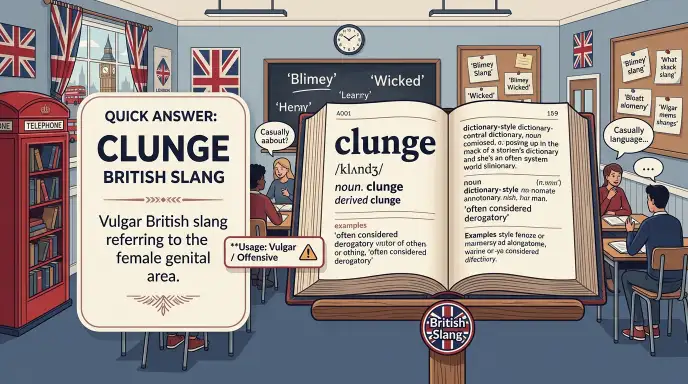
Clunge British slang is a vulgar British English slang term for a woman’s genitals. It is not suitable for formal conversations, workplaces, schools, or family settings. While the word sometimes appears in comedy, television, and online discussions, many people consider it crude and offensive.


What Does Clunge British Slang Mean?

Clunge British slang is an explicit and offensive slang word used in the United Kingdom to describe a woman’s genitals. It is mainly heard in casual adult conversations, comedy, and certain parts of British popular culture.

Unlike medical or neutral terms, “clunge” is intended to be crude. Depending on the speaker and situation, it may be used:

  • As a vulgar joke
  • To shock listeners
  • In adult comedy
  • Among close friends who are comfortable using explicit language
  • In online discussions with a humorous or provocative tone

Many British speakers never use the word themselves because it is considered impolite and offensive.

Is It a Compliment?

No.

The word is not a compliment. It is simply a crude slang expression and should not be mistaken for playful or affectionate language.

Is It Used Seriously?

Sometimes.

It can be used seriously, but more often it appears in:

  • Comedy sketches
  • Adult humor
  • Internet memes
  • Online forums
  • Casual conversations between adults

Even in these settings, not everyone finds it acceptable.


Does Clunge Have More Than One Meaning?

For most people, clunge has one primary meaning: a vulgar slang term referring to female genitalia.

However, the way people use it can vary depending on the context.

Meaning 1: Literal Vulgar Reference

This is the most common meaning.

Here, the speaker is directly referring to female anatomy using a crude slang word.

Example:

“That comedian used a lot of clunge jokes during the show.”

In this example, the speaker is referring to explicit jokes rather than using the word as an insult.

Meaning 2: Adult Comedy or Shock Humor

Sometimes the word is used simply to create shock value.

British comedians and internet users occasionally use “clunge” because it sounds unexpected or exaggerated.

Example:

“The movie was full of crude jokes and references to clunge.”

Here, the speaker is describing the style of humor rather than talking about anatomy directly.

Meaning 3: Internet Discussions About British Slang

Many people use the word while asking what it means rather than using it themselves.

See also  Gorgeous in Spanish Slang: Words Locals Actually Use 

Examples include:

  • “What does clunge mean?”
  • “Is clunge offensive?”
  • “I heard this word in a British TV show.”
  • “Why do British people say clunge?”

In these cases, the word is being discussed educationally rather than used as slang.


Is There a Full Form of Clunge?

No.

Clunge is not an acronym or abbreviation.

It does not stand for multiple words.

Unlike internet slang such as:

  • LOL
  • BRB
  • IMO
  • SMH

“Clunge” is simply a standalone slang word with no expanded form.


Where Is Clunge Commonly Used?

The word is mostly associated with British English and is far less common in other English-speaking countries.

Although many younger internet users recognize it, it is not an everyday word for most people.

Common Places You Might Encounter It

Platform or SituationCommon?Notes
British comedy✅ YesOften used for shock humor
Adult conversations✅ SometimesInformal only
Reddit discussions✅ YesUsually discussing British slang or jokes
Online forums✅ OccasionallyMostly in UK-focused communities
British TV shows✅ SometimesEspecially older or adult comedy
TikTok⚠️ RareMore often explained than used
Instagram comments⚠️ OccasionallyUsually in memes or British humor
Discord servers⚠️ SometimesMostly adult communities
Workplace chats❌ NoConsidered inappropriate
School❌ NoOffensive language
Family conversations❌ Generally noNot considered polite

Who Typically Uses This Slang?

The word is not widely used by everyone in Britain.

It is more commonly associated with:

  • Adults
  • Fans of British comedy
  • Online communities discussing UK slang
  • People using crude or dark humor
  • Internet users explaining unusual British expressions

Many native British English speakers understand the word but rarely say it in everyday conversation.


Why Do People Search for “Clunge British Slang”?

People often search for this phrase because they have heard it somewhere but are unsure what it means.

Common reasons include:

  • Hearing it in a British comedy show
  • Seeing it on Reddit or social media
  • Reading it in online forums
  • Watching a British YouTube video
  • Hearing someone use it in conversation
  • Curiosity about unusual British slang terms

Because it is a regional and explicit slang word, many people outside the UK have never encountered it before and want a clear explanation.


Is Clunge British Slang Rude, Offensive, or Harmless?

Short answer: Yes. Clunge is generally considered a vulgar and offensive British slang term. It is not appropriate for most public, professional, or family settings.

Unlike mild slang words that have become widely accepted, clunge remains a crude expression. Some people use it jokingly among close friends, especially in adult comedy or online discussions, but many others find it disrespectful or unnecessarily explicit.

How offensive is it?

SituationAppropriate?Why
Talking with close adult friends⚠️ SometimesOnly if everyone is comfortable with explicit humor.
Workplace❌ NoUnprofessional and could offend colleagues.
School or college❌ NoInappropriate language in educational settings.
Family gatherings❌ NoMost people would consider it rude.
Public speaking❌ NoNot suitable for general audiences.
Stand-up comedy✅ SometimesOften used for shock value or adult humor.
Social media⚠️ DependsSome platforms allow it, but it may violate community guidelines or offend readers.

Why do some people still use it?

People who use the word are usually trying to:

  • Make a crude joke.
  • Shock their audience.
  • Sound edgy or provocative.
  • Quote dialogue from a TV show or comedian.
  • Discuss British slang rather than use it seriously.

Its use is much less common than many other British slang terms, and plenty of UK speakers never use it at all.


Real-Life Examples of Clunge British Slang

Seeing a slang word in context makes it easier to understand its meaning. The examples below are educational and show how the term may appear in real conversations.

Example 1: Talking About Comedy

Person A: “That comedian used some really crude jokes.”

Person B: “Yeah, there were a few clunge jokes that made the audience laugh.”

Example 2: Watching a British TV Show

Person A: “I didn’t understand one of the words they used.”

Person B: “It was probably British slang. They said ‘clunge,’ which is a vulgar term.”

See also  Sorry in Spanish Slang: Casual Ways to Apologize

Example 3: Reddit Discussion

User 1: “Can someone explain what clunge means?”

User 2: “It’s British slang and it’s quite offensive, so don’t use it in formal conversations.”

Example 4: Friends Chatting

Friend 1: “That film had a lot of adult humor.”

Friend 2: “Yes, it relied on crude language and clunge jokes.”

Example 5: Language Learning

Student: “Should I use the word clunge when speaking English?”

Teacher: “No. It’s better to understand the meaning without using it yourself because it’s considered vulgar.”


Origin and History of Clunge

Short answer: The exact origin of clunge is uncertain, but it has been part of British slang for several decades.

Unlike many internet slang terms that can be traced to a specific website or social media platform, clunge developed through spoken British English. Linguists have not identified one clear source or exact date for its first use.

What is known about its history?

Although its precise origin is unclear, most language references agree that:

  • It is a British English slang term, not an internet abbreviation.
  • It became more widely recognized through British comedy and popular culture.
  • It has been used in adult conversations for many years.
  • It is not a modern invention from TikTok, Discord, or gaming communities.

Because reliable historical evidence is limited, it is best to avoid claiming an exact year or origin story.

Has its popularity changed?

Yes.

The word is generally less common today than it was during the 1990s and early 2000s. Many younger people recognize it from internet discussions or older British TV shows rather than hearing it in everyday conversation.

That means clunge is better described as a recognized but relatively uncommon British slang term rather than a trending expression.


Where Is Clunge Used Online?

Where Is Clunge Used Online?

Although clunge is not a mainstream internet slang word, it still appears on several online platforms, usually in discussions about British language or comedy.

Reddit

On Reddit, the word most often appears in:

  • British slang discussions.
  • Questions from non-native English speakers.
  • Threads explaining unusual UK expressions.
  • Conversations about British television and humor.

People are usually asking what the word means rather than using it frequently in conversation.

TikTok

On TikTok, clunge is uncommon.

You are more likely to see:

  • Videos explaining British slang.
  • Language learning content.
  • Comedy clips using British expressions.
  • Reactions from viewers who are unfamiliar with the term.

Discord

In Discord communities, the word occasionally appears in:

  • Adult humor servers.
  • UK-based chat groups.
  • Informal conversations between friends.

It is rarely appropriate in public or moderated communities because of its explicit meaning.

Instagram

On Instagram, the term may appear in:

  • Meme pages.
  • British comedy content.
  • Caption discussions about slang.
  • Comment sections explaining unusual words.

Its use is much less frequent than more common internet slang.

X (formerly Twitter)

On X, clunge occasionally appears in:

  • Posts about British culture.
  • Comedy-related discussions.
  • Quotes from TV shows.
  • Conversations comparing UK and American slang.

Most mentions are descriptive rather than conversational.


Can You Use Clunge at Work or School?

Short answer: No.

Because clunge is an explicit slang word, it is not suitable for:

  • Business meetings.
  • Workplace chats.
  • Emails.
  • School assignments.
  • Classroom discussions (unless analyzing language academically).
  • Professional presentations.
  • Customer service interactions.

Even if someone else uses the word jokingly, it is usually better not to repeat it in professional or educational settings.


Should Parents and Teachers Be Concerned?

If a child or teenager comes across the word, there is usually no need for alarm. It is most often encountered in online content, British comedy, or conversations about slang.

A calm explanation is usually enough:

  • Explain that it is a vulgar British slang term.
  • Let them know it is not appropriate for polite conversation.
  • Encourage them to avoid using it, especially at school or around people they do not know well.

Understanding the meaning is different from encouraging its use.


Similar Slang or Related Terms

Short answer: There are several British and English slang words that relate to the same topic, but they differ in tone and offensiveness. Some are mild, while others are highly vulgar.

See also  Blast Slang Meaning: What It Means and How to Use It

The table below compares clunge with a few related terms.

Important Note

Some of these words have different meanings depending on the country. For example, “fanny” usually refers to female genitals in the UK, but in American English it commonly means buttocks. Understanding regional differences helps avoid misunderstandings.


When Should You Avoid Using Clunge?

Short answer: In almost every formal or public setting.

Even though some adults use the word jokingly, clunge is not considered polite language. If you are unsure if it is appropriate, it is usually best not to use it.

Avoid using it in:

  • Workplace conversations
  • Business meetings
  • School or college
  • Job interviews
  • Family gatherings
  • Public speeches
  • Customer service interactions
  • Professional emails
  • Social media posts intended for a broad audience

Think about your audience

A word that one group finds funny may offend another. If you do not know the people you are speaking with well, choosing more respectful language is the safer option.


Polite Alternatives to Clunge

If your goal is simply to communicate clearly, there are better words to use.

These alternatives are easier to understand and are suitable for schools, workplaces, and public conversations.


Why Do People Use Clunge?

Short answer: Most people who use the word are trying to be humorous, shocking, or deliberately informal.

Here are some common reasons:

1. Adult Comedy

British comedians sometimes use explicit slang to surprise audiences or create awkward humor.

2. Informal Conversations

Close friends who are comfortable with crude jokes may occasionally use the word, although many still avoid it.

3. Internet Discussions

People often mention clunge while explaining British slang rather than using it in everyday conversation.

4. Pop Culture References

Older British comedy shows, podcasts, online videos, and discussion forums have helped keep the word recognizable, even though it is not especially common today.


Is Clunge Still Popular Today?

Short answer: Not really.

While many British English speakers recognize the word, clunge is not among the most frequently used slang terms today.

Compared with modern internet slang, it appears less often in everyday conversation.

Today, it is mostly seen in:

  • Discussions about British slang
  • Older comedy clips
  • Online forums
  • Language-learning articles
  • Social media posts explaining unusual UK expressions

Its popularity has faded compared with many newer slang words.


Common Misunderstandings About Clunge

People who hear this word for the first time often make incorrect assumptions. Here are some of the most common misunderstandings.

Myth 1: It is an internet abbreviation.

Reality: No. Clunge is a standalone slang word, not an acronym like LOL or BRB.

Myth 2: Everyone in Britain says it.

Reality: No. Many British people know the word but rarely, if ever, use it.

Myth 3: It is suitable for casual conversation.

Reality: Not usually. Because it is vulgar, many people avoid using it outside adult humor or discussions about slang.

Myth 4: It has an official full form.

Reality: No. The word does not stand for anything.

Myth 5: It is modern TikTok slang.

Reality: No. The term existed long before TikTok and other modern social media platforms.


Clunge vs. Medical or Neutral Terms

Understanding the difference between slang and neutral language can help you choose the right words for the situation.

Choosing the appropriate term depends on your audience and the purpose of the conversation.


Quick Recap

Here are the key facts to remember about clunge British slang:

  • It is a British slang term.
  • It is considered vulgar and offensive by many people.
  • It refers to female genitalia.
  • It is not an acronym or abbreviation.
  • It is not appropriate for workplaces, schools, or formal conversations.
  • It appears most often in adult comedy, British pop culture, and discussions about UK slang.
  • Its exact origin is uncertain, and it is less common today than it was in previous decades.

Frequently Asked Questions

Q1. What is British slang for kissing?

Answer: A common British slang term for kissing is “snog.” People often say “have a snog” when talking about kissing in a casual or romantic way.

Q2. What is the UK slang for coochie?

Answer: In the UK, several informal slang terms may refer to female genitalia. The exact word varies by region, age group, and context, and many of these terms are considered vulgar.

Q3. What is British slang for shut up?

Answer: Brits may say “shut your gob,” “button it,” or “zip it” as informal ways to tell someone to be quiet. These expressions are casual and can sound rude depending on the situation.

Q4. What is British slang for a hot guy?

Answer: Common British slang for an attractive man includes “fit,” “lush,” and “a bit of alright.” These expressions are often used in casual conversations.

Q5. How to flirt in UK slang?

Answer: People in the UK may use phrases like “chat someone up,” “fancy you,” or call someone “fit” when flirting. These expressions are common in informal British English.

Q6. Why do Brits say “oy”?

Answer: Brits use “oy” to get someone’s attention or express annoyance. It is similar to saying “hey!” and is common in everyday informal speech.


Conclusion

Clunge British slang is a vulgar British English term that refers to female genitalia. Although it is recognized by many UK speakers, it is not a word most people use in everyday conversation. Instead, it is more commonly found in adult comedy, internet discussions, and conversations about .

The most important thing to remember is that context matters. While understanding the meaning can help you follow British TV shows, online conversations, or comedy, using the word yourself may be seen as rude or offensive. In workplaces, schools, family settings, or any formal environment, respectful and neutral language is always the better choice.

If your goal is simply to understand British slang, knowing what clunge means and when not to use it is all you need to avoid confusion and communicate appropriately.


Get more information:

“Flamingo Slang Meaning: What It Really Means” 

Panther Slang: What It Means and How It’s Used

Gorgeous in Spanish Slang: Words Locals Actually Use