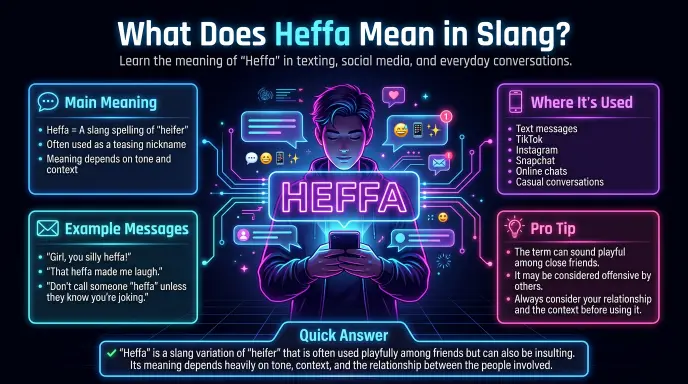
Heffa slang is an informal spelling of “heifer,” a word that is often used as slang to describe someone in a playful, teasing, or insulting way.
Depending on the tone and relationship between the speakers, calling someone a heffa can be a joke between friends or a rude insult. The meaning changes with the context, so it is important to understand how the word is being used.
People search for heffa slang because they hear it in conversations, social media posts, music, or television shows and want to know if it is funny, offensive, or harmless. This guide explains what heffa means, where it is commonly used, its different meanings, examples, and when you should avoid using it.
Quick Answer: What Does Heffa Mean in Slang?
Heffa slang is another spelling of “heifer.” It is usually used to refer to a person in a teasing or insulting way. The tone can be playful among close friends, but many people consider it rude when used to insult someone’s appearance or behavior.
Example:
“You shoking, heffa!”
Meaning:
“You’re being silly!” or “You’re acting funny!”
What Does Heffa Mean in Slang?
Heffa is a slang variation of the word “heifer,” which originally refers to a young female cow.
As slang, the word no longer relates to animals. Instead, people use it to describe someone during casual conversations, arguments, or jokes.
The meaning depends on:
- The speaker’s tone
- The relationship between the people
- The situation
- The cultural background
Sometimes it is used affectionately between close friends.
Other times, it is meant as an insult.
Because of this, context is very important.
Origin of the Word Heffa
Heffa comes from the word “heifer.”
Over time, many English speakers began spelling and pronouncing it as “heffa” to match casual speech.
The slang form became popular in everyday conversations, comedy, television, music, and internet culture.
Today, both spellings may appear online, but heffa is usually the informal version.
Different Meanings of Heffa Slang
Heffa as a Playful Nickname
Some close friends use heffa while joking with each other.
The word is meant to be funny instead of offensive.
Example:
“Girl, you forgot your phone again, heffa!”
Meaning:
The speaker is teasing a close friend.
This use normally appears between people who know each other well.
Heffa as an Insult
Heffa can also be used to insult someone.
In this situation, it may criticize:
- Someone’s attitude
- Their actions
- Their appearance
Example:
“Don’t be such a heffa.”
Meaning:
The speaker is expressing frustration or annoyance.
Because this meaning can hurt someone’s feelings, many people avoid using it.
Heffa in Humorous Conversations
Some comedians, television characters, and internet users say heffa simply to make people laugh.
Example:
“You little heffa, you scared me!”
Meaning:
The speaker is joking in a friendly way.
Again, the relationship between the people matters.
Where Is Heffa Slang Commonly Used?
Heffa is mostly heard in casual conversations and entertainment rather than formal communication.
Common places include:
- Social media
- Comedy videos
- Television shows
- Text messages
- Family conversations
- Friend groups
Heffa on Social Media
People sometimes use heffa in comments, memes, and funny videos.
Example:
“You funny, heffa.”
Meaning:
The speaker is teasing someone playfully.
Heffa in Text Messages
Friends may use heffa during casual chats.
Example:
“Heffa, answer your phone!”
Meaning:
The speaker is joking with a friend.
Heffa in Entertainment
Television shows, comedy sketches, and music sometimes use heffa to create humor or playful conversations.
The meaning depends on the character’s tone and the situation.
Is Heffa Rude, Offensive, or Harmless?
Heffa is not always offensive, but it can easily sound rude.
Among close friends, it may be harmless if everyone understands it is a joke.
However, using heffa with strangers, coworkers, teachers, or people who may not appreciate the joke can cause offense.
If the word is used to insult someone’s body, appearance, or personality, it is generally considered disrespectful.
Because people react differently to the term, it is usually safer to choose kinder language when speaking with someone you do not know well.
Why Do People Use Heffa Instead of Other Words?
People use heffa because it can sound playful, dramatic, or humorous in casual conversations. Some speakers use it to tease close friends, while others use it to show frustration without using stronger insults.
Common reasons people use heffa include:
- Joking with friends
- Reacting to something funny
- Expressing annoyance
- Quoting television shows or internet jokes
- Using familiar regional slang
Example:
“You little heffa, you almost made me laugh out loud.”
Meaning:
The speaker is teasing a friend in a lighthearted way.
How Heffa Meaning Changes by Context
The meaning of heffa depends on the conversation and the relationship between the people involved.
| Situation | Meaning | Tone |
| Friends joking | Playful nickname | Friendly |
| Family conversation | Light teasing | Casual |
| Argument | Insult | Negative |
| Comedy show | Humorous expression | Funny |
| Social media | Joke or criticism | Depends on context |
The same word can sound friendly in one conversation and offensive in another.
Real-Life Examples of Heffa Slang
Example Between Friends
Friend 1: “You ate the last cookie.”
Friend 2: “You little heffa!”
Meaning:
Friend 2 is joking in a playful way.
Example in a Text Message
Person 1: “You forgot my birthday.”
Person 2: “Sorry, heffa. I’ll make it up to you.”
Meaning:
The speaker is teasing a close friend while apologizing.
Example on Social Media
Comment:
“You funny, heffa.”
Meaning:
The person is reacting to a funny post in a playful way.
Example During an Argument
Person 1: “Stop talking about me.”
Person 2: “Whatever, heffa.”
Meaning:
Here the word is used as an insult and may offend the other person.
Example in a Family Conversation
Sibling: “Heffa, give me the remote.”
Meaning:
The word is used jokingly between family members.
Is Heffa Appropriate for Professional Communication?
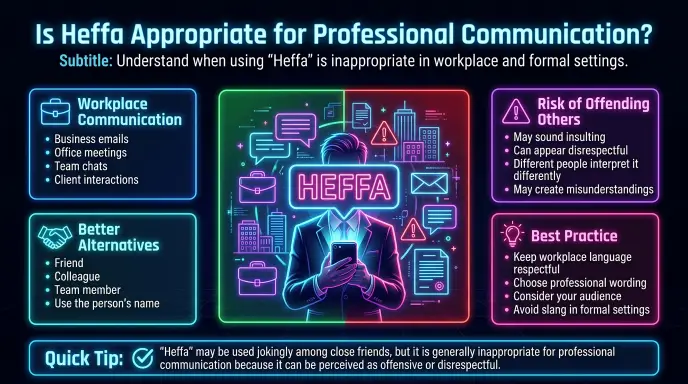
Heffa is not appropriate for professional communication.
Avoid using it in:
- Business emails
- Workplace meetings
- School assignments
- Professional presentations
- Conversations with customers
Even if you mean it as a joke, many people may see it as disrespectful.
Instead of saying:
“Heffa, hurry up.”
Use:
“Could you please hurry up?”
Polite language is a better choice in formal situations.
Origin and History of Heffa Slang
Heffa comes from the word “heifer,” which originally refers to a young female cow.
Over time, the pronunciation changed in casual speech, leading many people to spell it as heffa when writing informal conversations.
The slang form became popular through spoken English, comedy, television, and later through social media and online conversations.
The exact date when heffa became common as slang is uncertain, but it has been part of informal English for many years.
Similar Slang Words Related to Heffa
| Slang Word | Meaning | Tone |
| Heffa | Playful or insulting nickname | Depends on context |
| Girl | Friendly way to address someone | Casual |
| Sis | Female friend or close person | Friendly |
| Bestie | Best friend | Positive |
| Fool | Silly person | Playful or negative |
These words are not exact synonyms, but they often appear in similar casual conversations.
Common Misunderstandings About Heffa
Heffa Does Not Always Mean an Insult
Many people believe heffa is always offensive.
In reality, close friends and family members sometimes use it jokingly.
The relationship between the speakers makes a big difference.
Heffa Is Not Formal English
Heffa is informal slang.
It should not be used in formal writing, business communication, or academic work.
Not Everyone Finds Heffa Funny
Some people laugh when they hear the word.
Others may feel insulted because of its connection to the original meaning of “heifer.”
If you are unsure how someone will react, it is better to avoid using it.
When Should You Avoid Using Heffa?
Avoid using heffa when there is a risk that someone could misunderstand your intention.
Do not use it:
- With strangers
- At work
- At school
- During formal events
- When discussing serious topics
- If someone has asked you not to use it
Choosing respectful language helps prevent misunderstandings and hurt feelings.
Why Do People Search for Heffa Slang?
People search for heffa slang because they hear the word in conversations, movies, TV shows, music, or social media and want to know what it means. Since the word can sound playful in one situation and insulting in another, many people look for the correct meaning before using it.
Understanding the context is important because the same word can create very different reactions depending on the speaker, the listener, and the tone of the conversation.
How to Use Heffa Naturally
Heffa is best understood as casual slang that is sometimes used between people who know each other well.
Natural examples:
“You always make me laugh, heffa.”
“Heffa, you forgot your keys again.”
“You little heffa, you scared me!”
These examples are playful. Using the word with someone you do not know well may sound disrespectful.
Heffa Compared With Similar Slang Words
| Slang Word | Meaning | Common Tone |
| Heffa | Playful or insulting nickname | Depends on context |
| Bestie | Close friend | Friendly |
| Sis | Female friend | Friendly |
| Girl | Casual way to address someone | Friendly |
| Fool | Silly person | Playful or negative |
Although these words may appear in similar conversations, they do not all carry the same meaning.
Frequently Asked Questions About Heffa Slang
Q1. What does heffa mean in slang?
Heffa is an informal spelling of “heifer.” It is usually used as a playful nickname or an insult, depending on the situation and the speaker’s tone.
Q2. Is heffa an offensive word?
It can be. Some people use it jokingly with close friends, while others consider it rude or disrespectful, especially if it is directed at someone’s appearance or behavior.
Q3. Is heffa the same as heifer?
Yes. Heffa is an informal spelling that reflects casual pronunciation, while heifer is the standard English spelling.
Q4. Is heffa a compliment?
No, heffa is generally not considered a compliment. Even when it is used jokingly, it is usually playful teasing rather than praise.
Q5. Can friends call each other heffa?
Yes. Some close friends use heffa as a joke, but only if both people are comfortable with the term.
Q6. Is heffa used on social media?
Yes. Heffa sometimes appears in memes, comments, videos, and casual posts where people are joking with friends.
Q7. Can I use heffa at work?
No. Heffa is informal slang and is not suitable for professional communication.
Q8. Is heffa still used today?
Yes. Although it is less common than some modern internet slang, people still use heffa in casual conversations, entertainment, and online posts.
Q9. Why do some people find heffa offensive?
Some people dislike the word because it comes from “heifer,” a young female cow, and may sound insulting when directed at a person.
Q10. What is the safest alternative to heffa?
Friendly words like “friend,” “bestie,” or simply using the person’s name are safer choices, especially when speaking with people you do not know well.
Conclusion
Heffa slang is an informal version of “heifer” that can be playful or offensive depending on the context. Friends and family members may use it as harmless teasing, while others may see it as disrespectful, especially during arguments or when it refers to someone’s appearance.
Before using heffa, think about your relationship with the other person and how they may interpret the word. Choosing respectful language is usually the best option if there is any chance of misunderstanding.
Understanding the meaning and tone of heffa helps you recognize the word in conversations, social media, and entertainment while avoiding situations where it could cause offense.

I am Masson Caldwell, a language enthusiast and content writer at SlangAura. I write about internet slang, texting trends, and modern expressions to help readers understand the evolving world of online language with simple and clear explanations.