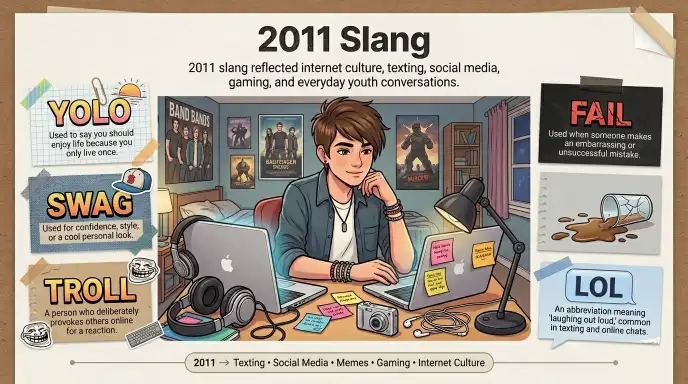
2011 slang included many short, playful, and internet-friendly words. Some popular terms from that period were “swag,” “YOLO,” “totes,” “peng,” “whevs,” “bromance,” and “tweet.”
Their popularity varied by country, age group, and online community.The year 2011 was a key period for social media language. Twitter, Facebook, texting, blogs, and online forums helped informal words spread quickly. Some terms were new to mainstream audiences, while others had existed for years and simply became more popular around that time.
Contemporary language sources from 2011 recorded words such as “peng,” “totes,” and “whevs.”If you are looking for 2011 slang, this guide explains the words linked with that period in simple English. It also shows how people used them and which terms have stayed common.
Quick Answer: What Was 2011 Slang?
2011 slang included informal words such as “swag,” “totes,” “peng,” “whevs,” “bromance,” and “YOLO.” Some were strongly linked with online culture, while others came from regional or youth speech. Not every term started in 2011; many simply became popular during that period.
What Does 2011 Slang Mean?
2011 slang refers to informal words and phrases that were popular, widely discussed, or strongly associated with conversations around the year 2011.
There was no single list of official 2011 slang. Different communities used different words.
For example, Cambridge Dictionary’s language blog recorded “peng” as a UK slang adjective meaning very attractive in 2011. It also recorded “totes” as a very informal form of “totally” and “whevs” as a casual form of “whatever.”
Other words had a wider online audience.
Swag
Swag was strongly associated with style, confidence, and a fashionable image during the early 2010s.
Someone with “swag” was often seen as confident and stylish.
Example:
“He has serious swag.”
The word was already in use before 2011. Its strong connection with early-2010s youth culture makes it one of the terms commonly associated with that period.
Totes
“Totes” is a shortened form of “totally.”
It was used in casual speech and online messages.
Example:
“That movie was totes amazing.”
The word had a playful tone and was especially common in informal communication. Cambridge documented it as very informal in 2011.
Peng
“Peng” is a UK slang word meaning very attractive.
Example:
“That outfit is peng.”
Cambridge recorded the word in 2011 and gave examples from British usage.
Whevs
“Whevs” is a casual form of “whatever.”
It can show indifference or a lack of interest.
Example:
“Whevs, I don’t care.”
Cambridge described it as a very informal expression used to show rude indifference.
Popular 2011 Slang Words and Their Meanings
Several informal words were widely connected with the online culture of the early 2010s.
| Slang | Simple meaning | Common tone |
| Swag | Style or confident attitude | Positive |
| Totes | Totally | Playful |
| Peng | Very attractive | Positive |
| Whevs | Whatever | Dismissive |
| Bromance | Close friendship between men | Casual |
| YOLO | You Only Live Once | Playful or bold |
| Tweet | A post on Twitter | Informal |
| Fist bump | Friendly hand gesture | Casual |
Some of these terms were not created in 2011. The list reflects words that were popular or strongly discussed around that period.
For example, Merriam-Webster-related reporting from August 2011 discussed “bromance,” “tweet,” “retweet,” “sext,” and “fist bump” as part of the growing recognition of informal modern vocabulary.
Why Was Slang Popular in 2011?
Social media played a major role in spreading informal language.
People were using short posts, text messages, comments, and tweets to communicate quickly. This created a strong space for short and memorable expressions.
Twitter was especially important because its short-post format encouraged brief messages. Words such as “tweet” and “retweet” became part of everyday online language during this period.
Texting also helped casual expressions spread among friends and younger users.
Social media and slang
Facebook and Twitter gave people new ways to share phrases with large groups.
A word could start in a small community and then appear in posts, videos, news stories, and everyday conversations.
Texting and slang
Text messages encouraged short and easy expressions.
Words such as “totes” fit this style because they made casual messages feel playful and quick.
Music and pop culture
Music, television, celebrities, and online trends also helped slang spread.
A phrase could become familiar after appearing repeatedly in songs, interviews, memes, or entertainment news.
Was YOLO Popular in 2011?
Yes, YOLO became strongly associated with the early 2010s and was especially popular around 2011:2012.
YOLO stands for “You Only Live Once.” People used it to express the idea of enjoying life or taking a chance.
Example:
“I’m going on the trip. YOLO!”
The phrase could sound serious, humorous, or playful depending on the situation.
It is important to avoid saying that YOLO was invented in 2011. The expression existed earlier, but it became much more visible during the early 2010s.
Was Swag a 2011 Slang Word?
Swag was one of the words strongly associated with early-2010s slang.
It was often used to describe someone’s style, confidence, or fashionable appearance.
Example:
“He walked in with so much swag.”
The word existed long before 2011. Its meaning also changed over time, so it is more accurate to say that swag was popular during the period rather than calling it a word created in 2011.
2011 Slang in British English
Not all 2011 slang was the same across English-speaking countries.
British English had its own popular informal terms. “Peng” is one clear example. Cambridge documented it in 2011 as UK slang for someone or something very attractive.
This shows why location matters when discussing old slang.
A word popular among British teenagers may not have been common among American users. The same period could produce different slang trends in different places.
Was 2011 Slang Mostly Internet Slang?
No.
Some 2011 slang came from everyday speech, music, regional language, and youth culture. Other terms became popular because of social media and online communication.
The internet helped spread these words faster, but it did not create every term.
For example, “peng” was recorded as UK slang, while “tweet” became closely tied to social media. These words had different paths into popular use.
Is 2011 Slang Still Used Today?
Some 2011 era terms are still familiar, while others now sound dated.
Words such as “tweet,” “bromance,” and “swag” remain recognizable. Other expressions may sound strongly linked with early-2010s culture.
Slang changes quickly. A word can become popular, spread widely, and later lose its everyday appeal.
That is why old slang is useful for understanding the culture and communication style of its time.
Real-Life Examples of 2011 Slang
The following examples show how some popular early-2010s slang could appear in casual conversations.
Example 1: Swag
“Dude, your new jacket has so much swag.”
Here, swag means a stylish or confident look.
Example 2: YOLO
“We booked the tickets at the last minute. YOLO!”
Here, YOLO means “You Only Live Once” and shows a bold attitude.
Example 3: Totes
“That concert was totes amazing.”
Here, totes is a casual short form of “totally.”
Example 4: Peng
“That new song is peng.”
In British slang, peng can describe something very attractive or appealing.
Example 5: Whevs
“Whevs, let’s just leave.”
Here, whevs is a casual form of “whatever” and can show indifference.
Similar Slang From the Early 2010s
The early 2010s had many informal words that appeared in texting, social media, music, and everyday speech.
| Slang | Meaning |
| Epic | Extremely impressive or exciting |
| Sick | Very good or impressive |
| Legit | Real, genuine, or very good |
| Fail | Something that goes badly |
| Chillax | Relax and take it easy |
| Pwned | Completely defeated or outplayed |
| Lit | Exciting or excellent |
| Bae | A romantic partner or someone close |
Not every term began in 2011. Some became popular before that year and continued into the early 2010s.
Why Did 2011 Slang Become Popular?
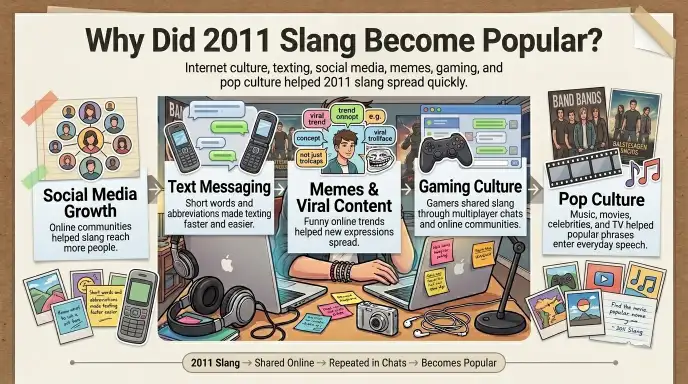
Social media helped informal language spread quickly during this period.
Twitter, Facebook, blogs, texting, music, and online communities gave people more ways to share short expressions.
A phrase could move from a small group into wider popular culture. Once people saw it often, they could start using it in their own conversations.
Social media
Social platforms gave users a fast way to repeat new words.
A popular phrase could appear in posts, comments, memes, and status updates within a short time.
Texting
Texting encouraged short and playful language.
Expressions such as “totes” fit well because they were quick to type and easy to understand in casual conversations.
Music and entertainment
Music, television, celebrities, and online videos also helped slang reach larger audiences.
Some expressions became popular because people heard them repeatedly in entertainment and then copied them in everyday speech.
When Should You Avoid Using 2011 Slang?
Some early-2010s slang can sound dated today.
That does not make every word wrong. It simply means that the phrase may sound old-fashioned or strongly linked to that period.
Avoid using dated slang when:
- Writing a formal report
- Preparing academic work
- Sending a professional email
- Speaking in a formal meeting
- Writing serious public information
- Trying to sound current without checking modern usage
In casual conversations, older slang can still work as a joke, reference, or nostalgic expression.
Is 2011 Slang Still Used Today?
Some words from that period are still understood today, while others have become less common.
“YOLO,” “swag,” “epic,” and “lit” remain recognizable to many English speakers. However, their popularity and tone have changed over time.
Some expressions may now sound nostalgic or dated. Their meaning can also depend on age group, region, and online community.
This is why it is better to describe these terms as slang associated with the early 2010s rather than claiming that every word was used by everyone in 2011.
How Is 2011 Slang Different From Gen Z Slang?
2011 slang belongs to an earlier stage of online culture. Gen Z slang developed through newer platforms, memes, gaming communities, and social media trends.
Terms such as “rizz,” “no cap,” “sus,” and “delulu” are associated with more recent online language.
The two groups can overlap. Some older words remain popular even after newer expressions appear.
Frequently Asked Questions About 2011 Slang
Q1. What was the slang in 2011?
Popular slang around 2011 included “swag,” “YOLO,” “epic,” “totes,” and “sick.” Many of these terms spread through social media, music, entertainment, and youth culture.
Q2. What is Gen Z’s favorite slang?
There is no single favorite Gen Z slang word. Common examples include “rizz,” “no cap,” “bet,” “sus,” “slay,” and “delulu.”
Q3. What are 2010 slang words?
Slang associated with around 2010 included “swag,” “fail,” “epic,” “chillax,” “pwned,” and “legit.” Usage varied by region, age group, and online community.
Q4. What were slang words in 2012?
Slang popular around 2012 included “YOLO,” “swag,” “turnt,” “lit,” “bae,” and “basic.” Their popularity grew through music, memes, television, and social media.
Q5. What are some old Gen Z slang?
Older Gen Z slang includes “yeet,” “fam,” “sus,” “salty,” “slay,” “low-key,” and “deadass.” Many of these terms became popular before newer Gen Z expressions appeared.
Q6. What slang was used in 2017?
Popular slang around 2017 included “lit,” “woke,” “fam,” “extra,” “snatched,” “gucci,” and “tea.” These terms were common in online conversations and popular culture during that period.
Q7. Was YOLO popular in 2011?
Yes. YOLO became strongly associated with the early 2010s and gained major attention around 2011 and 2012. The phrase means “You Only Live Once.”
Q8. Was swag popular in 2011?
Yes. Swag was strongly associated with early-2010s youth culture. It commonly described confidence, style, or a fashionable appearance.
Conclusion
2011 slang reflected the changing style of communication in the early social media era. Words such as “swag,” “YOLO,” “totes,” “peng,” and “whevs” appeared in different communities and settings.
Not every term started in 2011, and not every English speaker used the same slang. Region, age, online communities, and popular culture all influenced language at the time.
If you see an old slang word from 2011, check its context first. That will help you understand its meaning, tone, and connection to early-2010s culture.
Other Slang Meanings to Know:
Fortnite Slang: Meaning, Terms, and Common Examples

I am Masson Caldwell, a language enthusiast and content writer at SlangAura. I write about internet slang, texting trends, and modern expressions to help readers understand the evolving world of online language with simple and clear explanations.