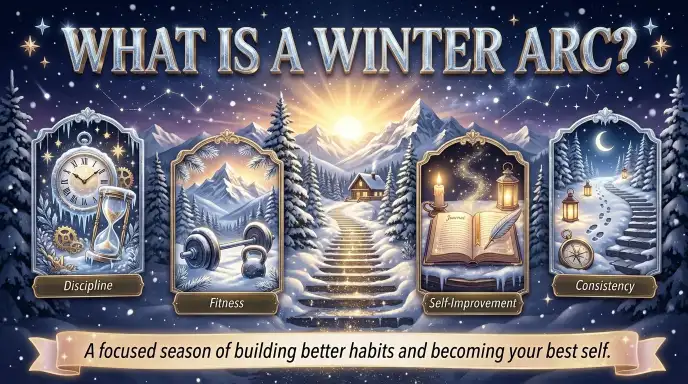
Winter arc means a 90 day self improvement challenge that runs from October 1 to December 31.
You pick three to five daily habits, hold them through the coldest months, and reach January already ahead. The phrase blew up on TikTok in 2024, and it returns every autumn when the days turn short and dark.
The idea is simple. Most people wait for January 1 to change their lives. Winter arc flips that script. You start on October 1, use the last quarter of the year as training time, and meet the new year as a stronger version of yourself. December feels dark and slow, so the challenge gives those months a purpose.
This guide covers everything. You will learn the exact meaning, where the phrase came from, how people use it on TikTok and Instagram, the rules (there is no official rulebook), ten real chat examples, and how to reply when someone says they are in their winter arc.
Short Answer
Winter arc means a self chosen challenge: you spend October, November, and December building better habits so you start the new year ahead.
The “arc” comes from storytelling, where a character arc marks the stretch where a hero changes. On TikTok, people say “I am entering my winter arc” when they lock in on training, sleep, food, and focus for the last 90 days of the year.
What Does Winter Arc Mean?
The Two Words Behind It
“Winter” names the season. “Arc” comes from storytelling. In a story, a character arc marks the stretch where a hero changes: the training montage, the comeback, the quiet work before the reveal. A winter arc borrows that idea and applies it to real life. You treat the last quarter of the year as your training montage.
The Challenge Version
In its strict sense, a winter arc means a 90 day challenge. You pick three to five daily rules and hold them from October 1 to December 31 (some people run it to January 1).
Common rules include training four times a week, sleeping eight hours, eating on a plan, reading ten pages a day, and cutting out distractions. The goal is simple: reach January already doing the thing everyone else is about to promise.
The Mood Version
In casual use, “winter arc” also names a mood. People post gym selfies at 5 a.m., talk about “locking in,” and go quiet on social plans. The hoodie up, early morning, heads down aesthetic belongs to the trend too. Some people use the phrase as a joke, posting sarcastic rules or mocking how fast early motivation fades.
Where Do People Use Winter Arc?
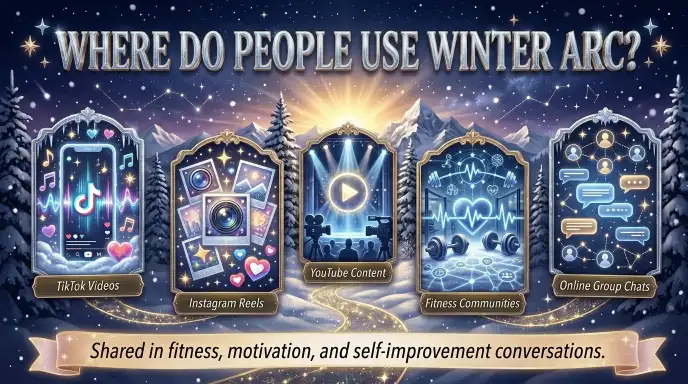
TikTok
TikTok started the trend and still drives it. Creators post “entering my winter arc” videos, share their rules, and film their progress. The hashtag filled with nearly half a million posts by November 2024.
Instagram carries the same trend through Reels and Stories. Fitness creators post their winter arc routines, and the aesthetic side (hoodies, cold mornings, gym clips) thrives here.
X (Twitter)
On X, people joke about the trend as much as they follow it. Parody rule lists and memes spread fast here.
YouTube
YouTubers make longer guides: how to plan a winter arc, which habits to pick, and how to stay consistent.
Group Chats and Texts
Friends use the phrase in private chats too: “I am in my winter arc, so no late nights.” It works as a short way to say you are busy improving yourself.
Winter Arc on TikTok: What the Videos Look Like
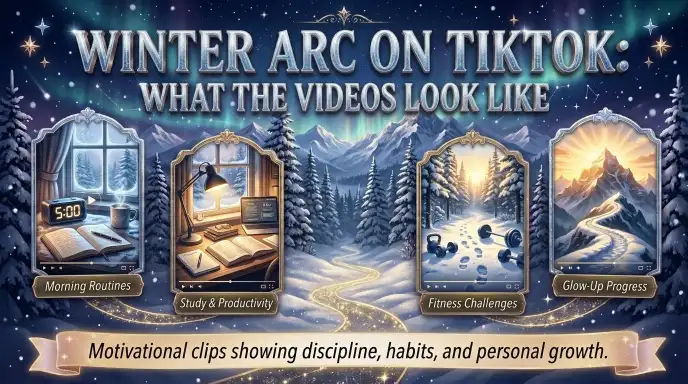
The Rule List Video
A creator films herself writing her winter arc rules on a whiteboard or a notebook. She lists three to five habits, sets her start date, and invites viewers to join her. These videos work because they feel like a plan, not a lecture.
The Day in the Life Video
A creator films a full winter arc day: a 5 a.m. alarm, a cold walk, a gym session, a healthy meal, and an early bedtime. The cozy winter light and the quiet routine pull viewers in.
The Progress Update Video
After 30 or 60 days, creators post before and after updates. They share their progress, which habits stuck, and what they would do differently. These updates keep the trend alive deep into December.
The Parody Video
Some creators mock the trend with sarcastic rule lists: wake up at noon, eat snacks, call it “rest arc.” These jokes spread fast and prove the phrase has entered everyday slang.
10: Real Chat Examples Using Winter Arc
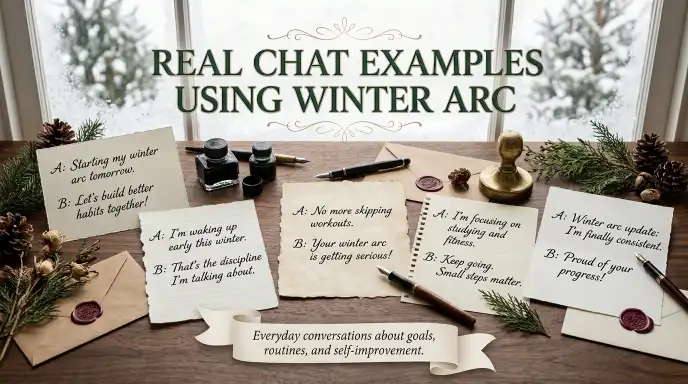
A: “Why are you up at 5 a.m.?”
B: “Winter arc. Gym before work now.”
A: “Want to come out tonight?”
B: “Can’t. I am in my winter arc, so I am staying in.”
A: “You look different lately.”
B: “Winter arc things. I train every day now.”
A: “What are your winter arc rules?”
B: “Gym four times a week, no sugar, read every night.”
A: “Is it too late to start a winter arc?”
B: “No! Start today. There is no official start date.”
A: “October 1 already?”
B: “Yes! Winter arc season starts now.”
A: “Why is everyone posting gym selfies?”
B: “Winter arc. Everyone locks in at the same time.”
A: “How is your winter arc going?”
B: “Day 40 and I feel stronger already.”
A: “New Year, new me?”
B: “No, winter arc. I started in October.”
A: “What happens after December 31?”
B: “You enter January already ahead. That is the whole point.”
How to Reply When Someone Says Winter Arc

Funny Reply
“Okay, main character. See you in January, leveled up.”
Casual Reply
“Nice, lock in! What are your rules?”
Friendly Reply
“Love that for you! I am cheering you on.”
Neutral Reply
“Cool. Good luck with it.”
Is Winter Arc Rude or Offensive?
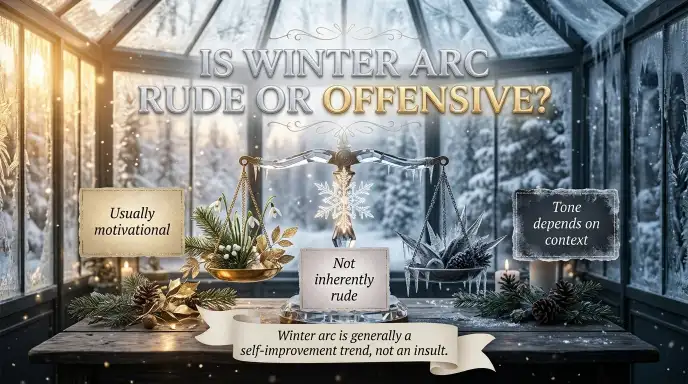
No. Winter arc carries no rude or offensive meaning. It is a motivational phrase about self improvement, and people use it in a positive or playful way.
One fair criticism exists: some people say the trend turns rest into guilt and makes normal winter tiredness feel like failure. Therapists note that the challenge works best as a consistency challenge, not a punishment. So the phrase itself is harmless, but the pressure around it can feel heavy for some people. Keep that in mind when you join in.
Who Uses Winter Arc?
Gen Z started the trend on TikTok, and young adults still use it the most. Fitness creators, self improvement accounts, and students use it heavily in autumn. But nothing about the trend limits it by age. Anyone who wants a focused last quarter of the year can claim a winter arc. Brands jumped in too: Gymshark and MyProtein both published winter arc explainers, and supplement brands now post winter arc guides each October.
Where Did Winter Arc Come From?

Early Mentions (2022)
The phrase appeared online around 2022 in small fitness and self improvement corners of Twitter. Urban Dictionary logged its earliest dated entry on September 1, 2022, describing winter as a time to face mental and physical challenges.
TikTok Blows It Up (2024)
Carly Berges, a Miami self development creator known as @carlyupgraded, popularized the modern version with a TikTok video at the end of September 2024. She laid out her plan for the last three months of the year:
waking earlier, training, eating on a plan, journaling, and reading. By the time TODAY covered the trend in November 2024, her video had 4.6 million views, and nearly half a million posts sat under the hashtag.
The Anime Connection
The “arc” idea likely comes from manga and anime, where a training arc shows a hero disappearing to train and returning stronger. Know Your Meme names the anime link as the leading explanation. Fans even pun on Game of Thrones with “Winter (Arc) Is Coming.”
Winter Arc Rules
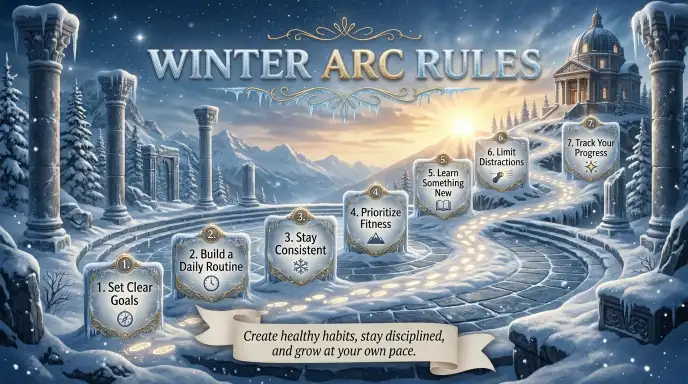
There is no official rulebook. Nobody governs the challenge, and nobody can tell you that your arc does not count. Still, most people follow the same loose shape:
Pick Three to Five Habits
Choose a small set of daily rules you can hold for 90 days. Common picks: train, sleep eight hours, eat clean, read, journal, cut screen time.
Stay Consistent, Not Perfect
The challenge rewards showing up every day. A missed day does not end your arc. There is no restart at day one rule.
Start Any Day
October 1 is the classic start, but you can start in mid November or any day you choose. The only real rule is to begin.
Track Your Progress
Many people log their habits in a journal or an app. Seeing the streak grow keeps motivation alive.
Winter Arc vs Similar Trends
| Trend | Timeframe | Main Idea | Flexibility |
| Winter Arc | Oct 1 to Dec 31 (90 days) | Build habits before the new year | High: you write your own rules |
| New Year Resolution | Starts Jan 1 | Change your life in the new year | High: any goal counts |
| 75 Hard | Any 75 days | Strict daily rules, no excuses | Low: fixed rules, restart if you slip |
| Hot Girl Summer | June to August | Confidence, fun, self love in summer | High: a mood, not a rulebook |
Winter arc stands apart because it uses the quiet months. While everyone else coasts toward the holidays, you lock in and reach January ahead.
Frequently Asked Questions
1. What does winter arc mean in slang?
Winter arc means a self chosen 90 day challenge in the last quarter of the year. You pick three to five daily habits, hold them from October through December, and reach the new year already ahead. The phrase comes from TikTok and borrows “arc” from storytelling.
2. When does winter arc start and end?
The classic window runs October 1 to December 31, about 90 days. Some people run it to January 1. There is no official start date, so you can begin any day, even in mid November. The dates work as a guide, not a strict rule.
3. Who started the winter arc trend?
Carly Berges, a Miami self development creator (@carlyupgraded), popularized the modern version with a TikTok video in September 2024. Early mentions date to 2022, but her video pushed the trend mainstream. By November 2024, her video had 4.6 million views.
4. What are the winter arc rules?
There is no official rulebook. Most people pick three to five daily habits (training, sleep, food, reading, focus) and hold them for 90 days. Consistency matters more than perfection, and a missed day does not end your arc. Pick rules you can hold every day.
5. Is winter arc only for Gen Z?
No. Gen Z started the trend on TikTok, but anyone can join. The idea suits any age: use the last quarter of the year to build habits and start January ahead. Fitness creators, students, and busy adults all join the trend each autumn.
6. What is the difference between winter arc and a New Year resolution?
A resolution starts on January 1. A winter arc starts on October 1, so you reach January already in motion. The arc uses the quiet months as training time instead of waiting for a fresh start. That head start is the whole point.
7. Can I start a winter arc in November?
Yes. There is no official start date. Many guides say you can start any day, including mid November. Pick your habits, start today, and run your arc to December 31. Even six weeks of steady habits can change how you enter January.
8. Is winter arc a real challenge or a joke?
Both. Many people follow it seriously as a 90 day discipline challenge. Others use it as a joke, posting sarcastic rules or mocking how fast motivation fades. Both uses live on TikTok side by side, and the jokes keep the trend in everyday slang.
9. What does “lock in” mean in winter arc?
“Lock in” means focus fully and commit to your habits. In winter arc posts, it means cutting distractions, showing up every day, and treating the last quarter as serious training time. People also use “lock in” for exams, work, and any focused effort.
Conclusion
Winter arc means using the last 90 days of the year as your training ground. You pick a few habits, hold them through the cold and dark months, and reach January as a stronger version of yourself.
The trend started as TikTok slang, but the idea behind it is timeless: start before you feel ready, and let small daily wins stack up. Ninety days sounds long, but it passes fast when you show up daily. Each small win builds the next one.
If the idea excites you, start today. Pick three habits you can hold, write them down, and take day one now. There is no official rulebook and no perfect start date. October 1 may have passed, but your arc starts the day you decide to lock in. Share your rules with a friend, track your streak, and enjoy the quiet pride of finishing what you started. January will come either way; a winter arc makes sure you meet it ahead.
🎀 More to Adore:
GTS OTP Meaning in Text: Real Meaning, Examples & Slang Use

I am Emma Collins, a content writer at SlangAura specializing in internet slang, texting abbreviations, and online language. I create simple and accurate guides to help readers understand modern slang easily and confidently.