What is a shrink slang is a common question because the word shrink appears in movies, TV shows, social media, and everyday conversations. If someone says, “I need to see my shrink,” they are usually talking about a mental health professional rather than something getting smaller.
Although the term has been around for decades, many people still wonder if it is respectful, outdated, or acceptable to use. Understanding the meaning behind this slang can help you avoid confusion and communicate more naturally in conversations. It is especially useful if you watch American TV shows, read online discussions, or hear people talking casually about therapy.
Today, awareness of mental health has increased, so knowing the tone and context of this slang is more important than ever.
Quick Answer:
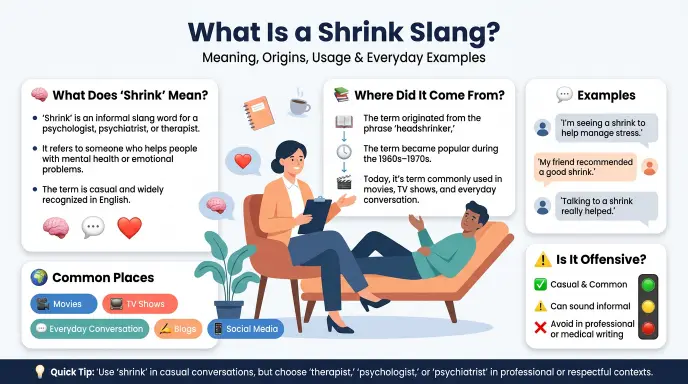
In slang, shrink refers to a psychiatrist, psychologist, therapist, or mental health counselor. It is an informal nickname rather than an official job title and is usually used in casual conversations.
What Does What Is a Shrink Slang Mean in Text?
Meaning of “Shrink” in Slang
When people use the word shrink in text or conversation, they usually mean a professional who helps people with their mental or emotional health.
For example, if someone texts:
“My shrink gave me some good advice today.”
They are talking about their therapist or psychiatrist.
Unlike the everyday meaning of shrink (to become smaller), the slang version has nothing to do with size. Instead, it refers to someone who treats emotional, behavioral, or psychological issues.
The exact professional being discussed depends on the conversation. It could mean:
- A psychiatrist
- A psychologist
- A licensed therapist
- A mental health counselor
Many people use shrink as a general term without distinguishing between these professions.
What Does “Shrink” Stand For?
Unlike internet abbreviations such as LOL or BRB, shrink is not an acronym.
There is no official full form for the word.
Instead, it is simply an informal nickname that became popular in American English.
People sometimes search for:
- shrink full form
- what does shrink stand for
- shrink meaning slang
The answer is the same: Shrink does not stand for anything. It is simply slang for a mental health professional.
Full Form / Definition of the Slang
Is There a Shrink Full Form?
No.
The slang shrink has no full form and is not an abbreviation.
Instead, it is a shortened nickname for professionals who work in mental health.
In modern conversations, it may refer to:
| Term | Meaning |
| Psychiatrist | A medical doctor who diagnoses mental illnesses and can prescribe medication. |
| Psychologist | A professional trained to assess and treat emotional or behavioral issues, usually through therapy and testing. |
| Therapist | A broad term for licensed professionals who provide counseling and emotional support. |
| Counselor | Someone who helps individuals manage personal, emotional, or relationship challenges. |
Because these professions overlap in everyday conversations, many people casually call all of them shrinks.
Is “Shrink” Rude, Offensive, or Neutral?
How People Usually View the Word
The tone of shrink depends on the speaker, the audience, and the situation.
In many casual conversations, the word is considered neutral or mildly informal. Friends often use it without any negative intention.
For example:
- “I’m meeting my shrink tomorrow.”
- “My shrink suggested a new coping strategy.”
These examples sound relaxed rather than disrespectful.
However, not everyone likes the term.
Some mental health professionals and patients prefer more respectful words like:
- therapist
- psychologist
- psychiatrist
- counselor
This is because shrink can sometimes sound old-fashioned or slightly dismissive.
When It May Sound Offensive
Although it is not generally considered a serious insult, it may sound inappropriate in situations such as:
- Professional meetings
- Medical appointments
- Academic writing
- Formal interviews
- Official healthcare discussions
For example, saying:
“The hospital assigned me a shrink.”
may sound less respectful than saying:
“The hospital assigned me a therapist.”
Choosing the more professional term shows respect and avoids misunderstanding.
Where Is “Shrink” Commonly Used?
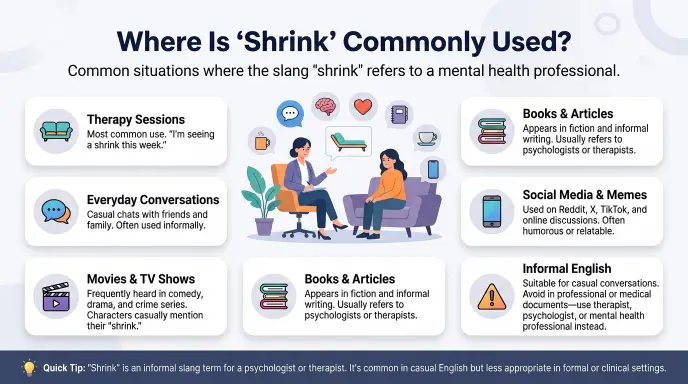
Everyday Conversations
The slang is most common in relaxed, face-to-face conversations among friends, coworkers, or family members.
For example:
- “I’ve been talking to my shrink every week.”
- “Maybe you should ask your shrink about that.”
People often use it naturally without thinking much about it.
Movies and Television
Many American movies and television shows use shrink when characters talk about therapy.
Crime dramas, sitcoms, romantic comedies, and psychological thrillers have helped make the slang widely recognized.
This is one reason international English learners often hear the term before they understand what it means.
Social Media
You may also find shrink on platforms such as:
- X (formerly Twitter)
- Instagram comments
- Online discussion forums
People discussing mental health, anxiety, relationships, or therapy sometimes use the slang casually.
Example:
“My shrink really helped me deal with stress.”
Compared with texting slang like LOL or IMO, shrink is less common in short messages but still appears regularly in conversations about mental health.
Books and Podcasts
Authors, comedians, and podcast hosts occasionally use shrink because it sounds conversational and easy to understand.
Modern books about psychology usually prefer professional terms like therapist or psychologist, but fictional stories often include shrink in dialogue to make conversations sound natural.
Origin and Background of the Slang
Where Did the Word “Shrink” Come From?
The slang shrink has been used in American English for many decades. It comes from the older phrase “headshrinker.”
The nickname was inspired by early misunderstandings of tribal practices involving shrunken heads. Over time, people jokingly connected mental health professionals with the idea of someone who “works on your head” or mind. Eventually, the longer term headshrinker was shortened to simply shrink.
Although the origin is based on humor rather than medical facts, the shorter word became popular in everyday speech, movies, television, and books.
Today, most people use shrink without thinking about its historical background. They simply understand it as an informal way to say therapist or psychiatrist.
Comparison with Similar Slang
Shrink vs Similar Terms
While shrink is a slang word, several other terms describe mental health professionals more accurately. Here’s how they compare.
| Term | Meaning | Tone | Best Used In |
| Shrink | Informal name for a therapist or psychiatrist | Casual | Friends, informal conversations |
| Therapist | Licensed mental health professional | Professional | Everyday and formal situations |
| Psychologist | Specialist in mental health assessment and therapy | Professional | Medical and educational settings |
| Psychiatrist | Medical doctor who can prescribe medication | Professional | Healthcare settings |
| Counselor | Professional who provides guidance and counseling | Neutral | Schools, workplaces, healthcare |
The table shows that shrink is the least formal option. If you’re unsure which word to use, therapist is usually the safest choice.
When to Avoid Using “Shrink”
Professional Settings
Avoid using shrink in professional conversations because it may sound too casual.
Examples include:
- Medical appointments
- Job interviews
- Academic papers
- Healthcare reports
- Professional emails
Using the person’s official title shows more respect.
Speaking With Someone You Don’t Know Well
If you are talking to a teacher, doctor, client, or someone you’ve just met, it’s better to say:
- Therapist
- Psychologist
- Psychiatrist
- Mental health professional
These words sound more polite and appropriate.
When Someone Prefers Professional Language
Some people feel strongly about reducing the stigma around mental health.
If someone introduces their healthcare provider as their therapist, it is respectful to use the same term instead of saying shrink.
Matching the language they use shows consideration.
Polite Alternatives to “Shrink”
Better Words to Use
If you want to sound more respectful or professional, consider these alternatives.
- Therapist
- Psychologist
- Psychiatrist
- Counselor
- Mental health professional
- Behavioral health specialist
These words work well in both formal and casual conversations.
For example:
Instead of:
“I’m seeing my shrink tomorrow.”
You could say:
“I’m seeing my therapist tomorrow.”
Both sentences communicate the same idea, but the second sounds more professional.
Why People Use This Slang
It Is Short and Easy to Say
One reason people continue using shrink is convenience.
The word is only one syllable and is easier to say than psychiatrist or mental health professional.
It Creates a Casual Tone
Friends often use slang because it makes conversations feel relaxed.
For example:
“My shrink suggested I take a break from work.”
This sounds like everyday conversation rather than formal medical language.
Influence of Movies and Television
American entertainment has helped keep the slang popular.
Characters in sitcoms, dramas, and comedy films frequently say shrink, making the term familiar even to people who have never attended therapy.
Habit and Cultural Usage
Many English speakers grew up hearing the word.
As a result, they continue using it naturally without intending to offend anyone.
However, younger generations who openly discuss mental health often prefer therapist because it sounds more respectful and modern.
Impact of Using Slang in Communication
Positive Effects
Using slang like shrink can make conversations feel:
- Friendly
- Relaxed
- Natural
- Less intimidating
Some people even find that informal language makes discussing mental health feel easier.
Possible Drawbacks
There are also situations where slang can create problems.
It may:
- Sound unprofessional
- Be misunderstood by English learners
- Feel disrespectful to some mental health professionals
- Reinforce outdated stereotypes if used carelessly
Because of this, understanding your audience is important before choosing the word.
Is It Safe for Social Media?
Yes, in Most Cases
Using shrink on social media is generally safe.
People commonly use it when sharing experiences about:
- Therapy
- Anxiety
- Depression
- Stress management
- Personal growth
- Mental wellness
The word itself is not considered offensive by social media platforms.
Consider Your Audience
Although the slang is acceptable online, think about who will read your post.
If you’re writing:
- Educational content
- Mental health advice
- Professional articles
- Healthcare information
using therapist or mental health professional is usually a better choice because it sounds more respectful and accurate.
Real-Life Examples of Usage
Friendly Conversation
Emma: “How have you been feeling lately?”
Sarah: “Much better. My shrink has really helped me manage stress.”
Casual Conversation
“I’m meeting my shrink after work, so I’ll be a little late.”
Argumentative Tone
“You should probably talk to a shrink instead of arguing with everyone.”
In this example, the word may sound sarcastic or dismissive depending on the speaker’s tone.
Social Media Example
“My shrink gave me one piece of advice that completely changed how I deal with anxiety.”
Text Message Example
Friend 1: “Are you free this afternoon?”
Friend 2: “Not today. I have an appointment with my shrink.”
Frequently Asked Questions
Is shrink an offensive slang word?
No. In most situations, shrink is considered informal rather than offensive. However, some people feel it sounds outdated or less respectful than terms like therapist or psychologist. If you’re unsure, use the professional title instead.
What does shrink stand for?
Shrink does not stand for anything. It is not an acronym and has no full form. It is simply an informal slang term for a mental health professional.
Is shrink the same as a therapist?
Often, yes. In everyday conversation, people use shrink to refer to therapists, psychologists, psychiatrists, or counselors. The exact meaning depends on the context, but it generally refers to someone who provides mental health care.
Can I use shrink in professional writing?
It is not recommended. In professional, academic, or healthcare settings, use words like therapist, psychologist, psychiatrist, or mental health professional instead. These terms are clearer and more respectful.
Is shrink commonly used in texting?
Yes, but not as often as internet abbreviations like LOL or BRB. People usually use shrink when talking about therapy, counseling, or mental health in text messages, online forums, and social media discussions.
Why do people call therapists “shrinks”?
The slang comes from the older term headshrinker, which became popular in American English many years ago. Over time, it was shortened to shrink, and the nickname remained in everyday speech.
Conclusion
Understanding what is a shrink slang helps you recognize the term when you hear it in conversations, movies, television shows, books, or online discussions. In modern English, shrink is an informal nickname for a therapist, psychologist, psychiatrist, or another mental health professional. Although many people use it casually without negative intent, it is still considered slang and may sound too informal in professional or medical settings.
Since shrink has no full form and is not an abbreviation, the meaning depends entirely on the context in which it is used. When chatting with friends, the term is generally acceptable. However, if you’re writing professionally or speaking with healthcare providers, using words like therapist or mental health professional is a more respectful and appropriate choice.
The key takeaway is simple: know your audience, consider the tone of the conversation, and choose the word that best fits the situation. Using the right language not only improves communication but also shows respect for mental health professionals and those seeking their support.
Related Texting Slang:

I am Emma Collins, a content writer at SlangAura specializing in internet slang, texting abbreviations, and online language. I create simple and accurate guides to help readers understand modern slang easily and confidently.