Pop slang refers to informal words or expressions that become popular through music, movies, social media, internet culture, and everyday conversations.
These terms often spread quickly on platforms like TikTok, Instagram, Snapchat, Reddit, Discord, and in texting. Unlike traditional slang, pop slang changes frequently as new trends appear and older expressions fade.
People often search for pop slang to understand trending words they see online or hear in conversations. Some expressions stay popular for years, while others disappear within a short time. Learning these terms makes it easier to understand online discussions and communicate naturally with friends.
Quick Answer:Pop Slang
Pop slang is a collection of trendy informal words and phrases that become popular through pop culture, social media, music, and the internet. These expressions are commonly used in casual conversations and online communities.
What Does Pop Slang Mean in Text?
In text messages, pop slang refers to popular informal words people use to make conversations more fun, expressive, and modern.
These expressions often reflect current internet culture and change as new trends become popular.
Pop Slang in Texting
Friends commonly use pop slang to react to messages, compliment someone, or describe exciting situations.
Examples:
- “That outfit is fire.”
- “This song is a vibe.”
- “You’re so iconic.”
These expressions make conversations sound more natural and engaging.
Pop Slang on Social Media
Many pop slang words first become popular through short videos, memes, influencers, and online communities.
Examples:
- “That edit ate.”
- “This trend is everywhere.”
- “She’s serving looks.”
As trends change, new slang replaces older expressions.
Definition of Pop Slang
Pop slang means informal language that becomes widely recognized because of popular culture and internet trends.
Unlike regional slang, pop slang often spreads quickly across different countries through social media.
Common Characteristics
Pop slang is usually:
- Informal.
- Trend-driven.
- Easy to remember.
- Popular among younger audiences.
- Frequently used online.
Many expressions eventually become part of everyday conversations.
Different Meanings of Pop Slang
The phrase pop slang can describe different types of popular informal language.
Internet Slang
Words that become popular online.
Examples:
- Fire
- Goated
- Slay
- Ate
Social Media Slang
Expressions widely used on platforms like TikTok and Instagram.
Examples:
- It’s giving…
- Main character
- Delulu
- NPC
Everyday Pop Culture Slang
Some words move beyond social media and become common in daily conversations.
Examples:
- Vibe
- Iconic
- Sever
- Low-key
Each category reflects a different part of modern communication.
Is Pop Slang Rude, Offensive, or Neutral?
Most pop slang is neutral or positive.
People mainly use it to express excitement, admiration, humor, or agreement.
Friendly Use
Friends often use pop slang during casual conversations.
Examples:
- “You’re iconic.”
- “That movie was fire.”
Neutral Use
Many expressions simply describe something impressive or interesting.
Examples:
- “That’s a vibe.”
- “This place is aesthetic.”
Can Pop Slang Be Offensive?
Some pop slang terms are harmless, while others may become offensive depending on their meaning and the situation.
Before using unfamiliar slang, learn its meaning and how people commonly use it.
Where Is Pop Slang Commonly Used?
Pop slang appears in many everyday conversations and online communities. It spreads quickly through entertainment, social media, and internet trends.
Text Messages
Friends often use pop slang to make conversations more fun and expressive.
Examples:
- “That concert was fire.”
- “Your new profile picture is iconic.”
- “This meme is hilarious.”
Social Media
Platforms like TikTok, Instagram, Snapchat, Reddit, Facebook, X, and YouTube help new slang become popular.
Examples:
- “She’s serving looks.”
- “That edit ate.”
- “This trend is a vibe.”
Gaming Communities
Gamers also use modern pop slang while chatting with teammates or reacting to exciting moments.
Examples:
- “That play was cracked.”
- “You’re goated.”
- “That win was huge.”
Everyday Conversations
Many pop slang words are now part of daily speech, especially among younger people.
Examples:
- “That café has a great vibe.”
- “Your jacket looks clean.”
- “That movie was iconic.”
Real-Life Examples of Pop Slang
These examples show how pop slang is used in different situations.
Friendly Conversation
- “Your new haircut is fire.”
- “You’re absolutely iconic.”
- “That was a sever comeback.”
Casual Text Messages
- “That outfit ate.”
- “Your playlist is a vibe.”
- “This photo is giving summer.”
Gaming
- “You’re cracked at this game.”
- “Our team is goated.”
Social Media
- “This edit is iconic.”
- “That recipe looks bussin’.”
- “She’s serving confidence.”
These examples show that pop slang helps people express emotions in a fun and modern way.
Origin and Background of Pop Slang
Pop slang develops through music, television, movies, online creators, gaming communities, and internet culture.
Many modern expressions also have roots in African American Vernacular English (AAVE) before becoming widely used across social media. As influencers, musicians, and content creators adopt these terms, they often spread to millions of users within a short time.
Unlike traditional slang that may stay within one region, pop slang often reaches a global audience through digital platforms.
Since online trends change quickly, new expressions appear every year while older ones become less common.
Comparison with Similar Terms
| Term | Meaning | Common Use |
| Pop Slang | Popular informal expressions | Everyday conversations |
| Internet Slang | Online abbreviations and expressions | Texting, forums |
| Gen Z Slang | Words popular with Generation Z | Social media |
| Text Slang | Shortened chat abbreviations | Messaging |
| Meme Slang | Expressions inspired by memes | Online communities |
| Gaming Slang | Terms used by gamers | Video games |
Although these categories overlap, each one has its own style and audience.
When Should You Avoid Using Pop Slang?
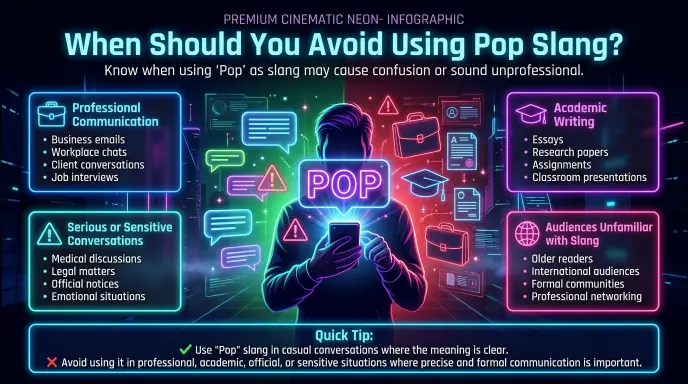
Pop slang works best in casual settings, but it is not suitable everywhere.
Professional Communication
Avoid pop slang in:
- Business emails
- Job interviews
- Academic assignments
- Official reports
Clear, standard English creates a more professional impression.
Formal Conversations
Some people may not recognize newer slang expressions.
Simple language helps everyone understand your message.
Overusing Slang
Using too many trendy words in one conversation can sound unnatural.
Choose expressions that fit the situation instead of following every trend.
Polite Alternatives to Pop Slang
If you want a more formal tone, these alternatives work well.
Instead of Pop Slang
Use:
- Excellent
- Impressive
- Wonderful
- Amazing
- Attractive
- Stylish
- Outstanding
- Great
- Fantastic
- Well done
These words communicate the same positive ideas while fitting professional and formal conversations.
Why Do People Use Pop Slang?
People use pop slang because it makes conversations more expressive, engaging, and current. Popular slang helps people react quickly, share emotions, and connect with others through familiar expressions.
Common reasons people use pop slang include:
- To sound friendly and casual.
- To follow popular trends.
- To express excitement or admiration.
- To connect with online communities.
- To make conversations more entertaining.
Since new expressions appear regularly, pop slang continues to evolve with internet culture.
Impact of Using Slang in Communication
Using pop slang can make conversations feel more natural, but it is important to match your language to the situation.
Advantages
- Makes conversations more engaging.
- Helps express emotions quickly.
- Builds connections with friends.
- Reflects current internet culture.
- Adds personality to messages.
Disadvantages
- Some people may not understand newer slang.
- Certain expressions lose popularity over time.
- Not appropriate for formal communication.
- Meanings can change across different communities.
Using pop slang thoughtfully helps your message stay clear and relatable.
Is Pop Slang Safe for Social Media?
Yes. Most pop slang is safe to use on social media.
Popular expressions appear every day on TikTok, Instagram, Snapchat, Reddit, Discord, Facebook, X, and YouTube.
Before using pop slang, keep these tips in mind:
- Use expressions that fit the conversation.
- Avoid slang in professional accounts.
- Remember that some trends change quickly.
- Learn the meaning before using unfamiliar words.
Overall, pop slang is a fun and harmless part of modern online communication.
Frequently Asked Questions
Q1. What is pop slang?
Pop slang is a collection of informal words and phrases that become popular through music, movies, social media, and internet culture.
Q2. Is pop slang the same as internet slang?
No. Internet slang is mainly used online, while pop slang includes trendy expressions that may also become common in everyday conversations.
Q3. Where is pop slang commonly used?
You can find pop slang in text messages, TikTok, Instagram, Snapchat, Reddit, Discord, YouTube, gaming chats, and everyday conversations.
Q4. Is pop slang rude?
Most pop slang is friendly or neutral. Some expressions may sound offensive depending on their meaning and the situation.
Q5. Why does pop slang change so quickly?
Pop slang changes because social media, music, movies, and online trends constantly introduce new words and expressions.
Q6. Who uses pop slang the most?
Pop slang is widely used by teenagers, young adults, content creators, gamers, and active social media users.
Q7. Can I use pop slang at work?
It is better to use standard English in professional settings. Pop slang is best suited for casual conversations.
Q8. Does pop slang have different meanings?
Yes. Some pop slang words can have different meanings depending on the platform, community, or conversation.
Q9. Is pop slang still changing?
Yes. New pop slang appears regularly, while older expressions gradually become less popular as trends evolve.
Q10. What does pop mean in Gen Z?
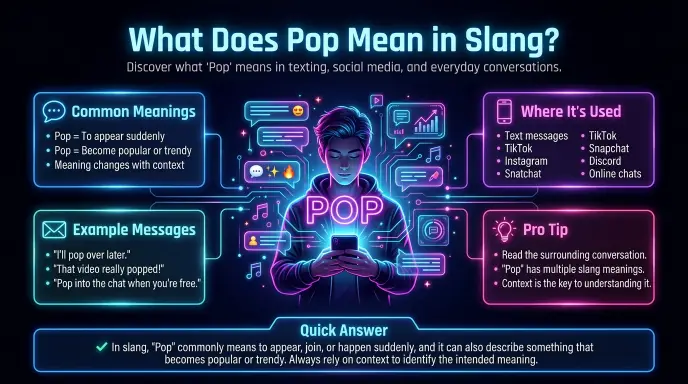
In Gen Z slang, pop often means something is becoming popular, exciting, or getting a lot of attention. It can also describe a song, trend, or event that is energetic and widely enjoyed.
Q11. What does pop in slang mean?
In slang, pop has several meanings depending on the context. It can mean to appear suddenly, become popular, attend briefly, or, in some conversations, refer to something exciting or eye-catching.
Q12. What are Gen Z slang words?
Common Gen Z slang words include rizz, delulu, slay, ate, bet, cap, no cap, goated, fire, valid, mid, and NPC. These expressions are widely used on TikTok, Instagram, Snapchat, Discord, and in texting.
Q13. What does pop mean in the hood?
In some urban slang, pop can mean to hit, shoot, or attack someone, depending on the conversation. Because this meaning relates to violence, it should be understood from context and avoided in casual or professional communication.
Conclusion
Pop slang includes the trendy words and phrases that shape modern conversations both online and offline. These expressions spread through social media, music, movies, gaming, and popular culture, making communication more lively and relatable.
Since pop slang changes over time, understanding the context behind each expression is essential. Learning these popular terms helps you follow current conversations, understand internet culture, and communicate more naturally with others.
Explore More Slang Meanings:
I am Emma Collins, a content writer at SlangAura specializing in internet slang, texting abbreviations, and online language. I create simple and accurate guides to help readers understand modern slang easily and confidently.