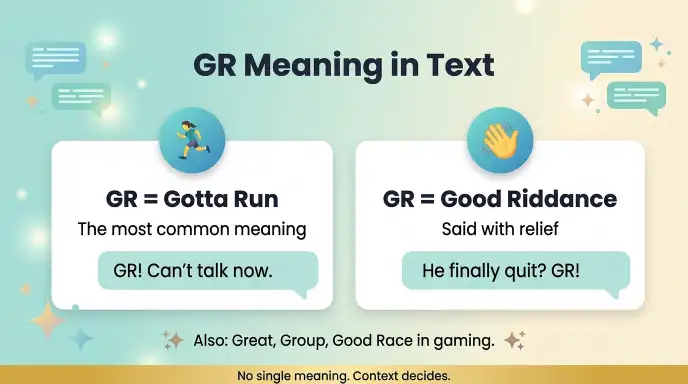
GR meaning in text usually stands for “Gotta Run.” People may use this informal abbreviation when they need to leave a conversation or attend to something else. For example, “Sorry, GR. Talk to you later” means the person has to go and cannot continue chatting right now. However, GR is less common than abbreviations like GTG and G2G, so its meaning can depend on the context.
If you have seen GR in a text message, gaming chat, or social media conversation, this guide explains its possible meaning, common uses, and real life examples.
Quick Answer: What Does GR Mean in Text?
GR usually means “Gotta Run” in informal texting. It is a short way to say “I have to leave” or “I need to go.”
For example, “GR, my class is starting” means the sender needs to leave because class is about to begin.
However, GR is not universally understood as a texting abbreviation. If the conversation does not make the meaning clear, check the surrounding message or ask the sender what they mean.
What Does GR Stand For?
When used in texting, GR can stand for “Gotta Run.” People use this expression to let someone know they need to leave or end a conversation.
The phrase has two parts:
- Gotta: An informal way of saying “got to” or “have to.”
- Run: In this expression, it means leaving or going somewhere.
Together, “Gotta Run” tells someone that you need to go. It does not necessarily mean you are physically running.
For example, a friend might text, “GR, my bus is here!” This means they need to leave to catch their bus.
Although this interpretation appears in texting references, GR is not as widely recognized as GTG or G2G. Therefore, the intended meaning may vary between conversations.
How Is GR Used in Text Messages?
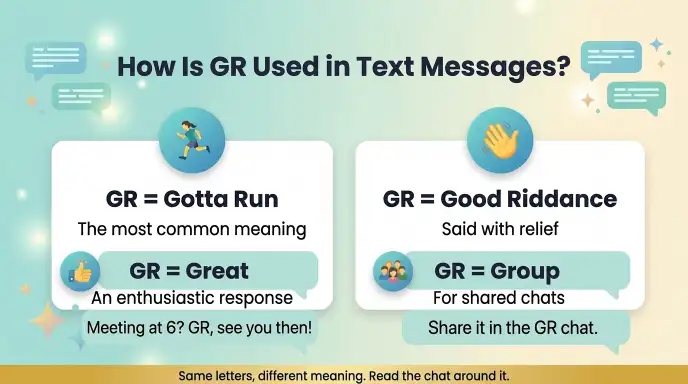
People may use GR in casual messages when they want to leave quickly without typing a complete sentence. The surrounding conversation often helps explain why they need to go.
1. When Someone Needs to Leave
Someone might send GR when they have to leave for an appointment, class, or other commitment.
Example:
“GR, I need to pick up my brother.”
Meaning: The sender needs to leave to pick up their brother.
2. When Ending a Conversation
GR can also appear at the end of a casual chat. The sender may use it to say goodbye and suggest talking later.
Example:
“Sorry, GR. Catch you later!”
Meaning: The sender needs to go but may continue the conversation another time.
3. When Someone Is in a Hurry
A person might use GR when they are rushing to reach a destination.
Example:
“GR now, or I’ll miss my train.”
Meaning: The sender needs to leave immediately to catch the train.
4. When Leaving School or Work
Students and employees may use GR in informal chats when a class, meeting, or task is about to begin.
Example:
“GR, the meeting starts in two minutes.”
Meaning: The sender needs to stop chatting and attend the meeting.
In each example, GR communicates the idea of leaving. However, because some people may not recognize it, writing “I have to go” can make the message clearer.
Real Life Examples of GR Meaning in Text
These conversations show how GR might appear in everyday messages.
Example 1: Leaving for School
Alex: “Can you help me with this question?”
Sam: “GR, class is about to start. I’ll help you later.”
Meaning: Sam needs to leave because class is starting.
Example 2: Ending a Chat With a Friend
Mia: “Are you free to talk?”
Lily: “For a minute, but GR soon. I have an appointment.”
Meaning: Lily can talk briefly but must leave soon.
Example 3: Catching a Bus
Ryan: “Where are you going?”
Noah: “GR, my bus is here!”
Meaning: Noah needs to leave to catch the bus.
Example 4: Leaving a Gaming Session
Player A: “Are you joining another match?”
Player B: “No, GR. Dinner is ready.”
Meaning: Player B needs to stop playing because dinner is ready.
Example 5: Finishing a Late Night Conversation
Ella: “Want to keep chatting?”
Zoe: “GR, I have to wake up early tomorrow. Good night!”
Meaning: Zoe needs to end the conversation and get some sleep.
Example 6: Leaving for a Meeting
Chris: “Did you read my message?”
Jordan: “Not yet. GR to a meeting, but I’ll reply afterward.”
Meaning: Jordan needs to attend a meeting and plans to respond later.
Example 7: A Quick Goodbye
Ava: “Okay, see you at the party!”
Emma: “GR now. See you there!”
Meaning: Emma needs to leave now and expects to see Ava at the party.
What Does GR Mean on Social Media?
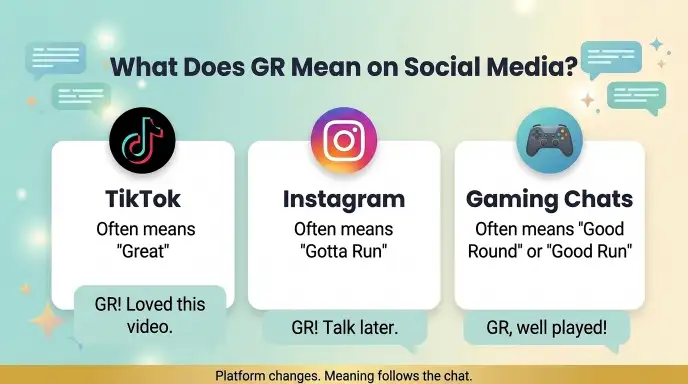
The meaning of GR on social media depends on the conversation. When someone uses it to explain that they need to leave, “Gotta Run” may be the intended meaning. However, GR does not have one universal meaning across all platforms.
GR on Snapchat
Snapchat users often exchange short, informal messages. Someone might use GR to explain that they need to stop chatting or leave for an appointment.
Example: “GR, my ride is here.”
Meaning: The sender needs to leave because their ride has arrived.
GR on Instagram
On Instagram, GR may appear in direct messages or casual conversations. If someone uses it while explaining that they are busy or leaving, “Gotta Run” may fit the context.
Example: “GR for now. I’ll reply later!”
Meaning: The sender needs to leave the conversation for the moment.
GR on TikTok
On TikTok, the meaning depends on if GR appears in a comment, caption, or direct message. The letters could refer to personal shorthand or terminology used by a particular community.
If the conversation is about someone leaving, “Gotta Run” may make sense. Otherwise, avoid assuming that this interpretation is correct.
GR in Gaming Chats
Players often use short messages to communicate quickly during a game. GR might be used to tell teammates that someone needs to leave or stop playing.
Example: “GR, last round for me!”
Meaning: The player needs to leave after the current round.
However, GR is not a universally established gaming command. Its meaning may vary between games and groups.
GR vs. GTG vs. G2G
GR, GTG, and G2G can communicate similar ideas when someone needs to leave. However, they are different abbreviations, and some are more familiar than others.
| Abbreviation | Meaning | Common use |
| GR | Gotta Run | Informal way to say you need to leave |
| GTG | Got to Go / Gotta Go | Ending a conversation |
| G2G | Got to Go | Telling someone you have to leave |
GTG and G2G are generally more recognizable in everyday texting. GR can express a similar idea, but some readers may not understand it without context.
For example, “GTG, see you tomorrow” clearly tells the other person that the sender needs to leave. Similarly, “G2G, my class is starting” means the sender must stop chatting.
If you want to avoid confusion, use GTG or write “I have to go” instead.
Is GR a Slang Word or an Abbreviation?
GR is best described as an informal abbreviation when it means “Gotta Run.” It shortens a longer expression so people can communicate quickly in casual conversations.
However, GR is not a traditional slang word with one universally accepted definition. Some people may recognize it immediately, while others may not know what it means.
It is also important not to confuse GR with GR8, which is commonly used to mean “great.” Although the abbreviations look similar, their meanings are different.
As with many texting terms, the context matters. A conversation about leaving may support the “Gotta Run” interpretation, while a different topic may suggest another meaning.
How to Reply When Someone Texts GR
If someone sends GR and you understand that they need to leave, a short and friendly reply is usually enough.
Here are some natural responses:
- “Okay, talk later!”
- “No worries. See you soon!”
- “Sure, catch you later!”
- “All good. Message me when you’re free.”
- “Take care!”
For example:
Person A: “GR, my ride is waiting.”
Person B: “Okay, talk to you later!”
However, if someone sends only “GR” and the meaning is unclear, you can ask, “Do you mean you have to go?” This helps you avoid misunderstanding the message.
Frequently Asked Questions
Q1. What does GR mean in text messages?
GR can mean “Gotta Run” in informal text messages. It tells someone that the sender needs to leave or stop chatting. However, GR is less widely recognized than some other texting abbreviations, so context matters.
Q2. Does GR mean “Gotta Run”?
Yes, “Gotta Run” is a documented interpretation of GR in texting. People may use it when they need to leave quickly or end a conversation.
Q3. Is GR the same as GTG?
No. GR can mean “Gotta Run,” while GTG usually means “Got to Go” or “Gotta Go.” Both can communicate that someone needs to leave, but GTG is generally more familiar.
Q4. What does GR mean on Snapchat?
On Snapchat, GR may mean “Gotta Run” when someone is ending a conversation or explaining that they need to leave. The surrounding message helps confirm the intended meaning.
Q5. Is GR commonly used in texting?
GR is recognized in some texting references, but it is less widely understood than GTG and G2G. Some people may need context to understand it.
Q6. What does GR mean when a friend sends it?
If your friend writes GR while mentioning a class, appointment, or ride, they may mean “Gotta Run.” They are likely telling you that they need to leave rather than suggesting anything negative about your conversation.
Q7. Does GR have other meanings?
Yes. GR can have other meanings in technical fields, specialized communities, or private conversations. However, you should not assume a particular alternative meaning without considering the context.
Conclusion
GR meaning in text can be “Gotta Run,” an informal expression people use when they need to leave or end a conversation. You might encounter it in personal messages, social media chats, or gaming conversations.
For example, “GR, my class is starting” means the sender needs to leave because class is about to begin. Although GR can work as a quick message, it is less familiar than GTG or G2G, so not everyone will understand it immediately.
When interpreting GR, pay attention to the surrounding conversation. If the sender is talking about leaving, “Gotta Run” is a reasonable interpretation. If the meaning is unclear, asking for clarification is the easiest way to avoid confusion.
🧠 Learn More Internet Slang:
GPT Meaning in Text: Real Meaning, Examples and Uses

I am Masson Caldwell, a language enthusiast and content writer at SlangAura. I write about internet slang, texting trends, and modern expressions to help readers understand the evolving world of online language with simple and clear explanations.