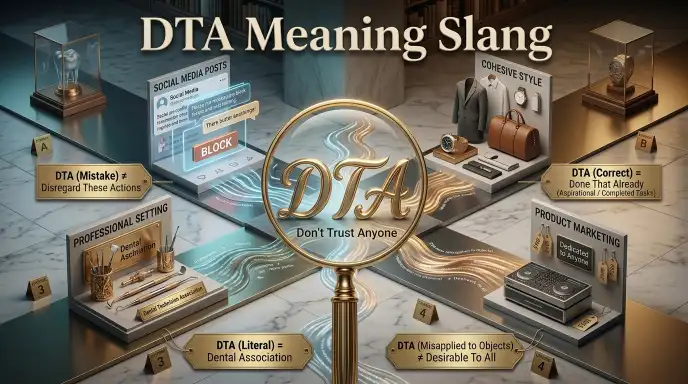
DTA is a popular internet slang acronym that stands for “Don’t Trust Anyone” (or “Don’t Trust Anybody”). People search for this term because seeing “DTA” in a text message, TikTok caption, or Instagram story can be confusing if you are unfamiliar with online abbreviations.
Understanding what this term means helps you quickly decode fast paced chats, spot social media trends, and recognize when someone is expressing self reliance or caution.Slang words and three letter acronyms heavily influence how people communicate in digital spaces.
While “DTA” is overwhelmingly used as a warning about trust and privacy, it can also carry distinct meanings depending on if you are talking about online art, financial policies, or sports history. This complete guide breaks down its quick answer, clear definitions, cultural origins, common mistakes, and real life examples so you always know how to interpret it.
DTA Meaning Slang : Quick Answer
The slang term DTA usually has two main applications depending on the conversation’s context:
- Don’t Trust Anyone / Anybody: A cautionary phrase advising someone to keep their guard up, protect their personal business, and be careful with who they trust.
- Example: “Keep your goals quiet until they are done. DTA 🤫”
- Draw To Adopt (Online Art Communities): A term used by digital artists on platforms like DeviantArt or Instagram where users draw a character design to claim ownership of it
- Example: “This new original character is open for DTA!”
In casual text messaging, group chats, and general social media posts, 95% of the time DTA means “Don’t Trust Anyone.”
Definition and Meaning of DTA Meaning Slang
Clear Definition
In online texting culture, DTA is an acronym designed to express skepticism, emotional protection, and independence. It acts as a quick reminder that people are not always loyal and that keeping your privacy intact is essential.
Simple Meaning
When someone types “DTA” in a chat or post, they are essentially saying:
- Keep your secrets to yourself.
- Do not rely too heavily on casual acquaintances.
- Trust your own judgment before depending on others.
Context and Usage
You will encounter this term frequently across fast paced digital channels—including text messages, Snapchat snaps, TikTok video captions, X (formerly Twitter) threads, and Discord servers. It is especially common in posts about personal growth, relationship drama, or financial independence.
Different Meanings by Context
- Casual Texting & Social Media: Stands for Don’t Trust Anyone or Don’t Trust Anybody.
- Digital Art & Character Trading: Stands for Draw To Adopt, a popular community challenge where artists submit fan art to win a character design.
- Finance & International Law (Non Slang): Stands for Double Taxation Agreement, a formal tax treaty between two countries.
- Gaming & Video Games: Occasionally used in older gaming communities to refer to titles like Downtown Run or specific game mods, though this is rare today.
The Origin of DTA Meaning Slang
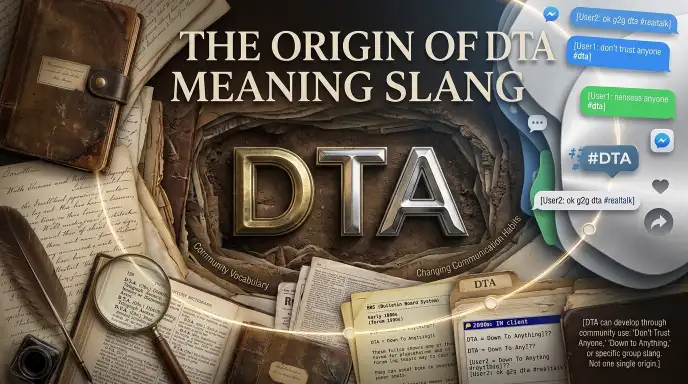
Unlike modern slang phrases created on TikTok, DTA has deep roots in pop culture and sports entertainment history before transitioning into text messaging.
In the late 1990s, professional wrestler “Stone Cold” Steve Austin popularized “DTA” in World Wrestling Entertainment (WWE). He used “DTA Don’t Trust Anybody” as his personal motto and catchphrase during television promos. The phrase appeared on merchandise, t shirts, and posters, etching the three letter acronym into mainstream popular culture.
As mobile phones became common in the early 2000s, texting keypads were slow to use, and mobile plans had character limits. Internet users began shortening popular spoken catchphrases into three letter shortcuts. “Don’t Trust Anyone” naturally turned into DTA, joining other famous street acronyms like TNO (Trust No One) and DTN (Don’t Trust Nobody).
British English vs. American English Usage
Because “DTA” is a universal English acronym, its meaning remains consistent across English speaking countries. However, subtle regional differences exist in how often it is used compared to local street slang.
Here is a side by side comparison:
| Feature / Region | American English | British / Commonwealth English |
| Primary Meaning | Don’t Trust Anyone | Don’t Trust Anyone |
| Popularity | Very High (Hip hop & sports culture) | High (Roadman chat & social media) |
| Alternative Local Slang | TNO, DTN, FR | Snake, Susp, Peak |
| Formal Acceptance | Informal / Slang only | Informal / Slang only |
- American Texting Style: “I keep my circle small, man. DTA all day.”
- British Texting Style: “Watch who you hang about with, mate. DTA.”
Which Spelling or Format Should You Use?
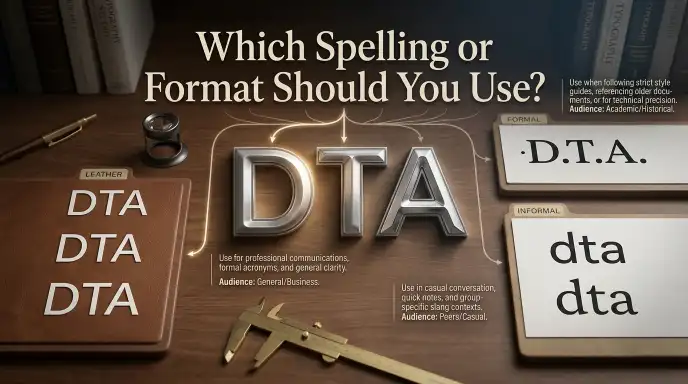
Knowing how to format and use this acronym depends on your platform, audience, and message:
- Casual Chats with Friends: Typing it in lowercase (dta) or uppercase (DTA) works fine in quick texts and direct messages.
- Social Media Captions: Writing DTA in uppercase accompanied by emojis (like 🤫, 💯, or 🐍) makes your post stand out and look clean.
- Digital Art Platforms: Capitalize DTA clearly in post titles so artists know you are hosting a “Draw To Adopt” event.
- Professional & Work Environments: Never use “DTA” in work emails, client messages, or formal letters. It can make you sound unreasonable or unprofessional. Stick to standard business English.
Understanding Tone and Nuance in Daily Communication
Slang terms convey specific emotions and attitudes. Using “DTA” shifts the mood of your sentence depending on how you present it.
Notice how the tone changes between these sentences:
- Option A (Self Reliant & Motivated): “Focusing on my career and staying in my lane. DTA 🚀” (Positive, independent, and focused.)
- Option B (Hurt / Cynical): “Friends always switch up on you… DTA.” (Reflects disappointment or past betrayal.)
- Option C (Casual Advice): “Don’t tell everyone your business, bro. DTA.” (Friendly, protective advice.)
Common Mistakes with DTA Meaning Slang
- Confusing DTA with DTF: People sometimes confuse DTA with unrelated “DT ” acronyms like DTF (Down To F). Double check the sentence context before making assumptions.
- Overthinking Simple Mistakes: Assuming someone is making a complex political or financial statement about “Double Tax Agreements” when they are simply sending a text about trusting friends.
- Using it in Corporate Communications: Leaving “DTA” in an email to a supervisor or business client instead of writing a formal statement.
- Assuming it Always Means Betrayal: Using DTA does not always mean someone is angry; people often use it as a lighthearted reminder to stay focused.
DTA Meaning Slang in Everyday Examples
Here is how the acronym appears across various real life scenarios, social media conversations, and media contexts:
Text Messaging Between Friends (Giving Advice)
- Jordan: “I told Sarah about my new job idea and now everyone knows.”
- Taylor: “I told you to keep it lowkey, man. DTA!”
Social Media Captions & Posts
- Instagram Post: “Building in silence. DTA. 🤫📈”
- X / Twitter Post: “The older you get, the more you realize DTA is actually great advice.”
Digital Art & Community Context
- Artist Post: “Host contestant announcement! This design is open for DTA until Friday.”
- Follower Reply: “Awesome! Working on my drawing submission right now.”
Sports & Pop Culture Quotes
- Interview Quote: “In this industry, you have to remember Stone Cold’s rule: DTA.”
Formal Writing (Correct Usage Slang Avoided)
- Business Email: “We must maintain privacy regarding client data because confidentiality is our top priority.” (Slang is avoided).
DTA Meaning Slang : Google Trends & Usage Data
Search engine analytics show consistent search interest for “DTA meaning slang” year round:
- Primary Search Motivation: A majority of searches come from users who saw “DTA” in a comment section, lyrics, or direct message and wanted to confirm its exact meaning.
- High Volume Countries: Search interest is highest in English speaking nations, including the United States, the United Kingdom, Canada, Australia, and South Africa.
- Demographic Breakdown: Gen Z, Millennials, and gaming/art communities represent the main demographic searching for and sharing this term.
Related Slang Terms Comparison
To help you understand how DTA fits into modern internet vocabulary, here is a detailed breakdown comparing it with similar acronyms:
| Acronym | Full Form | Primary Meaning | Tone | Best Context |
| DTA | Don’t Trust Anyone | Caution, privacy, self reliance | Guarded / Motivated | Texting, Captions, Music |
| TNO | Trust No One | Absolute caution and privacy | Serious / Intense | Social Media, Bio |
| DTN | Don’t Trust Nobody | Double negative form of DTA | Casual / Urban | Streetwear, Chat |
| IYKYK | If You Know You Know | Inside knowledge or secret | Exclusive / Playful | Captions, Stories |
| FR | For Real | Emphasizing truth or agreement | Sincere / Direct | Daily Texting |
Frequently Asked Questions
Q1. What does DTA stand for?
DTA can stand for different phrases depending on context. In texting and slang, it commonly means “Don’t Trust Anyone,” while in other contexts it can have completely different meanings.
Q2. What does dta mean in a text?
In a text, DTA commonly means “Don’t Trust Anyone.” It is often used as a short expression about being careful about whom you trust.
Q3. What does “DTA” mean in urban slang?
In urban slang, DTA can mean “Don’t Trust Anyone.” The abbreviation is often used in captions, messages, and social media posts.
Q4. What is the meaning of slang in chat?
Slang in chat means informal words, abbreviations, or expressions people use in casual online conversations. Examples include LOL, BTW, FR, TBH, and IDK.
Q5. What are Gen Z slang words?
Common Gen Z slang words include rizz, drip, sus, no cap, bet, slay, vibe, lowkey, highkey, and ghosting. Their meanings can change as online language evolves.
Q6. What is chat in Gen Z slang?
In Gen Z slang, chat can simply refer to people participating in an online conversation, especially in livestreams and social media. Phrases like “chat, hear me out” address the audience directly.
Conclusion
Navigating modern text conversations requires understanding both current trends and long standing internet shorthand. The slang term DTA stands out as a clear, impactful abbreviation for “Don’t Trust Anyone.” From its origins in 1990s wrestling culture to its modern role in texting, social media captions, and digital art communities, DTA continues to serve as a fast way to express self reliance and caution.
Knowing when and how to use terms like DTA keeps your digital communication natural and clear. Keep casual acronyms for relaxed chats with friends or social feeds, and stick to standard English when writing for work or school. Now that you understand its complete meaning, history, variations, and usage rules, you can read and write “DTA” in any chat with total confidence.
Dig It More:
Drip Slang Meaning: Uses, Contexts, and Examples

I am Masson Caldwell, a language enthusiast and content writer at SlangAura. I write about internet slang, texting trends, and modern expressions to help readers understand the evolving world of online language with simple and clear explanations.